






Definition and Meaning of a Legal Contract Template
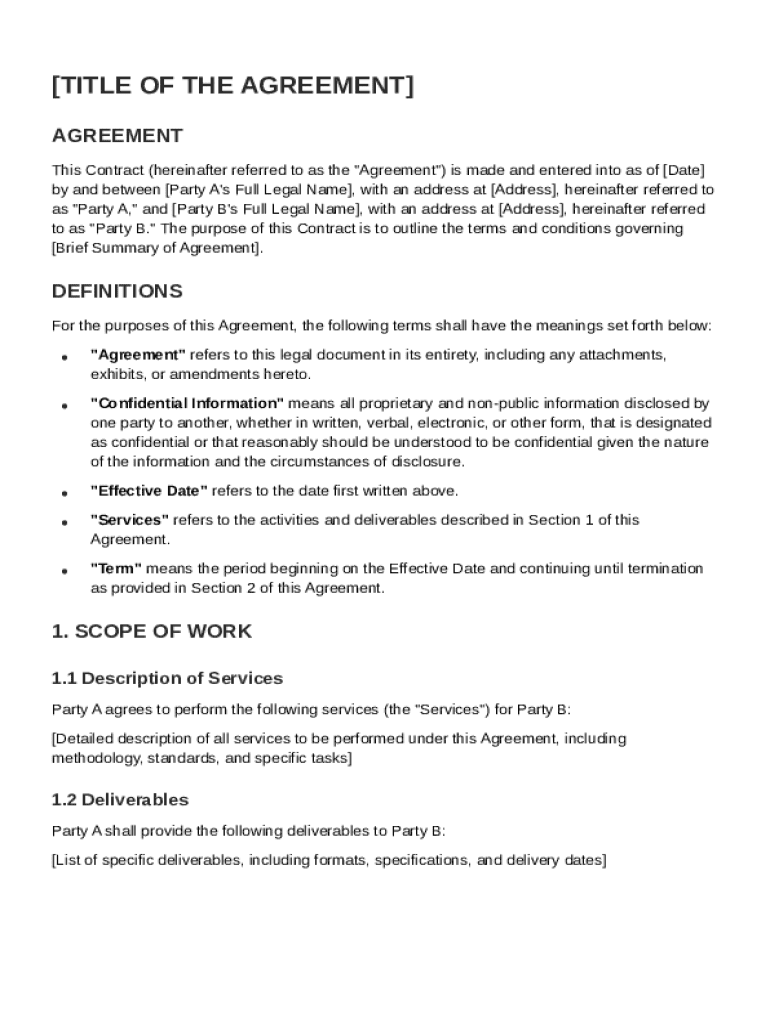
A legal contract template is a pre-drafted document that outlines the specific terms and conditions binding two or more parties in a legally enforceable agreement. This template serves as a framework to include essential elements like the identities of the involved parties, the scope of work, payment terms, confidentiality stipulations, and the termination process. It allows businesses and individuals to establish formal agreements without starting from scratch, ensuring that all critical legal procedures are maintained. By utilizing a template, parties can customize terms to fit their particular needs, while still adhering to a standard format recognized by law.
How to Use the Legal Contract Template
Using a legal contract template involves several methodical steps to ensure the document meets both parties' expectations and legal standards. First, examine the template to ensure it covers the necessary provisions for your specific agreement. Add or modify clauses to reflect unique arrangements, such as specific deliverables, timelines, and payment methods. Once the template reflects the agreement, both parties should review it for clarity and completeness before adding their signatures. It is crucial to consult with a legal expert if there are any complex or ambiguous provisions that need professional interpretation. This ensures the contract is legally sound and minimizes potential disputes.
Steps to Complete the Legal Contract Template
-
Identify Parties Involved: Clearly define all participating parties’ legal names and addresses to establish who is bound by the contract.
-
Detail the Services or Products: Describe in detail the services or products involved, ensuring each aspect of the agreement is addressed.
-
Set Payment Terms: Clearly outline payment amounts, methods, schedules, and any penalties for late payment to avoid misunderstandings.
-
Establish Confidentiality Clauses: Include sections that protect sensitive information shared during the agreement.
-
Define Dispute Resolution Procedures: Outline steps for resolving any disputes that might arise, such as mediation or arbitration procedures.
-
Finalize and Review: Have all parties and legal advisors review the contract for accuracy and comprehensiveness before signing.
-
Secure Signatures: Ensure all parties sign the document and keep copies for record-keeping and enforcement purposes.
Key Elements of a Legal Contract Template
A legal contract template encompasses several key components that are fundamental to its enforceability:
- Offer and Acceptance: Clearly stated offer and acceptance terms to form the basis of the agreement.
- Consideration: Define the value exchanged between parties, ensuring mutual obligations are met within the contract.
- Legality of Purpose: Confirm that the contract's purpose complies with U.S. laws.
- Capacity of Parties: Ensure both parties have the legal authority to enter into the contract.
- Performance Obligations: Detailed delineation of duties and responsibilities for each party.
- Termination Conditions: Specify scenarios in which the contract can be lawfully terminated by either party.
Important Terms Related to Legal Contract Template
- Indemnification: Clauses ensuring that one party will compensate the other for any harm, liability, or loss caused during the execution of the contract.
- Governing Law: Specifies which state’s laws will be used for interpreting and enforcing the contract.
- Force Majeure: Provisions for extraordinary events, such as natural disasters, which may postpone or exempt contract fulfillment.
- Severability: Ensures that if one part of the contract is invalid, the remainder still applies.
- Amendments: Procedures for legally modifying the contract post-execution.
Who Typically Uses the Legal Contract Template
Legal contract templates are typically used by a variety of stakeholders across different industries and sectors. These include but are not limited to:
- Small and Medium Business Owners: To formalize relationships with vendors, clients, and partners.
- Freelancers and Contractors: To establish clear agreements with clients regarding deliverables and payment terms.
- Corporations: For comprehensive agreements with stakeholders and large-scale projects.
- Non-profits: To ensure clarity and compliance in partnerships with donors and service providers.
- Individuals: For personal transactions such as property leases or sale agreements.


State-Specific Rules for Legal Contract Templates
Different states in the U.S. might have particular rules and requirements when it comes to creating, executing, and enforcing legal contracts.
- Governing Law and Jurisdiction: Each state may have specificity in terms of what governing law applies, affecting contract interpretation and enforcement.
- Statutory Requirements: Some states require certain clauses for contract validity, such as written form for specific agreements like real estate transactions.
- Notarization and Witnessing: States may also have distinctive rules regarding notarization and witnessing of contractual documents.
- Disclosure Requirements: State laws might mandate the disclosure of certain information to the contracting parties.
Legal Use of the Legal Contract Template
Legal contract templates must be used in accordance with proper legal standards to ensure enforceability and protection against future disputes.
- Formality and Intent: The agreement must demonstrate a clear intent to create legal relations.
- Compliance with Contract Law: All aspects should adhere to the principles of contract law, including offer, acceptance, and consideration.
- Legal Enforceability: Ensure the terms comply with local, state, and federal laws to prevent the contract from being deemed void.
- Documentation and Safekeeping: Always keep an original signed copy and digital records for reference and potential legal inquiries.