Definition and Meaning
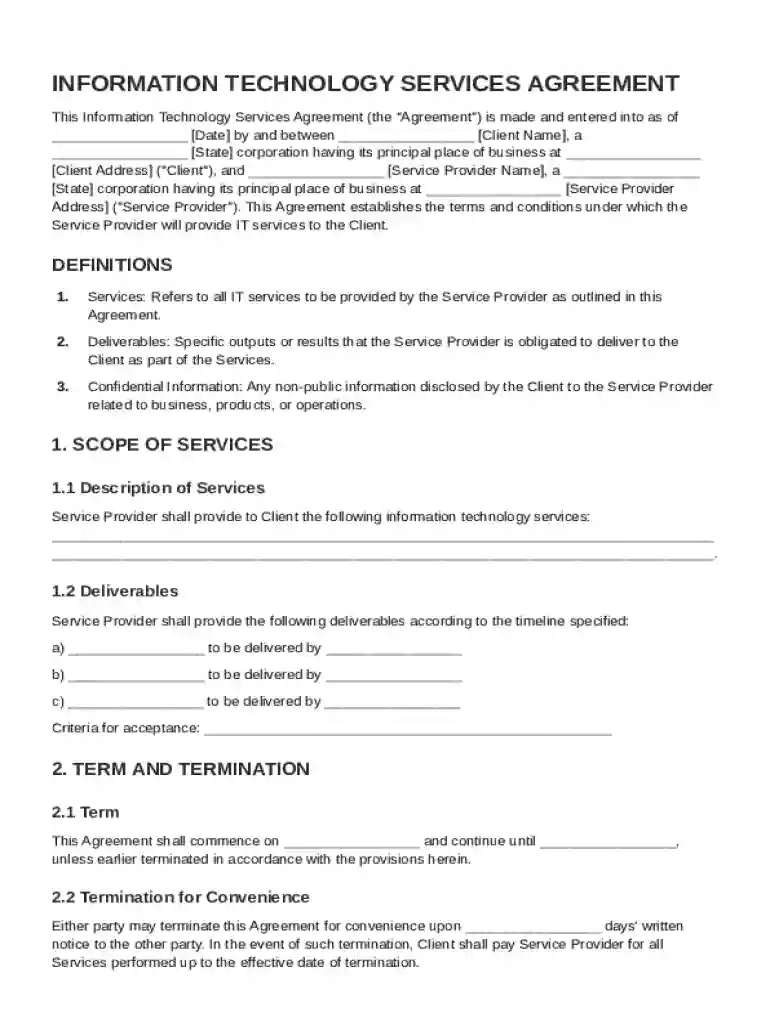
An Information Technology Contract Template is a formal agreement used to outline the terms and conditions under which IT services are provided by a service provider to a client. This document ensures that both parties have a clear understanding of the services to be delivered, as well as their respective responsibilities and obligations. It typically includes important details such as the scope of services, payment terms, confidentiality requirements, and intellectual property rights. The contract serves as a safety net, offering legal protection and ensuring that the expectations of both parties are met.
Key Elements of the Information Technology Contract Template
The Information Technology Contract Template is composed of several crucial components:
- Scope of Services: Clearly defines the range and limits of the IT services to be provided.
- Payment Terms: Specifies the pricing, payment schedules, and any applicable penalties for late payments.
- Responsibilities: Outlines the duties and obligations of both the service provider and the client, ensuring accountability.
- Confidentiality Obligations: Protects sensitive information by detailing how confidential data should be handled.
- Intellectual Property Rights: Clarifies ownership of work produced and any licensing requirements.
- Warranties and Indemnification: Details assurances provided by the service provider and conditions for indemnification in case of disputes.
- Dispute Resolution Procedures: Describes the methods for resolving conflicts, such as arbitration or litigation.
How to Use the Information Technology Contract Template
Utilizing the Information Technology Contract Template is a structured process:
- Identify Parties: Clearly list the names and contact details of both the service provider and the client.
- Define Scope: Enumerate the specific services to be offered, including any deliverables.
- Determine Payment Terms: Agree on pricing structures, payment methods, and timelines.
- Establish Responsibilities: Clarify the roles and duties of each party, ensuring mutual understanding and compliance.
- Set Confidentiality and IP Clauses: Discuss how confidential information should be treated and establish ownership rights of intellectual property.
- Review with Legal Counsel: Have a legal professional review the template for compliance and completeness.
Important Terms Related to Information Technology Contract Template
Understanding the terminology used in an Information Technology Contract Template is essential for effective use:
- Service Level Agreement (SLA): Describes the performance standards the service provider must meet.
- Change Management: Refers to the process for handling service modifications or contract amendments.
- Milestones: Important project stages that are often linked to payment tranches.
- Force Majeure: Clauses that provide relief in events of extraordinary circumstances preventing contract fulfillment.
- Termination Conditions: Specifies conditions under which the contract can be terminated by either party.
Steps to Complete the Information Technology Contract Template
Completing an Information Technology Contract Template involves the following steps:
- Preliminary Discussions: Hold initial meetings to align on objectives and expectations.
- Draft Initial Document: Fill in the template with basic information and proposed terms.
- Review and Revise: Circulate the draft between both parties for feedback and adjustments.
- Negotiate Terms: Resolve any disputes regarding terms to reach a mutual agreement.
- Finalize and Sign: Once both parties are satisfied, finalize the document with signatures for legal binding.
Who Typically Uses the Information Technology Contract Template
Various professionals and organizations utilize an Information Technology Contract Template, including:

- IT Service Providers: To formalize agreements with clients.
- Corporations: Engaging IT vendors for infrastructure or software development.
- Startups: Hiring freelance developers for project-based work.
- Consultants: Offering IT advisory services to clients.
Legal Use of the Information Technology Contract Template
The Information Technology Contract Template must comply with U.S. federal laws as well as state-specific regulations:
- Contract Law Compliance: Adheres to applicable contract laws ensuring enforceability.
- Privacy Regulations: Considers laws like the GDPR for clients handling international data.
- Employment Laws: Distinguishes between independent contractors and employees, avoiding legal pitfalls.
State-Specific Rules for the Information Technology Contract Template
In the U.S., state-specific provisions may alter how an Information Technology Contract Template is executed:
- California: Strict rules regarding contractor classification under AB5 laws.
- New York: Requirements for Special Timelines for dispute resolutions.
- Texas: Distinct guidelines on intellectual property rights, particularly in the tech industry.
Each of these provisions seeks to ensure that the contract remains relevant and enforceable regardless of jurisdiction.