






Definition & Meaning
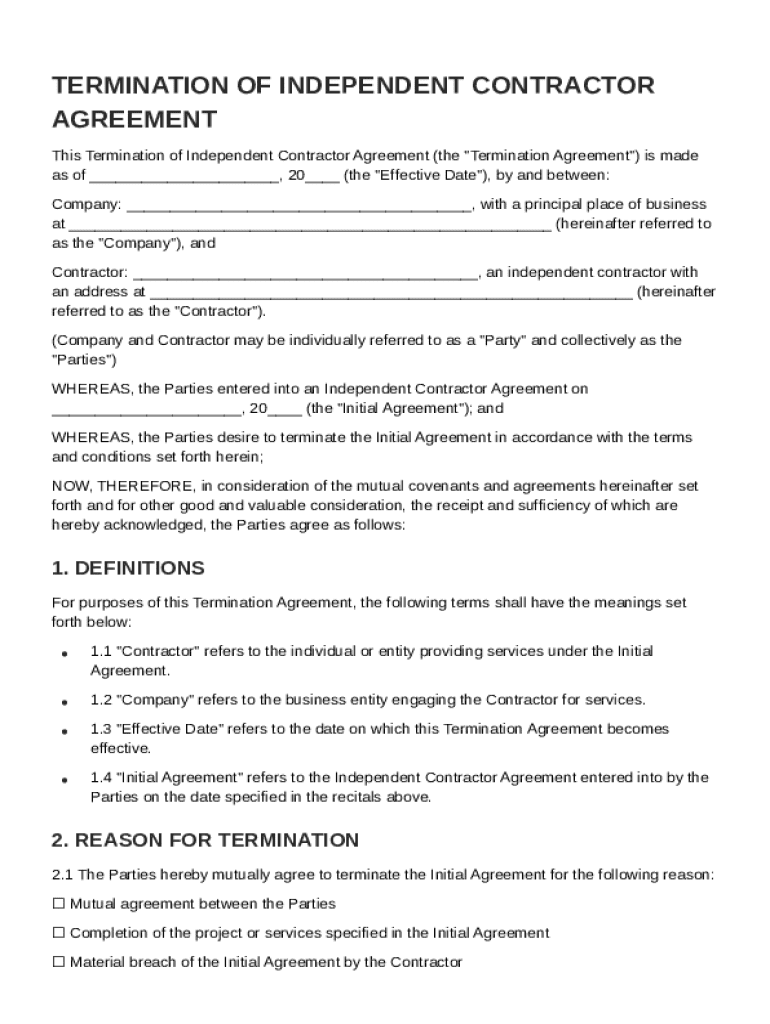
The Termination of Independent Contractor Agreement Template is a legal document used to formalize the conclusion of an existing contract between a company and an independent contractor. This agreement outlines the conditions under which the contract will be terminated, including any mutual terms agreed upon by both parties. The purpose of this document is to ensure a clear and amicable end to the business relationship, protecting the rights and obligations of both parties involved. This tool is critical in avoiding potential disputes and misunderstandings that might arise from the closing of the contractual engagement.
Key Elements of the Termination of Independent Contractor Agreement Template
To create a comprehensive Termination of Independent Contractor Agreement, certain key elements must be included:
- Parties Involved: Clearly identify the company and the individual contractor involved in the original agreement.
- Termination Date: Specify the exact date on which the contract will be considered null and void.
- Reason for Termination: Include a brief explanation of why the contract is being terminated, whether it is mutual or based on specific circumstances.
- Final Payment Details: Outline any remaining compensation due to the contractor for services rendered up to the termination date, including details of how and when this payment will be made.
- Return of Property: Establish the protocol for returning any company-owned property or materials in the contractor's possession.
- Confidentiality and Liability: Reinforce any ongoing confidentiality commitments and address mutual release from future liabilities or claims related to the contract.
Steps to Complete the Termination of Independent Contractor Agreement Template
- Review the Original Contract: Begin by reviewing the initial independent contractor agreement to ensure all terms have been met and to understand any termination clauses.
- Complete the Template: Fill out the Termination of Independent Contractor Agreement Template, ensuring all relevant sections, such as parties involved and termination date, are completed accurately.
- Discuss Terms with Contractor: Engage in a conversation with the contractor to discuss the termination terms and any conditions they may have.
- Obtain Mutual Consent: Ensure that both parties agree to the termination terms, documenting their consent within the agreement.
- Sign and Execute the Document: Both parties should sign the agreement to acknowledge their understanding and acceptance of the termination details.
- File the Agreement: Maintain a copy of the signed agreement for your records and provide one to the contractor for their reference.
Why Should You Use a Termination of Independent Contractor Agreement Template
Utilizing a Termination of Independent Contractor Agreement Template offers several benefits:
- Legal Protection: Establishes a clear legal framework that protects both the company and the contractor from future disputes.
- Clarity and Transparency: Provides a transparent process for ending the contractual relationship, reducing potential misunderstandings.
- Formal Record: Acts as a formal record of termination, which can be valuable if future legal questions arise.
- Notification of Obligations: Ensures both parties are fully aware of their post-termination obligations and responsibilities, including non-disclosure and final payment terms.
Important Terms Related to the Termination of Independent Contractor Agreement
Understanding the terminology used in the Termination of Independent Contractor Agreement is essential for its effective use:
- Independent Contractor: A self-employed individual providing services to a company, distinguished from an employee.
- Mutual Termination: A jointly agreed-upon ending of a contract by both parties.
- Non-Disclosure Agreement (NDA): A clause restricting the disclosure of confidential information shared during the contract period.
- Liability Release: Documentation that absolves parties from future claims related to the agreed-upon termination terms.
- Governing Law: The legal jurisdiction that will be used to interpret the terms of the agreement.
Legal Use of the Termination of Independent Contractor Agreement Template
The Termination of Independent Contractor Agreement Template has specific legal applications:
- Binding Agreement: Once signed, it becomes a legally binding document, enforceable under U.S. contract law.
- Enforcement of Terms: Can be used in a court of law to enforce terms, should either party fail to comply with agreed-upon obligations.
- Resolution of Disputes: Provides a basis for resolving any disputes that arise from the termination.
State-Specific Rules for the Termination of Independent Contractor Agreement
While the template can be broadly applicable, state-specific laws may affect its use:
- Varying Legal Requirements: Different states may have unique legal requirements for contractual agreements, affecting how termination must be executed.
- Compliance with Local Laws: Users should always ensure compliance with the specific legal requirements of their state or consult with a local legal professional for guidance.
- Notarization Requirements: Some states may require notarization of the agreement to consider it legally binding.
Who Typically Uses the Termination of Independent Contractor Agreement Template
This template is commonly used by:
- Small to Medium Businesses: Often used by SMBs engaging with freelancers or independent contractors.
- Corporations: Larger corporations may use the template to conclude short-term projects with contractors.
- Independent Contractors: Contractors themselves may initiate termination using the template to maintain professional relationships and clear terms of departure.