
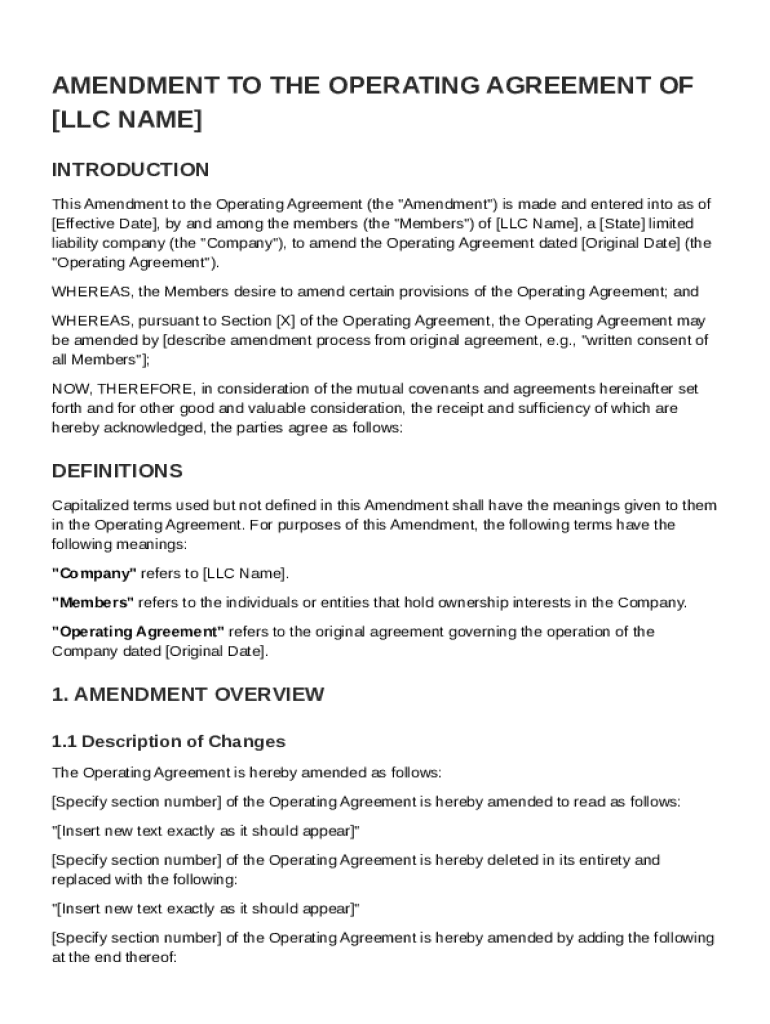







Definition and Purpose of the Amend Operating Agreement Template
An Amend Operating Agreement Template is a legal document used primarily by members of a limited liability company (LLC) to formally document changes to the company's original operating agreement. This template facilitates the clear articulation of amendments, ensuring that all changes are legally recognized and enforceable. It typically includes sections detailing which parts of the original agreement are being amended, the specific changes being made, the effective date of these changes, and the signatures of authorized parties. Using this template ensures that modifications to the agreement are consistently applied and understood by all LLC members.
Key Elements Included
- Amendment Clause: Specifies the provision being altered, describing the original text and how it is being modified.
- Effective Date: Establishes when the amendments become legally binding.
- Signatures: Provides spaces for authorized signatories to confirm their agreement to the amendments. This section is crucial, as unsanctioned amendments lack legitimacy.
- Governing Law: Indicates which state laws govern the amended agreement, maintaining compliance with local legal requirements.
- Severability Clause: Ensures that if one part of the agreement is found invalid, the remaining sections remain effective.
Steps to Complete the Amend Operating Agreement Template
- Review the Original Agreement: Begin by thoroughly examining the existing operating agreement to identify sections that require change.
- Draft the Amendments: Use clear and precise language to detail the amendments. It is advisable to outline both the current and the proposed language.
- Consult with Legal Counsel: For significant changes, consult an attorney to ensure that the amendments comply with legal standards and do not infringe on any existing laws.
- Gather Members’ Consent: Obtain written consent from all LLC members affected by the changes to ensure unanimous approval.
- Complete the Template: Fill in all necessary fields of the template, including the effective date, detailed changes, and signatories.
- Review and Finalize: Double-check the completed form for accuracy and completeness before finalization.
- Distribute Copies: Provide all members with copies of the amended agreement and retain a signed version for company records.
Legal Use of the Amend Operating Agreement Template
The template must be used in compliance with federal and state-level regulations that govern LLCs. It aligns with the U.S. standards and legislation, including the Revised Uniform Limited Liability Company Act (RULLCA) adopted by several states. Any changes made should not violate state-specific statutes or federal laws that oversee company operations. An accurate and legally-permissive amendment process helps avoid future legal disputes and maintains the integrity of the LLC’s governance.
Business Entity Types Best Served by the Template
While the template is primarily designed for LLCs, variations of it can be employed by other business structures.
- Corporations: Similar agreement structures might be altered when bylaws need to be updated.
- Partnerships: Partnership agreements can be amended in a similar fashion to reflect changes in organizational structure or member roles.
- Sole Proprietorships and Others: While not all features apply, sole proprietorships might use variations for personal record-keeping.
State-Specific Rules and Considerations
The rules governing the amendment of operating agreements may differ significantly from one state to another in the U.S. Some states have specific requirements regarding quorum, notice, and the percentage of members that must approve an amendment for it to be valid.
- California: Requires the vote of a majority of members in LLCs to amend the agreement.
- Delaware: Offers greater flexibility by allowing management to dictate amendment procedures.
- Texas: Often mandates specific wording for amendment clauses for them to be legally enforceable.
Understanding and applying these state-specific nuances is crucial in ensuring the amendments stand up under legal scrutiny.
Examples of Using the Amend Operating Agreement Template
- Adding a New Member: A company brings in a new partner requiring a reallocation of responsibilities and profits.
- Changing Member Roles or Titles: Updates due to promotions or restructuring must be documented to clarify hierarchical changes.
- Adjusting Profit Distribution Models: Modifying the way profits are shared among LLC members necessitates a formal amendment.
- Updating Capital Contributions: Reflects changes in the financial contributions made by each member to the LLC.
These examples illustrate the versatility of the template in adapting to changes within an organization.
Required Documents for Amending an Operating Agreement
When completing the amendment process, it is critical to gather and maintain several key documents:
- Original Operating Agreement: The foundational document being altered.
- Member Consents: Written approvals from LLC members.
- Legal ID and State Registration: Verification of the company’s legal identity and standing.
- Supporting Legal Documentation: Any legal advice or guidance notes used to substantiate the amendment.
Having these documents prepared and organized can streamline the amendment process and support its legality.
Software Compatibility and Integration
The integration of digital tools such as DocHub enhances the efficiency of amending operating agreements. This platform enables users to:
- Edit and Annotate Documents: Amend the template directly within a user-friendly online editor.
- Facilitate Collaboration: Share the document with fellow members for review and consent.
- Apply Digital Signatures: Legally bind amendments through compliant electronic signatures.
- Store and Retrieve Documents Securely: Ensure amendments are accessible and secure through cloud storage.
These features streamline a traditionally cumbersome process, fitting it seamlessly into modern digital workflows.




