
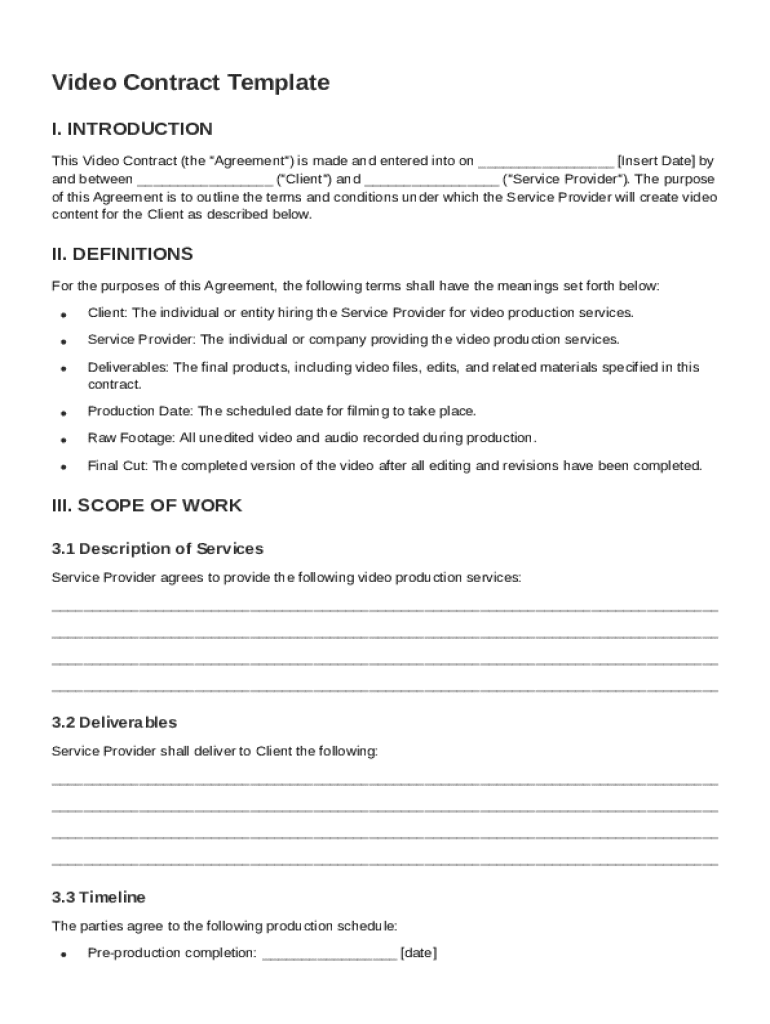







Definition and Meaning of the Video Contract Template
A Video Contract Template serves as a foundational legal agreement between a client and a service provider offering video production services. This document lays out critical aspects such as the scope of work, compensation, and intellectual property rights. Primarily, it helps ensure that both parties have a clear understanding of their responsibilities and expectations, preventing misunderstandings in the future. By detailing every aspect of the video creation and delivery process, this contract becomes an essential tool for protecting the interests of both the client and the service provider.
Key Elements of the Video Contract Template
The Video Contract Template encompasses several essential components that ensure comprehensive protection and clarity:
- Scope of Work: Specifies the tasks involved, deadlines, and deliverables for the video project.
- Compensation Details: Outlines payment terms, including total cost, deposit requirements, and payment scheduling.
- Intellectual Property Rights: Clarifies ownership of the produced video content and any licensing agreements.
- Confidentiality Clauses: Protects sensitive information shared during the project.
- Revisions and Feedback: States the number of revisions allowed and how feedback should be communicated.
- Termination Conditions: Lists circumstances under which the contract may be terminated by either party.
Each element ensures that the expectations and obligations of both parties are clearly defined, minimizing potential disputes.
How to Use the Video Contract Template
Using a Video Contract Template is straightforward but requires attention to detail to ensure all necessary information is accurately filled out:
- Review and Customize: Begin by reviewing the template in its entirety. Customize sections to reflect the specific agreements between you and the client or service provider.
- Add Detailed Descriptions: Ensure that the scope of work section contains precise details about the tasks involved, including timelines and deliverables.
- Include Legal Provisions: Ensure legal clauses, like indemnification and governing law, align with the jurisdiction relevant to the contract.
- Signature Section: Finalize by collecting signatures of all parties involved, making the contract legally binding.
This approach will help ensure the template serves its purpose and offers legal protection.
Important Terms Related to the Video Contract Template
Several important terms are commonly referenced in the Video Contract Template that users should understand:
- Client: The individual or entity commissioning the video production services.
- Service Provider: The individual or company providing the video creation services.
- Liability: Refers to the service provider's legal responsibility for damages or losses incurred.
- Deliverables: The final video product agreed upon in the contract terms.
- Force Majeure: Events outside the control of any party that could impede the completion of the project.
Grasping these terms is critical for both parties to interpret the contract accurately and comply with its provisions.
Steps to Complete the Video Contract Template
Creating a thorough and legally sound Video Contract Template requires careful completion, focusing on detailed and precise language:
- Gather Information: Collect all necessary details regarding the project, parties involved, and timelines.
- Customization: Adjust the template sections to reflect the specific agreements you've reached, such as changes in scope or additional clauses.
- Add Revisions Clause: Clearly state the number of revisions permitted to prevent scope creep.
- Include Deliverables Schedule: Set realistic deadlines and expectations for the delivery of final video content.
- Review Legal Aspects: Verify that all clauses meet state-specific and federal legal requirements.
- Sign the Document: Ensure all parties sign and date the contract to make it legally enforceable.
These steps allow users to complete and utilize the template effectively for their video production needs.
Legal Use of the Video Contract Template
Utilizing a Video Contract Template involves understanding its legal implications and ensuring compliance with all relevant laws:
- Compliance with ESIGN Act: Electronic signatures must adhere to this act to be considered valid.
- State-Specific Laws: Consideration of local regulations that may influence contract enforceability.
- Confidentiality Agreements: Often included to protect proprietary information.
- Dispute Resolution: Reference procedures for resolving potential conflicts.
Fulfilling these legal requirements is crucial for the contract not only to be effective but also to hold up in a legal context.
State-Specific Rules for the Video Contract Template
Video contract provisions may vary considerably depending on state regulations. Here’s how they might differ:
- Governing Laws: Different states have varying terms concerning intellectual property and video production rights.
- Title and Commercial License Restrictions: Some states require specific licenses for video content used commercially.
- Dispute Mechanisms: Variations in how disputes are mediated or arbitrated state by state.
Understanding these differences ensures that the template is tailored correctly and meets legal requirements in the specific location where the contract is to be executed.
Examples of Using the Video Contract Template
Real-world scenarios where a Video Contract Template plays a critical role include:
- Corporate Marketing Videos: Companies outlining the scope of a promotional video project.
- Documentary Productions: Defining the rights and responsibilities when collaborating with filmmakers.
- Freelance Videographers: Ensuring payments and deliverables with a contract for clients seeking wedding videography.
These examples demonstrate the flexibility and importance of a Video Contract Template across various video production contexts, ensuring smooth project execution and clear communication between all stakeholders.




