
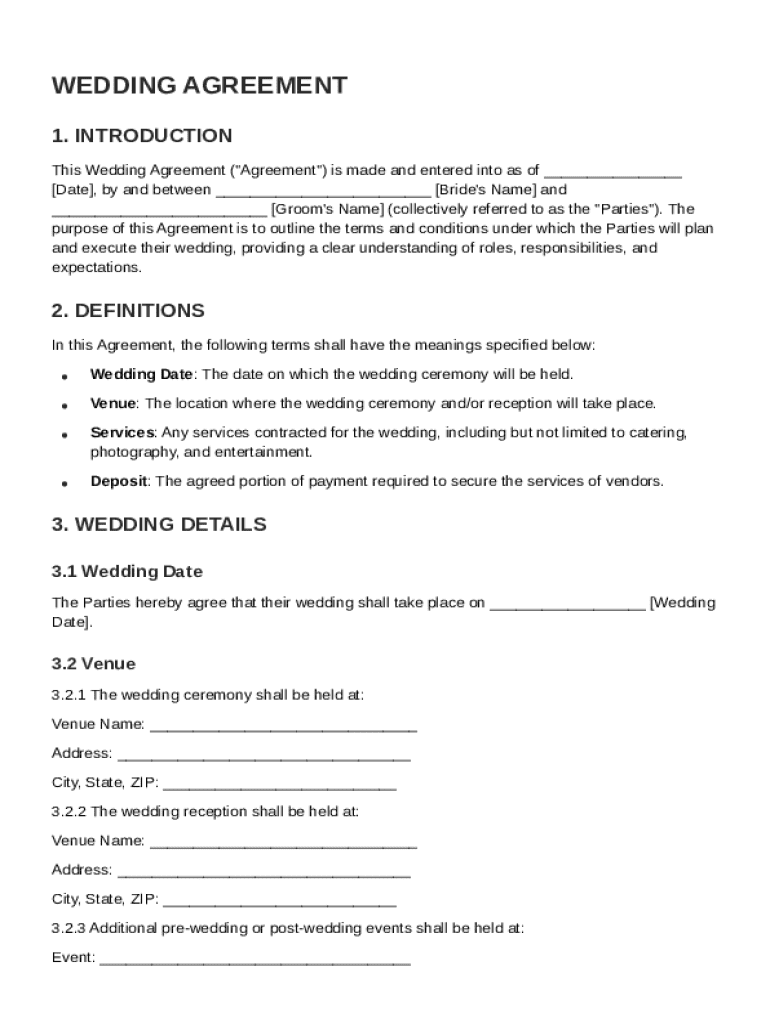







Definition and Purpose of a Wedding Agreement Template
A Wedding Agreement Template serves as a formal contract between the parties involved in a wedding, namely the bride and groom, and often includes vendors and service providers. This document outlines the terms and conditions for planning and executing a wedding, thereby ensuring clarity in expectations and responsibilities. The template typically covers important details such as the wedding date, location, service specifics, budgetary considerations, and ethical guidelines, providing a structured framework to manage all aspects of the wedding. This not only helps in preventing misunderstandings but also serves as an official record that can be referenced as necessary.
How to Use the Wedding Agreement Template
Using a Wedding Agreement Template involves several steps to ensure all necessary arrangements are captured. Begin by customizing the template to fit the specific needs of the wedding. This includes adding precise details such as the wedding date, location, and the names of all involved parties. Next, clearly outline the services to be provided, including the roles and responsibilities of each vendor. It is essential to delineate financial obligations, specifying who is responsible for each cost and by what date payments are due. Finally, clauses should be included for conflict resolution and amendment procedures, ensuring that all parties understand how changes will be managed.
Steps to Complete the Template
- Customize the Template: Adjust sections to reflect specific details about your wedding.
- Define Responsibilities: Clearly state duties for each party involved.
- Outline Financials: Include payment terms and total costs.
- Add Conditions: Provide terms for modifications and cancellations.
- Review and Sign: Have all parties review the terms before signing.
Key Elements of a Wedding Agreement Template
Each Wedding Agreement Template should comprehensively include certain critical elements to ensure both parties are protected:
- Basic Information: Includes the names of the bride and groom, the date of the event, and the venue details.
- Service Details: Lists all services being contracted, including catering, photography, and floristry.
- Financial Terms: Outlines the budget, payment schedules, deposits, and any refund policies.
- Roles and Responsibilities: Specifies the responsibilities of each party, including the bride and groom, coordinators, and vendors.
- Conflict Resolution: Includes provisions for handling disputes and potential amendments.
- Signatures: Requires the signatures of all parties to legally bind the agreement.
Legal Use and Binding Nature
The Wedding Agreement Template is a legally binding contract once signed by all parties. It provides a formal agreement that is enforceable under United States contract law. One of the key aspects is the ESIGN Act, which ensures that electronic signatures are valid and enforceable. Parties can add digital signatures through platforms like DocHub, ensuring that the agreement is recognized legally. This prevents any potential backlash from services not rendered, thereby offering legal protection in case of any disagreements or breaches of contract.
Who Typically Uses the Wedding Agreement Template
Different parties typically utilize a Wedding Agreement Template during the course of wedding planning:
- Couples: To formalize their expectations and responsibilities.
- Wedding Planners: To ensure all details are covered and responsibilities understood.
- Vendors and Service Providers: To clarify the terms of the services being provided and related compensation.


Examples of Use
- A couple uses the template to set expectations with vendors.
- A wedding planner coordinates multiple vendors, ensuring each is aware of their deliverables.
- A florist signs the agreement, acknowledging their role and payment structure.
Important Terms and Clauses
The Wedding Agreement Template incorporates various terms and clauses to cover all possible scenarios and responsibilities:
- Change of Date Clause: Outlines how changes to the wedding date are handled.
- Payment Terms: Clearly defined payment schedule and accepted payment methods.
- Cancellation Policy: Details any fees or penalties for cancellation by either party.
- Force Majeure Clause: Addresses how unforeseen events (e.g., natural disasters) are handled.
State-Specific Rules and Considerations
While wedding agreements are often standard, various states within the U.S. might have specific regulations or norms governing wedding contracts. For instance, certain states may have unique stipulations regarding deposit handling or cancellation policies. Couples and vendors should be mindful of these differences and may need to consult legal advice to ensure compliance. Using DocHub, you can adjust clauses as needed to align with state laws, further streamlining your workflow and ensuring all stipulations are met before proceeding with wedding arrangements.




