




01. Edit your form online
Type text, add images, blackout confidential details, add comments, highlights and more.

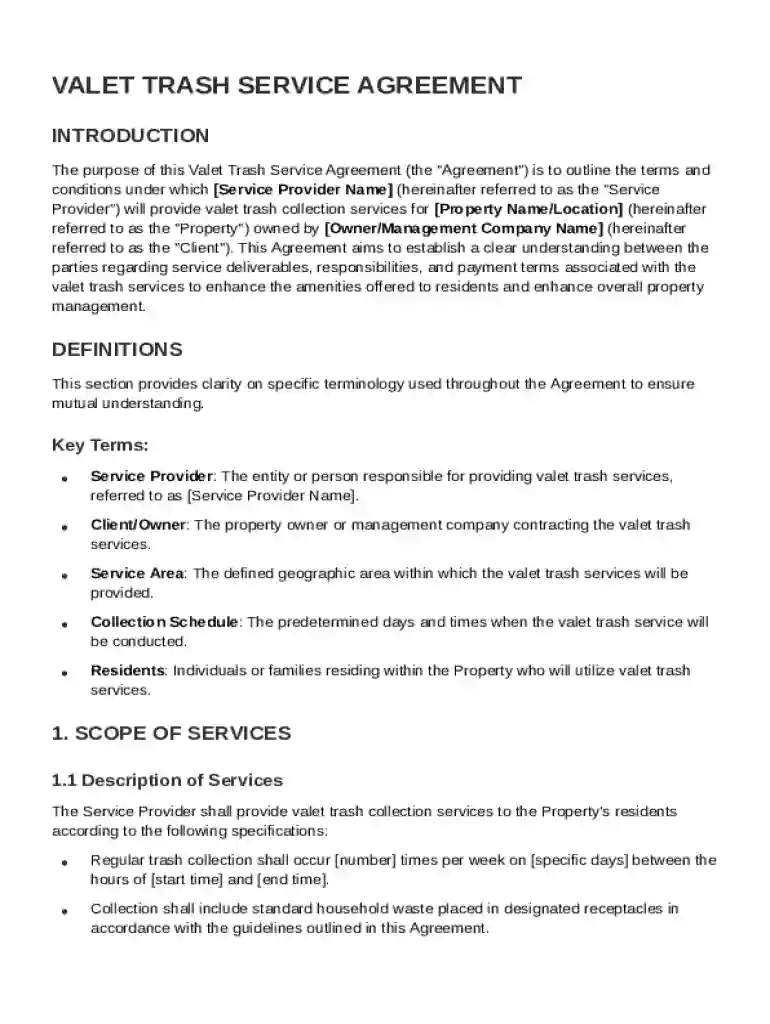
Type text, add images, blackout confidential details, add comments, highlights and more.

Draw your signature, type it, upload its image, or use your mobile device as a signature pad.

Send it via email, link, or fax. You can also download it, export it or print it out.
The Valet Trash Contract Template serves as a formal agreement between a property owner or management company and a valet trash service provider. This document outlines the specific terms under which trash collection services will be rendered. The template generally covers details like the scope of services, the responsibilities of each party, and the timelines for service delivery. By defining these parameters, the template helps ensure both parties have a mutual understanding of their obligations and expectations. Importantly, it aims to provide a framework for enhancing resident satisfaction through the efficient handling of waste disposal.
To effectively use the Valet Trash Contract Template, follow a structured approach to customization and execution:
Review and Understand: Start by thoroughly reading the template to grasp all included terms, conditions, and clauses.
Customize for Specific Needs: Tailor the template to reflect specific service requirements, such as pick-up frequency, designated collection points, and payment structures. This can involve modifying sections to suit the particular nuances of your property or service provider agreement.
Include Parties' Details: Input the names, addresses, and contact information of the property management and service provider. This is crucial for legal clarity.
Specify Terms: Clearly outline the time frame for the agreement, including the starting date and renewal or termination conditions.
Legal Review: Before finalizing, have a legal professional review the template to ensure compliance with local laws and regulations.
Sign and Store: Once both parties agree to the terms, sign the document electronically or in person and store it securely for future reference.
Completing the Valet Trash Contract Template involves a step-by-step process to ensure all necessary details are covered:
Gather Information: Collect all pertinent details about the property management company and the valet trash service provider.
Input Essential Data: Fill in the template with key data points such as service dates, scope of services, and payment terms.
Add Specific Provisions: Include any special terms that may apply, such as penalties for service lapses or incentives for outstanding service performance.
Assign Responsibilities: Clearly delineate responsibilities for both parties, ensuring each party understands their commitments.
Finalize and Share: Once the template is completed and reviewed, finalize the contract by securing any necessary signatures. Distribute a copy to each party involved.
Maintain Document Security: Use secure platforms like DocHub to store the final document, taking advantage of encryption features to protect sensitive information.
A Valet Trash Contract Template typically contains several critical elements to ensure comprehensive coverage:
The legal use of this template is rooted in its ability to formalize the terms of service between a property management entity and a trash collection provider. It serves several vital purposes:
While the basic structure of a valet trash contract remains consistent, state-specific rules may necessitate certain modifications. These variations can include differences in:
Valet trash contract templates find application across various scenarios:
In each example, the contract acts as a binding document to balance needs and expectations between service providers and property managers.
Utilizing digital tools like DocHub enhances the efficiency and security of managing your valet trash contracts. This platform ensures compatibility with:
The capacity to manage these contracts digitally not only saves time but also enhances communication and record-keeping efficiency for all parties involved.
At DocHub, your data security is our priority. We follow HIPAA, SOC2, GDPR, and other standards, so you can work on your documents with confidence.


The contract must be in English and the domestic workers preferred language. ☐ Take out trash and recycling. ☐ Shop for groceries. ☐ Run errands.
Aug 19, 2022 Suppliers have two options in reporting Tier 2 dollars depending on the terms on the contract: Direct and Indirect. Definitions and further


