




Definition and Meaning of a Software Lease Agreement Template
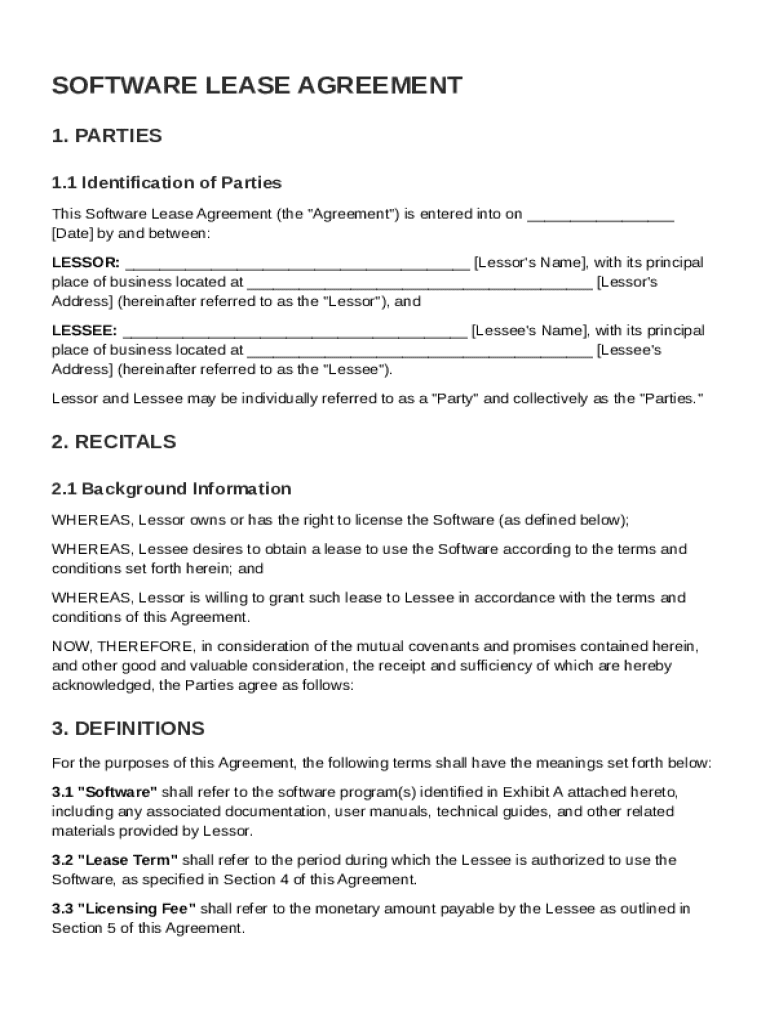
A Software Lease Agreement Template serves as a predefined document format that outlines the critical terms under which a software license is granted to a user, referred to as the Lessee, by the software owner, referred to as the Lessor. It specifies the conditions for the usage of the software, including the defined lease term. This agreement is legally binding and generally covers detailed aspects such as the scope of the license, payment terms, and responsibilities of the parties involved.
Key Features of the Template
- Licensing Period: Specifies the time duration for which the lease is valid.
- Parties Involved: Clearly identifies the Lessor and the Lessee.
- Licensing Fees: Details the financial obligations of the Lessee.
- Permissions: Describes the non-exclusive, non-transferable rights of usage.
- Renewal Terms: Includes conditions under which the agreement may be renewed.
How to Use the Software Lease Agreement Template
To effectively utilize a Software Lease Agreement Template, follow these steps to ensure the document accurately reflects the understanding between the Lessor and Lessee:
- Review the Template: Familiarize yourself with the general structure and included sections.
- Customize the Fields: Adapt the document to the specific software and parties involved by filling in custom details, like the lessee's name and lease start and end dates.
- Insert Specific Terms: Ensure any additional terms, like maintenance obligations or confidentiality clauses, are distinctly mentioned.
- Review Legal Language: It's advisable to consult with legal counsel to verify the legality of terms.
Practical Examples
- Software Development Companies: Often use this template to issue temporary licenses to clients for trial purposes.
- Educational Institutions: May use it when offering software solutions to students or staff for specific periods.
Key Elements of the Software Lease Agreement Template
The Software Lease Agreement Template consists of several major elements that protect both the Lessor and Lessee, ensuring a fair and clear agreement. These sections include:
- Licensing Scope: Details what the software can be used for and any limitations on its usage.
- Support and Maintenance: Outlines what kind of support is included, and how maintenance is scheduled.
- Confidentiality Clause: Imposes obligations to protect sensitive information accessed through the software.
- Termination Conditions: Defines scenarios under which the contract may be terminated prematurely.
Detailed Breakdown
- Licensing Fees: May include one-time payments and recurring charges.
- Governing Law: Specifies the jurisdiction under which any disputes will be resolved.
Legal Use of the Software Lease Agreement Template
The Software Lease Agreement Template is a critical reference document that ensures compliance with legal standards and expectations in the software industry. Proper utilization of this template provides a legally binding framework that underpins the following:
Compliance and Protection
- ESIGN Act Compliance: Ensures electronic signatures used in agreements are legally recognized.
- Dispute Resolution Procedures: Clearly outlines procedures to follow in case of disagreements between parties.
State-specific Rules for the Software Lease Agreement Template
While software lease agreements are generally standardized, certain states in the U.S. may have specific laws influencing these contracts. It is important to consider:
- Different Jurisdictions: Licensing terms might be subject to local state laws.
- Governing Laws: Ensure the template reflects applicable state regulations, especially for compliance with consumer protection laws.
State Variations
- California: May have specific data protection and privacy laws affecting software agreements.
- New York: Often requires explicit terms concerning automatic renewals.
Who Typically Uses the Software Lease Agreement Template
The Software Lease Agreement Template is a versatile tool used across various industries and organizations:
- Software Vendors: Use it to license applications or platforms to customers.
- Educational Institutions: Employ it when providing software access to faculty and students.
- Corporate Enterprises: Utilize it for temporary software solutions during project durations.

End Users
- Small to Medium Enterprises (SMEs): Often engage in short-term leasing for cost-effective solutions.
- Freelancers and Contractors: May lease specific tools required for project execution.
Steps to Complete the Software Lease Agreement Template
Completing a Software Lease Agreement Template involves detailed customization and ensuring full agreement between parties. The completion process should include:
- Identify Parties: Clearly list the Lessor and Lessee with contact information.
- Define Software and Services: Accurately describe the software being leased.
- Outline Financial Terms: Specify payment schedules and amounts.
- Set Usage and Restrictions: Detail permissible and prohibited uses.
- Finalize and Execute the Agreement: Ensure all parties read, agree, and sign the document. Utilize electronic signatures for convenience and compliance with the ESIGN Act.
Comprehensive Approach
- Double-Check Details: Verify all entered data for accuracy.
- Store Securely: Maintain records of the signed agreement for future reference.
Important Terms Related to Software Lease Agreement Template
Understanding key terms associated with software lease agreements enhances comprehension and proper usage:
- Lessee: The user or entity leasing the software.
- Lessor: The owner or entity providing access to the software.
- Lease Term: The duration for which the software can be used.
- Non-exclusive License: Allows the software owner to lease the software to multiple users.
- Confidentiality: Obligations to protect any disclosed sensitive information.
Understanding Terminology
- Software Maintenance: Refers to ongoing updates and support services to ensure software functionality.
- Termination Clauses: Define the terms and conditions under which the agreement may be voided.