
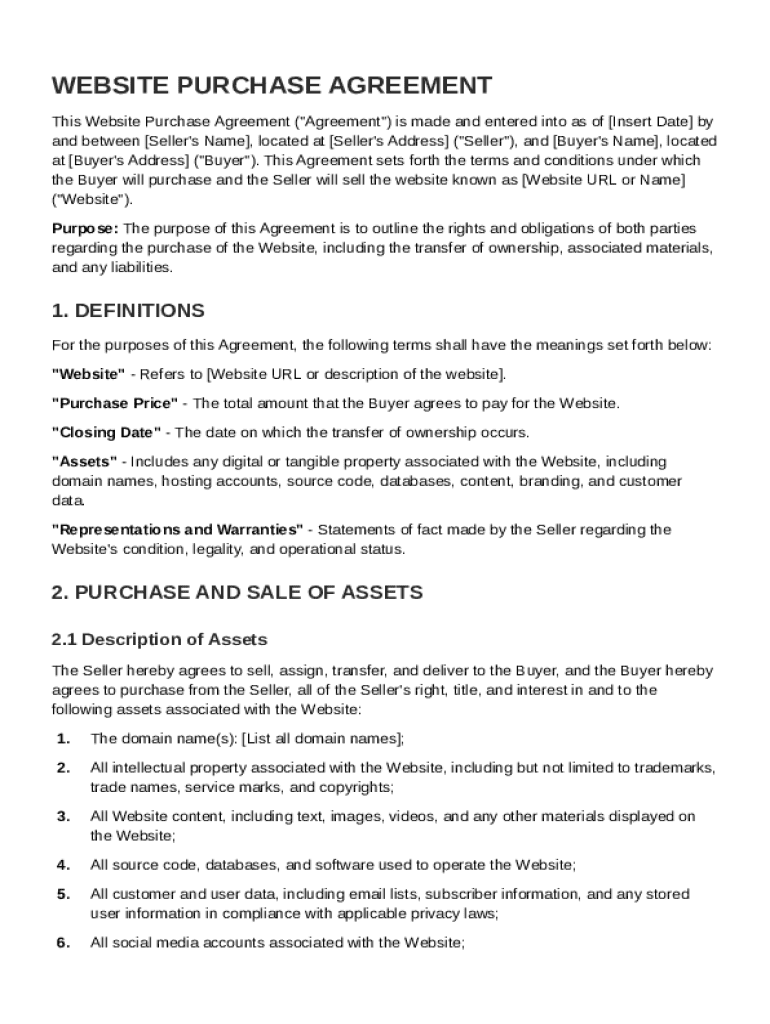







Definition & Meaning
A Website Purchase Agreement Template is a legally binding document that outlines the terms and conditions for the sale of a website from a Seller to a Buyer. It specifies the assets included in the sale, financial arrangements, and critical procedures such as closing and representations. This template helps establish the rights and obligations of each party, ensuring a smooth transition of ownership and defining responsibilities related to liabilities and indemnification. Typically, the agreement involves specifying governing law and detailing how amendments can be made, making it an essential component in website transactions.
How to use the Website Purchase Agreement Template
Using a Website Purchase Agreement Template involves several key steps. First, customize the template to include the specific details of the transaction, such as the names of the parties involved, purchase price, and payment terms. Next, ensure that all assets, like domain names, content, and customer databases, are clearly listed. Pay careful attention to clauses covering representations and warranties, as they protect both parties from future disputes. Before finalizing the agreement, review each section to ensure it aligns with your transaction's specifics and legal requirements. Finally, both parties should sign the document, committing to the terms outlined.
- Insert buyer and seller details, including contact information.
- Specify the website's assets included in the agreement, such as the domain and intellectual property.
- Define payment methods and any installment plans or conditions.
- Incorporate a section for representations and warranties from both parties.
Key Elements of the Website Purchase Agreement Template
A comprehensive Website Purchase Agreement Template should contain several crucial elements to protect all involved parties. These include:
- Assets and Liabilities: Clearly define what is being transferred, including tangible and intangible assets.
- Purchase Price and Payment Terms: Detail how the price will be paid, including any upfront payments, escrow arrangements, and schedules.
- Closing Process: Lay out the procedures for finalizing the sale, covering transfer of control and any conditions that must be met before closing.
- Representations and Warranties: Include statements from both parties regarding the truthfulness of the information provided, safeguarding against future disputes.
- Indemnification Clauses: Define who is responsible for specific liabilities after the transfer.
- Governing Law and Dispute Resolution: Specify which state laws govern the agreement and how disputes will be resolved.
Important Terms Related to Website Purchase Agreement Template
Understanding key terms in a Website Purchase Agreement Template is essential for navigating the document effectively. Some of these terms include:
- Assets: Refers to all components being transferred, such as intellectual property, domain names, and customer lists.
- Indemnification: A commitment to financially protect the other party from certain risks or liabilities following the sale.
- Representations and Warranties: Assurances made by both parties regarding the truthfulness and accuracy of their disclosures.
- Governing Law: Specifies the state or jurisdiction's laws that will oversee the agreement.
- Escrow: A third-party service that holds funds until the completion of a transaction to ensure security.
Steps to Complete the Website Purchase Agreement Template
Completing a Website Purchase Agreement Template involves a series of detailed steps. Here's a breakdown:
- Initial Agreement: Confirm the interest of both parties in proceeding with the purchase.
- Template Customization: Modify the template to address specific transaction details, such as unique asset lists and payment terms.
- Review: Both parties should review the contract thoroughly, ensuring all necessary clauses and conditions are included.
- Negotiation: If necessary, negotiate terms until both parties agree.
- Legal Consultation: Consider consulting a legal professional to ensure compliance with applicable laws and regulations.
- Signing and Execution: Once all details are finalized, both parties sign the agreement, making it legally binding.
Legal Use of the Website Purchase Agreement Template
Employing a Website Purchase Agreement Template legally requires adherence to certain protocols:
- Accurate Representation: Ensure that all information presented is accurate and truthful to avoid legal disputes.
- Compliance with Governing Law: The agreement must comply with the laws of the state or jurisdiction specified in the governing law section.
- Signatures: Both parties must sign the agreement for it to be legally valid.
- Consideration Clause: Clearly define the consideration (payment or other compensation) being exchanged for the website.
State-Specific Rules for the Website Purchase Agreement Template
When using a Website Purchase Agreement Template, it's crucial to be aware of state-specific regulations that may impact the agreement:
- Governing Law: Every state can have different laws that affect the enforceability of certain contract terms.
- Tax Implications: States may have unique tax requirements on the sale of digital assets that need addressing.
- Registration and Licensing: Some states require registration or specific licenses for certain types of web-based businesses.
Examples of Using the Website Purchase Agreement Template
There are several scenarios where a Website Purchase Agreement Template can be utilized:
- Startup Acquisition: A company purchasing a startup's website to gain its technology, content, or customer base.
- Domain Portfolio Sale: An individual or business selling a portfolio of websites to another entrepreneur or company.
- Brand Expansion: A business acquiring a website to broaden its brand's online presence or enter a new market segment.
In these cases, using a structured agreement template provides clarity and legal protection for both the buyer and the seller.




