






Definition & Meaning
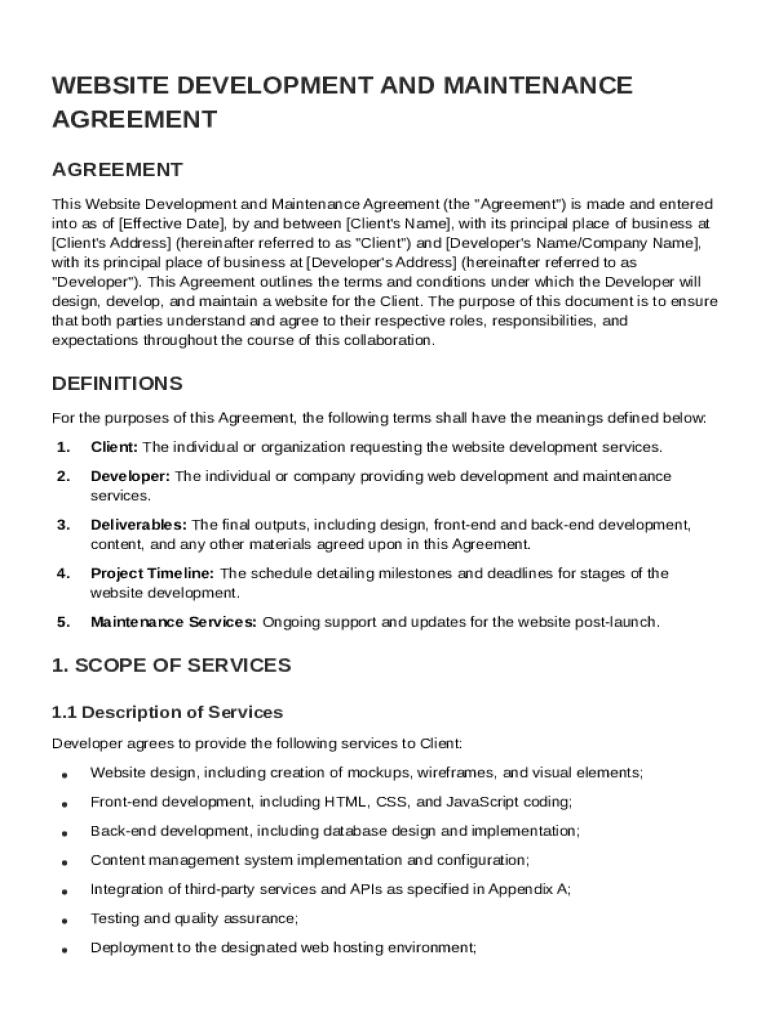
A Website Agreement Template is a structured document outlining the terms and conditions agreed upon by a client and a developer. This agreement serves as a legal contract that specifies the responsibilities involved in designing, developing, and maintaining a website. It encompasses various aspects such as project scope, payment terms, confidentiality obligations, and termination conditions. This template assists both parties in understanding their roles, reducing misunderstandings, and ensuring a clear path to successful project completion.
The agreement acts as a safeguard for both the client and developer, protecting their interests and setting out the groundwork for productive collaboration. In this way, it combines practical guidelines with legal stipulations to ensure both functionality and compliance.
Key Elements of the Website Agreement Template
The Website Agreement Template typically includes several critical components that facilitate smooth collaboration between the parties involved. Understanding these elements helps in crafting a detailed and effective agreement:
-
Scope of Services: Clearly defines the services to be provided, including design, development, and maintenance tasks. It outlines deliverables and timelines, ensuring both parties are aligned on expectations.
-
Payment Terms: Specifies the payment structure, including rates, payment schedules, and any upfront fees. This section also covers how additional expenses, if any, will be handled.
-
Milestones: Establishes key project benchmarks that trigger reviews or payments, helping both parties track progress efficiently.
-
Intellectual Property Rights: Details who owns the code, design, and content created during the project. It ensures that both parties understand their rights concerning usage and ownership of developed assets.
-
Confidentiality Obligations: Enforces the need to keep sensitive information shared between the parties confidential. This clause protects trade secrets and proprietary information.
-
Termination Conditions: Outlines the process for terminating the agreement should it become necessary, including notice periods and any penalties or obligations following termination.
-
Warranties and Indemnities: Provides assurances on the quality of work and protection against breaches or failures resulting from the agreement.
Steps to Complete the Website Agreement Template
Creating a comprehensive Website Agreement using the template involves several steps to ensure completeness and clarity:
-
Identify Parties: Clearly state the identities of the client and developer, including business names and representative contacts.
-
Define Project Scope: Fill in details regarding the services to be provided, including deliverables and deadlines.
-
Agree on Payment Terms: Specify the payment structure and any conditions for additional expenses, clear to both parties.
-
Set Milestones: Insert agreed-upon project milestones with dates and deliverables.
-
Clarify Intellectual Property Rights: Clearly state who holds ownership of the developed content upon project completion.
-
Establish Confidentiality Requirements: Enter details requiring the protection of sensitive information shared between the client and developer.
-
Detail Termination Settings: Specify conditions under which the agreement may be terminated.
-
Review and Sign: Ensure both parties review the document thoroughly, addressing any ambiguities before signing.
Legal Use of the Website Agreement Template
Utilizing a Website Agreement Template ensures both parties adhere to legal standards, particularly within the U.S. context. The agreement provides a legally binding framework once signed, which means both the client and developer can rely on legal recourse if terms are not honored.
Key legal components include:
-
Compliance with U.S. Laws: Ensures all contractual arrangements adhere to federal and state laws, safeguarding the parties from legal disputes.
-
Dispute Resolution Processes: Defines the procedures for handling disagreements, often specifying mediation or arbitration as preferred methods to avoid court interventions.
-
Indemnification Clauses: Protects parties from potential legal claims arising out of project activities, allocating responsibilities for liabilities.
Understanding these components aids in constructing a robust agreement that minimizes potential legal disputes and clarifies the rights and responsibilities of all parties involved.
Important Terms Related to Website Agreement Template
It's vital to comprehend the specific terms associated with a Website Agreement Template, as these ensure both parties are on the same legal and operational page:
- Client: The party commissioning the web development services.
- Developer: The individual or company providing the development services.
- Deliverables: Tangible outcomes agreed upon within the project scope.
- Confidential Information: Data that must remain private, as sharing could result in competitive and legal disadvantages.
- Breach of Contract: Failure to perform according to the agreement’s terms, potentially leading to legal consequences.
Recognizing these terms aids in effective communication and prevents misinterpretations during the project lifecycle.
Examples of Using the Website Agreement Template
Real-world scenarios highlight the practical application of a Website Agreement Template:
-
Small Business Website Development: A local store needing an online presence would use the template to engage a freelancer for web design, detailing the design requirements and payment schedule clearly within the agreement.
-
E-commerce Platform Development: An enterprise might include specific functionality requirements, such as shopping cart integration and user authentication, ensuring these are explicitly documented in the contract to avoid scope creep.
-
Non-Profit Organization Site Overhaul: A charitable entity may specify timelines and confidentiality in handling sensitive donor information, forming a critical component of the agreement terms.
These examples illustrate the diverse applications of the template across different industries and scenarios, ensuring tailor-made solutions for specific needs.
State-Specific Rules for the Website Agreement Template
When drafting a Website Agreement in the United States, be mindful of state-specific regulations influencing the template:
-
Governing Law Clause: Specify the state's laws that will govern and interpret the agreement, as this affects dispute resolution procedures.
-
State-specific Requirements: Each state may have unique rules regarding service contracts, including registration requirements for certain professional services.
-
Tax Implications: Understand state-specific tax obligations for contracting services, ensuring compliance with local tax codes.
By incorporating these considerations, the agreement becomes not only legally robust but also regionally compliant, reducing the risk of state-level legal issues.
Software Compatibility and Integration
The adaptability of your Website Agreement Template with various software platforms is crucial for digital project management:
-
Document Management: Platforms like DocHub facilitate editing, signing, and sharing, compatible with formats beyond PDF, such as DOC, XLS, and TXT. These capabilities enable seamless access and integration with tools your team regularly utilizes.
-
Synchronization with Cloud Storage: Support for services like Google Drive allows convenient importing and saving of documents, streamlining workflow processes without extra software installations.
-
Collaboration Tools: Ensure your agreement can be easily shared and jointly edited with tools that support team collaboration, ensuring real-time updates and comments from all stakeholders.
This compatibility ensures that the template remains as efficient and practical in execution as it is in design, allowing for quick adaptability within your team's existing tech stack.