




Definition & Meaning
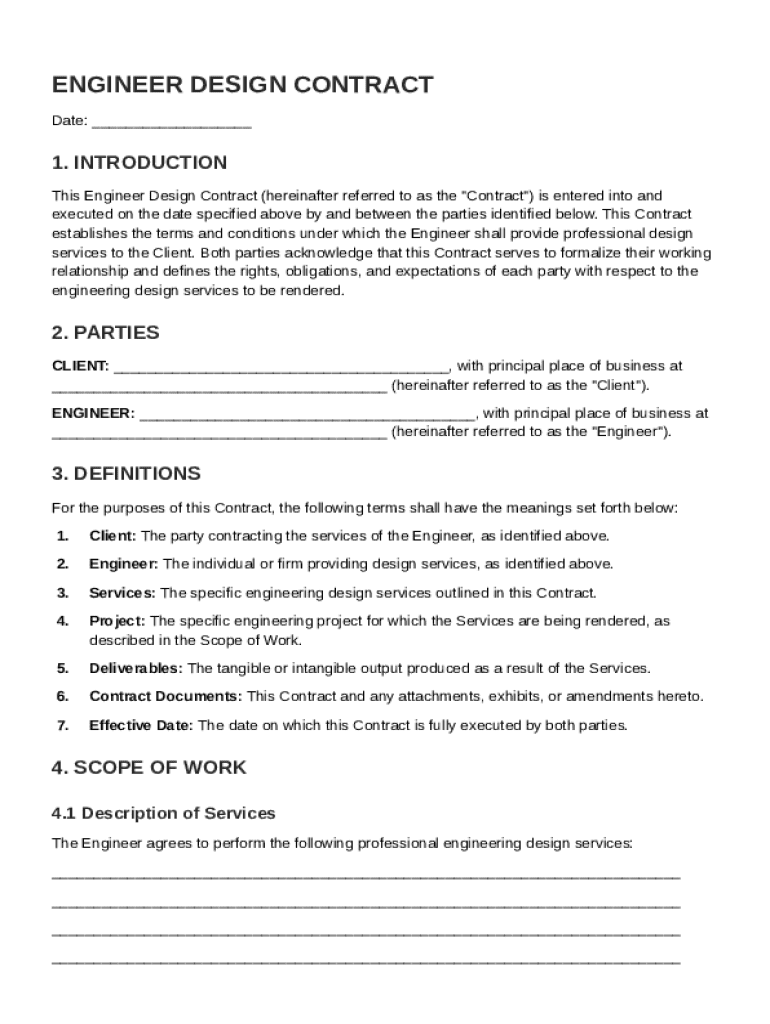
An Engineer Design Contract Template provides a structured outline for agreements between engineers and clients regarding design services. This template standardizes various terms and conditions, ensuring that expectations are clearly defined for both parties. Core aspects typically include the scope of work, payment terms, responsibilities, project timelines, and deliverables. Using a template allows for consistency in contracts by providing predefined clauses that can be modified as required for specific projects. This helps in reducing misunderstandings and facilitates a smoother working relationship.
Key Elements of the Engineer Design Contract Template
The template contains several critical sections that ensure a comprehensive agreement:
- Scope of Work: Detailed description of the design services to be provided.
- Responsibilities: Clear delineation of both parties' obligations.
- Compensation Structure: Payment terms, including rates and payment schedules.
- Intellectual Property: Ownership rights and usage terms for the work products.
- Confidentiality: Provisions for protecting proprietary information.
- Liability and Indemnity: Conditions under which each party is protected from legal claims.
- Termination Conditions: Terms for ending the contract before completion.
- Dispute Resolution: Procedures for resolving conflicts related to the contract.
Steps to Complete the Engineer Design Contract Template
Filling out the contract template involves several steps to ensure completeness and accuracy:
- Review the Template: Read through the entire document to understand the framework and standard clauses.
- Customize the Scope of Work: Clearly outline the engineering tasks to be performed, providing as much detail as necessary.
- Specify Compensation: Fill in the agreed-upon rates, payment schedule, and any conditions for payment.
- Define Responsibilities: List the obligations and duties of both the engineer and the client.
- Set Milestones and Deadlines: Include project timelines and deliverable checkpoints.
- Review Legal Terms: Adjust any legal clauses to align with the specific needs of the project and applicable laws.
- Add Signatures: Ensure all parties sign and date the document to formalize the agreement.
How to Use the Engineer Design Contract Template
This template serves as a practical tool for formalizing engineering service agreements:
- Select Relevant Clauses: Begin with the template’s framework and delete or modify sections that do not apply.
- Consult Legal Professionals: Seek advice from legal experts to ensure the contract meets industry standards and legal requirements.
- Incorporate Project Details: Tailor the document with specific details pertinent to the project and client requirements.
- Utilize Custom Fields: The template may feature fields to input specific data directly, maintaining consistency across documents.
Who Typically Uses the Engineer Design Contract Template
This template is primarily utilized by professionals and entities in the engineering sector:
- Engineering Firms: Use it to standardize contracts for recurring design services.
- Independent Engineers: Freelancers and consultants can formalize agreements with clients.
- Clients and Businesses: Companies engaging engineering services can ensure comprehensive coverage of expectations and deliverables.
- Legal Teams: They often review and refine these templates to ensure compliance with legal obligations and industry practices.

Important Terms Related to Engineer Design Contract Template
Familiarity with these terms enhances understanding and effective usage of the template:
- Force Majeure: Clauses that relieve parties from obligations due to unforeseeable events.
- Non-disclosure Agreement: Ensures confidential information is not shared with unauthorized parties.
- Deliverables: End products or outcomes to be provided by the engineer.
- Authorization: Permission granted for specific tasks or access to proprietary data.
State-Specific Rules for the Engineer Design Contract Template
While this template provides a general framework, state-specific laws may dictate certain adaptations:
- Licensing Requirements: Some states require engineers to hold specific licenses or certifications.
- Contractor Registration: Check if state laws mandate engineer registration as contractors.
- Insurance Obligations: Policies for liability insurance may differ across states.
- Construction and Zoning Laws: Regulations affecting how and where design projects can proceed vary state by state.
Legal Use of the Engineer Design Contract Template
The template should be utilized in compliance with applicable laws to ensure enforceability:
- Adherence to the ESIGN Act: Electronic signatures used within the template must comply with the ESIGN Act to be legally binding.
- Inclusion of Required Disclosures: Ensure all required legal disclosures are present and understandable.
- Compliance With Professional Standards: Confirm that all work outlined adheres to industry standards and regulations.
- Termination and Breach Clauses: Clearly state conditions and repercussions for contract termination or breaches.