
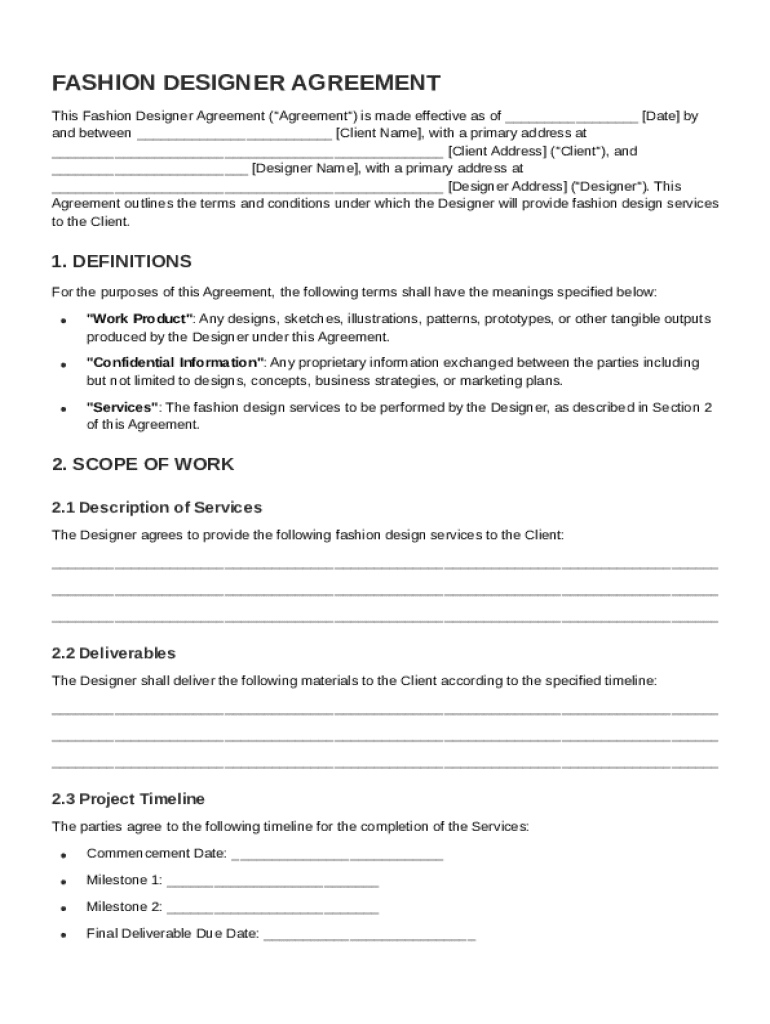







Definition and Meaning
A Fashion Designer Agreement Template serves as a formal contract governing the relationship between a fashion designer and their client. This legally binding document outlines the terms and conditions of their collaboration, ensuring mutual understanding and protection. Key components include defining essential terms such as "Client" and "Designer," providing a clear scope of work including specific fashion design services to be delivered, enumerating payment terms, and detailing confidentiality clauses. By specifying these elements, the agreement effectively protects both parties from potential disputes and misunderstandings.
Examples of Usage
Real-world scenarios in which this template might be utilized include collaborations where a designer is commissioned to create a clothing line for a retail brand or when a freelance designer offers bespoke services to an individual client for events like weddings or fashion shows. These situations demand clear outlines of expectations to ensure the designer's originality and effort are safeguarded while the client receives the promised deliverables.
Key Elements of the Fashion Designer Agreement Template
Comprehensive details in the Fashion Designer Agreement Template ensure a thorough understanding of responsibilities and rights:
- Scope of Work: An in-depth description of the design services to be provided, including timelines, deliverables, and any particular methods employed.
- Payment Terms: Clarity on fees, payment schedules, and conditions for additional costs.
- Ownership Rights: Provision detailing who holds rights to the final designs, including any transfer of intellectual property rights.
- Confidentiality Obligations: Stipulations about the treatment of sensitive information shared between parties during the contract period.
- Representations and Warranties: Statements assuring the capabilities and authenticity of the designer's work.
- Termination Rights: Conditions under which the agreement can be prematurely ended by either party.
- Dispute Resolution Processes: Outlines mediation or arbitration methods should disagreements arise.
Edge Cases and Variability
Depending on the scope of services and the size of the client, contracts may vary significantly. For instance, independent designers might have more flexible terms, whereas larger entities or celebrity collaborations may insist on stringent clauses to protect brand identity and originality.
How to Use the Fashion Designer Agreement Template
For effective utilization of the template:
- Customization: Adapt the template by filling in the necessary information like the names of the parties, scope of work, and specific terms agreed upon.
- Review and Amend: Both parties should review the document in detail, noting any amendments or additional clauses needed to suit the specific project.
- Expert Review: Consider legal advice to ensure compliance with current laws and regulations.
- Finalization: Once both parties agree to the terms, each should sign and retain a copy of the agreement for their records.
Practical Steps
- Utilize software to edit and manage the template, allowing for efficient revisions.
- Ensure that all verbal agreements are captured in written form within the template to prevent future discrepancies.
Legal Use of the Fashion Designer Agreement Template
The Fashion Designer Agreement Template serves as a legal instrument to establish a formal relationship between involved parties. This legally binding document can be enforceable in court, should disputes arise, by adhering to the following standards:
- Ensure that all parties involved have reached a mutual agreement over the documented terms.
- Include all necessary signatures to validate the document legally.
- Confirm that the contract adheres to state and federal laws relevant to contract agreements.
Exceptions and Special Scenarios
In certain states, specific provisions may be needed to address additional legal requirements. For instance, clauses involving intellectual property rights might require extra documentation, depending on the jurisdiction.
Important Terms Related to the Fashion Designer Agreement Template
Understanding industry-specific vocabulary is crucial for accurate interpretation and execution of the agreement:
- Intellectual Property (IP): Refers to the rights granted to the designer for their original work.
- Non-Disclosure Agreement (NDA): A contract to protect any confidential information exchanged during the project.
- Force Majeure: A clause freeing both parties from liability due to events beyond their control.
- Escrow Deposit: A payment method ensuring financial accountability and security during the project execution phase.
Further Definitions
Explore terms relating to breach of contract, indemnities, and liabilities that might appear in extended versions of the template, ensuring thorough comprehension of potential legal implications.
Steps to Complete the Fashion Designer Agreement Template
Following structured steps will aid in filling out the template efficiently:
- Input Basic Information: Start by clearly articulating the names and contact information of both the client and the designer.
- Detail Work Scope: Define the services, timeframe, and deliverables expected from the engagement.
- Establish Financial Details: Outline the fee structure, including upfront deposits, installment payments, and consequences of late payments.
- Specify Legal Clauses: Include terms covering confidentiality, IP rights, and termination conditions.
- Final Review and Signing: Once all terms are agreed upon, both parties should sign the document, ideally in the presence of a witness, to establish its binding nature.
State-Specific Rules for the Fashion Designer Agreement Template
The legality and enforceability of the agreement may vary depending on state laws. Customize the template to align with:
- Intellectual Property Laws: Different states may have nuanced IP regulations impacting ownership and usage rights.
- Contract Compliance: Ensure that the contract is compliant with both local contract law and the Uniform Commercial Code, if applicable.
Specific Considerations
For instance, California's laws regarding worker classification could influence the contract terms related to hired designers, distinguishing between independent contractors and employees.
Who Typically Uses the Fashion Designer Agreement Template?
The users of this template generally include a diverse range of individuals and businesses within the fashion industry:
- Independent Fashion Designers: Freelancers offering bespoke services.
- Fashion Houses or Brands: Larger firms outsourcing specific design work.
- Event Planners: Coordinators commissioning designs for particular events.
- Retailers and Boutiques: Businesses partnering with designers to produce exclusive collections.


Benefits to Different User Types
Each user can adapt the template to reflect their unique projects and requirements, ensuring a balanced and detailed agreement that suits their professional style and business needs.




