Definition & Meaning
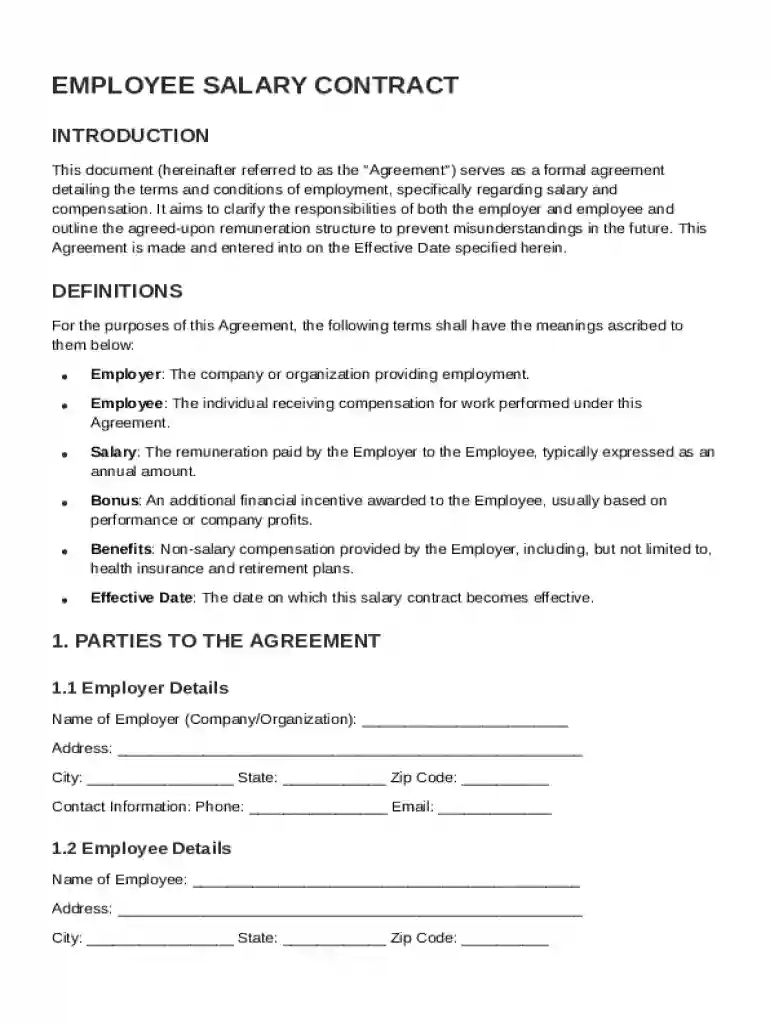
An Employee Salary Contract Template is a standardized legal document that details the terms and conditions of employment between an employer and employee. The focus is on salary, bonuses, benefits, and responsibilities. This template ensures clarity and helps prevent misunderstandings regarding remuneration and employment expectations. It includes sections on job roles, compensation structure, confidentiality obligations, and termination conditions. Understanding this document is crucial for both parties as it forms the basis of employment tenure.
Key Elements Included
- Salary and Compensation: Details on how much the employee will be compensated, including base salary, overtime pay, commissions, or bonuses.
- Employment Terms: Specifies the length of employment, whether it's permanent, temporary, or project-based.
- Job Responsibilities: Clearly outlines the duties and expectations associated with the position.
- Confidentiality Clauses: Protects proprietary information and trade secrets shared during the employment period.
- Termination Conditions: Conditions under which the contract can be terminated by either party, including notice periods and potential severance pay.
How to Use the Employee Salary Contract Template
Using an Employee Salary Contract Template involves customizing it to reflect the specifics of the employment arrangement. This includes modifying sections such as salary, roles, and responsibilities to fit the job offer.
Steps for Customization
- Review the Template: Before customization, thoroughly read through the template to understand the structure and standard language.
- Input Employee Details: Add personal information such as the employee’s name, address, and position.
- Define Salary and Benefits: Specify the salary, including frequency of payments, and detail all benefits provided by the employer.
- Clarify Job Role: Clearly describe the job duties, reporting manager, and performance expectations.
- Adjust Legal Clauses: Depending on jurisdiction, some legal clauses may require amendments to align with local employment laws.
Example Scenario
An HR manager from a tech company can use this template to craft bespoke contracts for new software developers, specifying unique salary packages and remote work benefits.
Steps to Complete the Employee Salary Contract Template
Completing the Employee Salary Contract Template is a straightforward process that ensures all parties have a clear understanding of the employment agreement.
Step-by-Step Procedure
- Gather Required Information: Collect all necessary details about the employee and job role.
- Fill in Contract Fields: Input personal information, salary details, and job responsibilities in the corresponding sections of the template.
- Review and Revise: Ensure that all clauses are relevant and reflect the company’s policies and the employee's agreement.
- Seek Legal Advice: Consult with a legal expert to validate the contract’s compliance with applicable laws.
- Finalize and Sign: After mutual agreement, both parties should sign the contract to make it legally binding.
Who Typically Uses the Employee Salary Contract Template
The Employee Salary Contract Template is widely used by businesses and HR departments across various industries to formalize employment agreements.

Common Users
- Small Business Owners: Who need a straightforward template to manage employment contracts.
- Human Resources Managers: Who are responsible for creating and overseeing employment agreements.
- Corporate Legal Teams: Who customize contracts to adhere to company policy and legal standards.
- Recruitment Agencies: Who draft initial contracts for candidates being placed in different companies.
Key Elements of the Employee Salary Contract Template
Understanding the core components of the Employee Salary Contract Template ensures that the document serves its intended purpose effectively.
Essential Components
- Parties Involved: The template identifies both the employer and the employee.
- Compensation Details: Clearly demarcates all elements of compensation including bonuses and commissions.
- Position Details: Provides a comprehensive description of the job title, duties, and the department.
- Compliance Clauses: Includes necessary compliance clauses as per local employment regulations.
Legal Use of the Employee Salary Contract Template
The legal validity of an Employee Salary Contract Template is crucial to enforce the agreement's terms and protect both parties' interests.
Ensuring Legality
- Compliance with Laws: The template should align with federal and state employment laws to remain legally enforceable.
- Amendments and Modifications: Any changes in the contract post-signature should be documented and agreed upon by both parties.
- Dispute Resolution: Legal sections should stipulate how disputes will be resolved, either through arbitration or court proceedings.
State-Specific Rules for the Employee Salary Contract Template
Employment laws can vary significantly across states, necessitating adjustments in the template for compliance.
State Regulations
- Minimum Wage Laws: Adjust salary sections to comply with state-specific minimum wage requirements.
- Employment-at-Will: In states recognizing employment-at-will, include appropriate clauses that reflect these conditions.
- Leave Entitlements: State-specific mandates on leave, such as sick leave or family medical leave, must be addressed in the contract.
Software Compatibility
Employees and employers often use different software programs to manage and store contract documentation. Ensuring compatibility with these systems can simplify implementation.
Compatible Platforms
- Google Workspace: Direct integration with Google Drive for easy import and export.
- Microsoft Office Suite: Compatibility with Word documents for editing and customization.
- Document Management Systems: Seamless operation with popular systems like DocHub to streamline workflow processes.