






Definition & Meaning
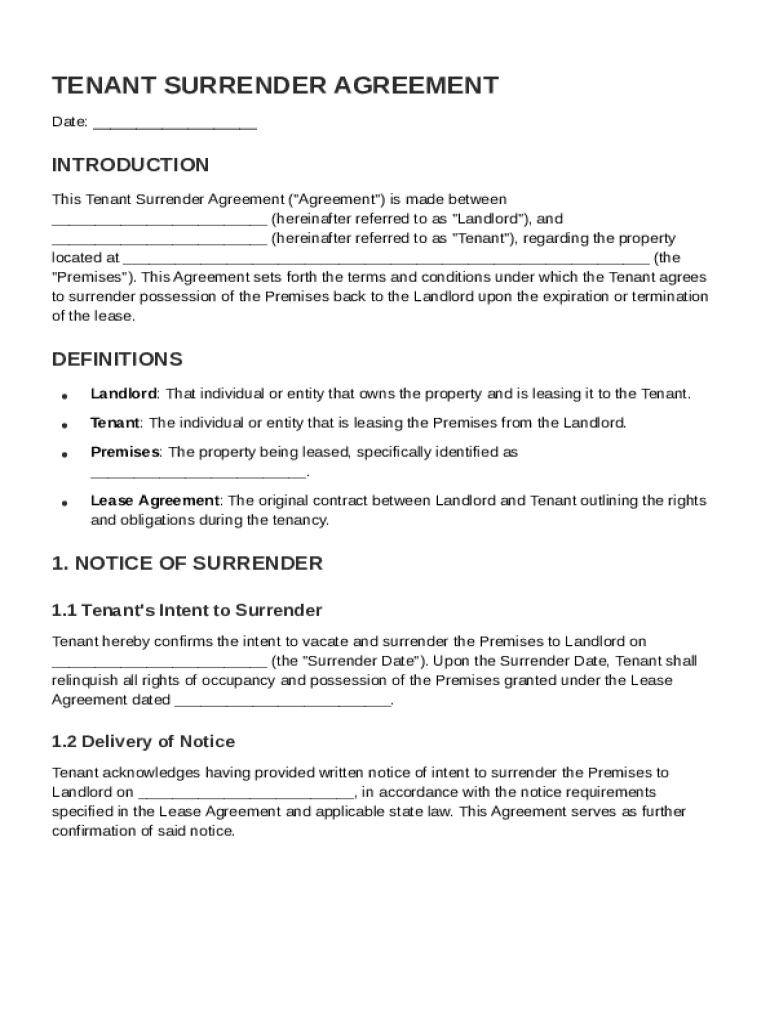
A Tenant Surrender Agreement Template is a legal document used to outline the conditions under which a tenant agrees to return possession of a leased property to the landlord. This typically occurs upon the expiration or termination of the lease. The agreement formalizes the tenant's intention to vacate the premises and is essential for protecting the rights and responsibilities of both parties involved. It encompasses various provisions such as notices of surrender, conditions of the premises, return of security deposits, and potential release of claims. The template ensures that all aspects related to the property’s handover are documented, minimizing potential disputes.
Key Elements of the Tenant Surrender Agreement Template
The structure of the Tenant Surrender Agreement Template is comprehensive, covering several critical aspects:
- Notice of Surrender: Specifies the tenant's formal notification of their intent to vacate the property.
- Condition of the Premises: Details the expected condition in which the property should be returned, including cleanliness and repairs.
- Security Deposit: Outlines procedures for returning the security deposit, and deductions if necessary.
- Release of Claims: Provides for the mutual release of claims, preventing future disagreements unless stipulated in the document.
- Governing Law: Identifies the jurisdiction's laws under which the agreement is enforceable.
- Amendments: Describes how changes to the agreement should be made, ensuring they are documented and agreed upon by both parties.
Each section is tailored to safeguard both tenant and landlord interests, promoting a smooth lease termination process.
Steps to Complete the Tenant Surrender Agreement Template
- Review and Understand the Template: Carefully read each section of the agreement to ensure comprehension of its terms.
- Fill in Essential Details: Enter the names of the tenant and landlord, property address, lease start and end dates, and other requisite information.
- Detail the Surrender Date: Specify the date the tenant will vacate the premises.
- Outline Property Condition Requirements: Clearly describe the expected condition of the property upon surrender, including cleaning and repairs.
- Define Security Deposit Terms: Note how the security deposit will be handled, including conditions for any deductions.
- Specify Governing Law: Indicate the applicable state's laws overseeing the agreement.
- Obtain Signatures: Ensure both parties sign the document for it to be legally binding.
Following these steps helps ensure that all necessary aspects are covered, safeguarding both tenant and landlord interests.
Legal Use of the Tenant Surrender Agreement Template
The Tenant Surrender Agreement Template ensures legal compliance when a tenant vacates a property. It provides a framework for setting clear terms regarding the handover of premises, mitigating the risk of disputes. Legal enforceability is achieved through explicit clauses that both parties must agree upon and sign. Provisions covering the condition of the property, financial settlements, and mutual releases of claims contribute to a comprehensive legal document. Landlords and tenants are encouraged to seek legal counsel to tailor the template to specific needs or state-specific requirements, ensuring adherence to local real estate laws.
State-by-State Differences
Though the Tenant Surrender Agreement Template is broadly applicable, specific provisions may vary by state due to differing landlord-tenant laws:
- Security Deposit Regulations: States have varying rules about how quickly a landlord must return a security deposit and what constitutes allowable deductions.
- Notice Periods: The required notice period a tenant must give may differ depending on state legislation.
- Condition Requirements: Expectations for property condition at turnover can be governed by state standards.
- Legal Enforcements: Some states require specific legal language to be included for the agreement to be enforceable.
Understanding the varying state-specific requirements helps ensure the agreement is compliant with local laws where the property is located.
Important Terms Related to Tenant Surrender Agreement Template
Several key terms are integral to fully understanding and effectively using the Tenant Surrender Agreement Template:
- Premises: The property leased by the tenant, which they are surrendering to the landlord.
- Surrender Date: The exact date on which the tenant agrees to vacate and return the property.
- Mutual Release: A clause that releases both parties from further claims related to the lease.
- Normal Wear and Tear: The expected depreciation in the condition of property, not subject to deductions from the security deposit.
Familiarity with these terms ensures clear communication and reduces the likelihood of misinterpretations within the agreement.
Who Typically Uses the Tenant Surrender Agreement Template
The primary users of this template include:
- Residential Tenants and Landlords: Facilitate the lawful termination of residential lease agreements.
- Commercial Leaseholders: Businesses shifting premises utilize the template to ensure compliance and clear terms when vacating a commercial space.
- Property Managers: Responsible for handling turnovers efficiently and in alignment with lease terms.
- Real Estate Professionals: Offer guidance in drafting and finalizing agreements to mitigate legal issues.
These stakeholders rely on the template to streamline the handover process, uphold contractual obligations, and prevent disputes.


Examples of Using the Tenant Surrender Agreement Template
Consider the following scenarios that illustrate the application of the Tenant Surrender Agreement Template:
- Residential Lease Termination: A tenant in a New York apartment gives notice and uses the template to finalize the terms with the landlord, ensuring the apartment is returned in the agreed condition and the security deposit is addressed.
- Commercial Property Transition: A business ending its lease in California uses the template to outline the conditions for surrendering the space, maintaining records of repairs and ensuring released claims against further liability.
- Unexpected Lease Termination: A tenant needing to break their lease due to unforeseen circumstances in Texas negotiates the surrender terms with the landlord to avoid penalties.
In each scenario, the template aids in documenting agreements clearly and legally, protecting both parties' interests.