
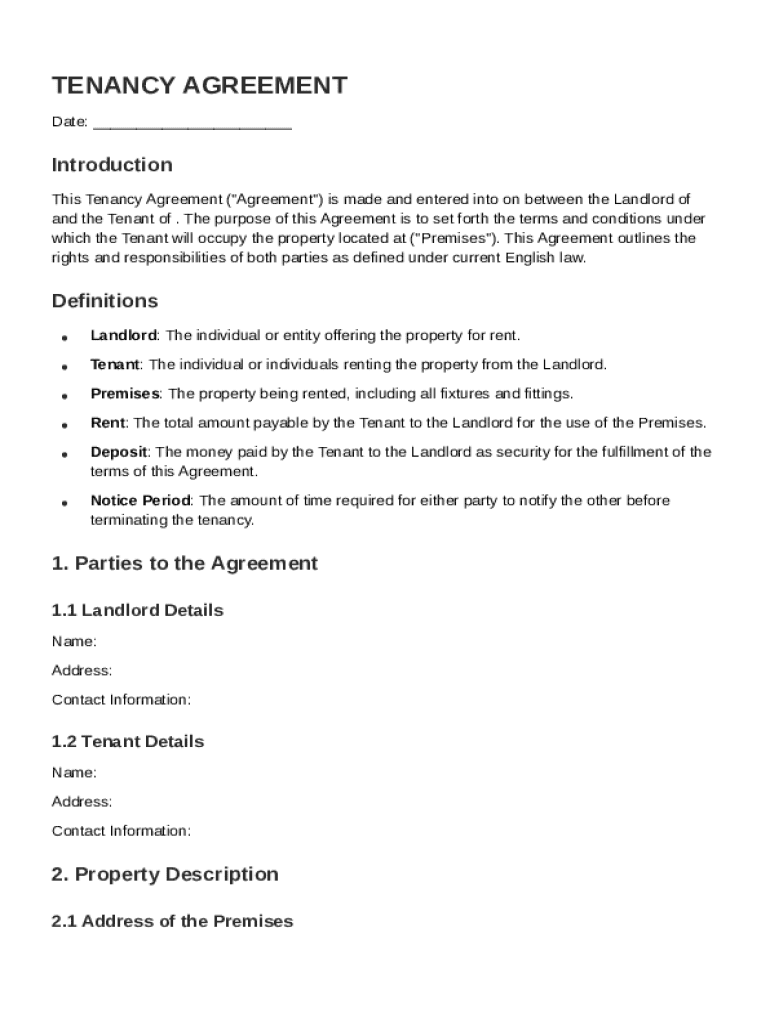







Definition and Purpose of the Tenancy England Agreement Template
The Tenancy England and Agreement Template is a standardized legal document used to outline the terms and conditions of a rental arrangement between a landlord and a tenant in England. It serves as a legally binding contract, detailing the rights, responsibilities, and obligations of both parties involved in the rental of a property. This agreement ensures that each party understands and agrees to the terms, which include rent payment schedules, maintenance responsibilities, and conditions for terminating the tenancy. It functions as a protective measure to prevent disputes and provides a clear framework for resolving any disagreements that may arise.
Key Elements of the Tenancy England Agreement Template
The template for a tenancy agreement in England encompasses several crucial components:
- Parties Involved: Clearly identifies the landlord, tenant, and any other occupants.
- Property Details: Provides a detailed description of the rental property, including the address and any included amenities.
- Rent Details: Specifies the rent amount, payment frequency, and accepted payment methods.
- Deposit Conditions: Outlines the deposit amount, terms for its return, and conditions under which deductions may be made.
- Maintenance Responsibilities: Defines the responsibilities for property upkeep, repairs, and maintenance for both parties.
- Termination Clauses: Explains the conditions under which the tenancy may be terminated by either party, including notice periods and procedures.
- Dispute Resolution: Details the process for resolving conflicts, often recommending mediation or arbitration before legal action.
Legal Considerations for Using the Template
The use of a tenancy agreement in England is governed by English law, requiring both landlords and tenants to comply with statutory regulations. The Tenancy England and Agreement Template must adhere to the Housing Act 1988, which governs most residential tenancies in England. This includes ensuring the agreement respects tenants' rights, such as protection from invalid eviction, safe and habitable accommodation, and fair rent practices. Landlords must also provide legally required documents to tenants, like the Energy Performance Certificate (EPC) and the "How to Rent" guide.
How to Obtain the Tenancy England Agreement Template
Obtaining the Tenancy England and Agreement Template can be done through various avenues:
- Online Legal Services: Several legal websites offer free or subscription-based templates that adhere to current legislation.
- Property Management Platforms: Property management software often includes customizable templates for agreements.
- Legal Advisors or Solicitors: Hiring a lawyer can ensure the template is tailored to your specific needs and complies with all legal requirements.
- Landlord Associations: These organizations may provide resources and templates as part of their membership benefits.
Steps to Complete the Tenancy England Agreement Template
Completing the tenancy agreement template involves several careful steps to ensure accuracy and compliance:
- Gather Necessary Information: Collect details about the property, landlord, and tenant, as well as rent and deposit specifics.
- Fill in Template Sections: Enter the gathered information into the appropriate sections of the template.
- Review Legal Requirements: Ensure all mandatory legal disclosures and requirements are included.
- Seek Legal Review: Consider a legal review by a solicitor to verify the document's compliance with English law.
- Sign the Agreement: Both landlord and tenant must read and sign the document. Signatures can be collected electronically if agreed upon by both parties.
Relevant Terminology for the Agreement Template
Understanding key terms related to the tenancy agreement will aid both parties in comprehending the document:
- Assured Shorthold Tenancy (AST): The most common type of agreement used in England for residential properties.
- Guarantor: A person who agrees to pay the rent or cover damages if the tenant does not.
- Licensee: Someone who occupies the property with the landlord’s permission but doesn’t have tenancy rights.
- Notice to Quit: A formal notification given by either party to terminate the tenancy.
Typical Users of the Tenancy England Agreement Template
This agreement template is typically used by various parties involved in the residential rental market:
- Private Landlords: Individuals who own rental properties and require a simple, legally compliant way to establish lease terms.
- Tenants: Individuals or families seeking to understand their rights and obligations when renting a property.
- Property Management Companies: Businesses that manage rental properties on behalf of landlords and need standardized agreements to streamline processes.
- Solicitors: Legal professionals who prepare or review tenancy agreements as part of their services to clients.
Advantages of Using the Tenancy England Agreement Template
Utilizing this template offers multiple benefits:
- Legal Protection: Provides a clear outline of legal rights and obligations, reducing the risk of disputes.
- Standardization: Uses a standardized format that complies with current legal requirements, ensuring clarity and consistency.
- Efficiency: Saves time in preparing documents as it includes all necessary sections in a ready-to-use format.
- Flexibility: Can be tailored to meet specific agreement terms without compromising legal integrity.
Variations and Alternatives to the Agreement Template
While the Tenancy England and Agreement Template is comprehensive, alternative agreements or formats might include:
- Periodic Tenancies: Agreements that continue indefinitely on a weekly or monthly basis without a fixed end date.
- Company Lets: When a company leases a residential property, often for employee use.
- Licenses to Occupy: Used where granting a lease is not appropriate, such as for lodgers sharing accommodation with landlords.
These alternative agreements are tailored to distinct scenarios and should be considered where standard agreements are not suitable.




