






Definition and Purpose of the Embargo Agreement Template
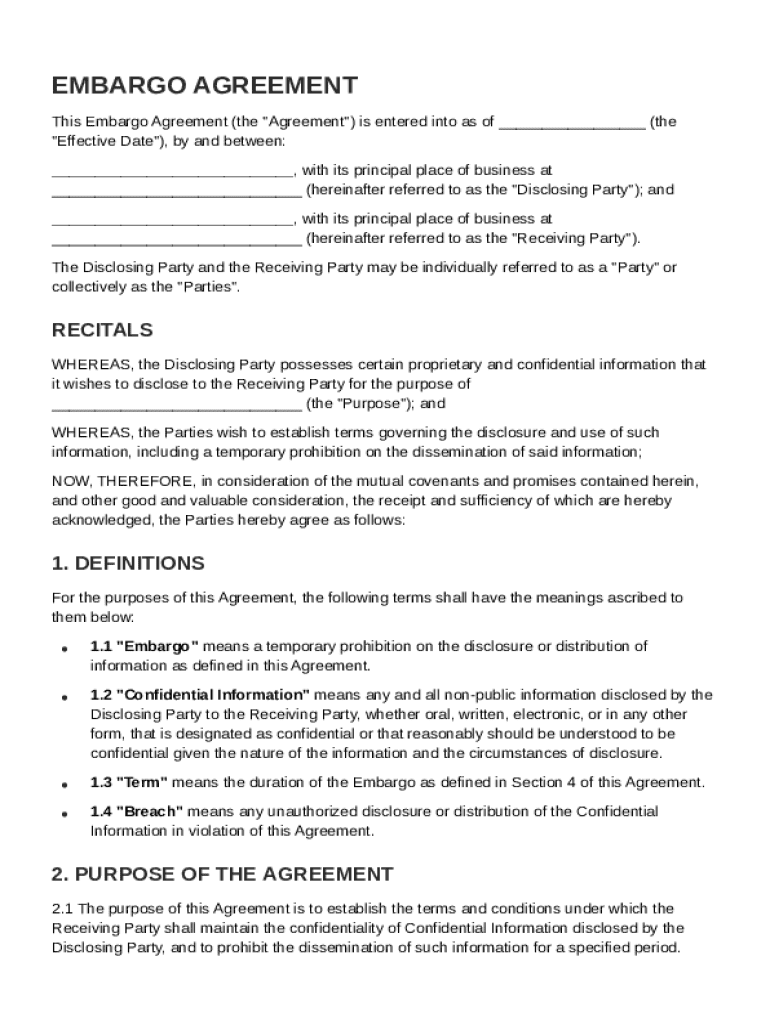
The Embargo Agreement Template is a crucial legal document serving to protect proprietary and confidential information shared between two parties, typically referred to as the Disclosing Party and the Receiving Party. This document outlines specific terms to ensure the confidentiality of sensitive information during shared communications or business engagements. The primary goal is to prevent unauthorized disclosure while providing room for specified exceptions. It stipulates the definitions, purpose, scope, obligations, and duration of confidentiality, along with permitted disclosures and potential consequences for breaches. By clearly delineating these terms, the agreement provides a structured approach to maintaining the integrity and confidentiality of shared information, ensuring both parties have a mutual understanding of their responsibilities and limitations.
How to Use the Embargo Agreement Template
Using the Embargo Agreement Template involves several key steps to ensure all relevant details are accurately captured and legally binding. Start by reviewing the template to understand all the clauses and sections that need to be filled out. Identify the parties involved, including the Disclosing Party and the Receiving Party, and detail their responsibilities clearly. Define the scope of the agreement, specifying what information is protected and the duration of the embargo.
Follow these additional steps to complete the process:
- Customize the Template: Tailor the template to reflect the specifics of the transaction or engagement. This includes altering the language to suit the particulars of the information being protected.
- Insert Specifics: Add any predetermined exceptions where information can be disclosed, and clarify the process for consent from the disclosing party.
- Review Obligations: List the obligations for both parties, emphasizing the importance of adherence to the confidentiality terms.
- Understand Legal Implications: Ensure both parties recognize the legal implications of breaching the terms and the associated penalties.
- Sign and Date: Conclude by having both parties sign and date the agreement for it to be effective.
This process ensures that the agreement not only serves its purpose but also aligns with the specific needs and legal requirements of both parties involved.
Importance of the Embargo Agreement Template
The Embargo Agreement Template is vital for protecting sensitive information, notably in situations involving proprietary data or strategic business details. It serves as a legal safeguard against unauthorized dissemination or use of confidential information. Businesses and individuals utilize this template to secure their trade secrets, maintain a competitive edge, and ensure trust between collaborating parties.
Key benefits include:
- Legal Protection: Provides a formalized, legally binding framework to protect sensitive data.
- Clarity and Structure: Offers clear guidelines and structure for managing confidential information exchange.
- Risk Mitigation: Establishes consequences for breaches, reducing the risk of unintended disclosures.
Such agreements are particularly useful in negotiations, partnerships, commercial contracts, or any situation where sensitive data exchange occurs.
Key Elements of the Embargo Agreement Template
Certain critical elements are integral to the effectiveness of the Embargo Agreement Template. These elements ensure the agreement is comprehensive and covers all necessary legal grounds:
- Parties: Identification of both the Disclosing Party and the Receiving Party.
- Objective: Clearly defined purpose and scope of the agreement, detailing what information is protected.
- Obligations: Responsibilities and obligations of each party concerning the use and protection of the disclosed information.
- Duration: The specific time frame during which the embargo is in effect.
- Exceptions: Listed exceptions where the information may be disclosed under stipulated conditions.
- Breach Consequences: Legal repercussions and penalties for violations of the agreement.
- Governing Law: The jurisdiction under which any legal issues will be interpreted and resolved.
These elements provide a cohesive framework allowing for effective risk management and adherence to agreed terms.
Legal Aspects of the Embargo Agreement Template
Understanding the legal ramifications associated with the Embargo Agreement Template is crucial for both parties. The agreement is legally binding and enforceable, meaning any breach could result in legal action. It aligns with relevant laws, often including agreements such as the ESIGN Act for electronic signatures. This ensures signatures are valid and the document holds up in legal proceedings.
Legal considerations include:
- Validity Across Jurisdictions: Ensure alignment with the governing law stated within the agreement.
- Enforceability: The document must be drafted clearly to prevent nullification due to vague terms.
- Signature Requirements: Compliance with electronic signature laws if the document is signed digitally.
Such an agreement provides a robust legal foundation protecting all parties’ rights.
State-Specific Rules and Variations
State-specific regulations may influence the terms and enforceability of the Embargo Agreement Template due to variations in privacy and contract laws. It's essential for parties to understand regional legal frameworks that may affect confidentiality agreements, particularly with:
- Differing Laws: States may have specific requirements or limitations on protective clauses.
- Standard Practices: Regional norms may impact how items within the agreement are interpreted.
- Filing and Enforcement: Procedures for legal recourse and document filing may vary.
Consulting with a legal professional knowledgeable in state law can ensure the agreement’s proper execution and adherence to local regulations.
Practical Examples of Embargo Agreement Use
To better understand the practicality of the Embargo Agreement Template, consider scenarios where the agreement proves indispensable:
- Corporate Acquisitions: During due diligence, companies often exchange sensitive financial data requiring protection.
- Joint Ventures: Partners collaborating on new products or technology share proprietary details that are safeguarded by such agreements.
- Media and Press Releases: Prior to official public announcements, companies may embargo information to control its early release to stakeholders.
Each scenario illustrates the agreement's role in facilitating secure, confidential communication essential to preserving trust and strategic interests.
Steps to Complete the Embargo Agreement Template
Finishing the Embargo Agreement Template requires attention to detail to ensure comprehensive coverage and legal enforceability:
- Review: Begin by thoroughly reviewing existing intellectual property and confidentiality laws to align the agreement.
- Complete Details: Fill in party names, specific terms, and other details accurately.
- Customization: Modify to reflect any industry-specific regulations or needs.
- Legal Consultation: Engage legal counsel to verify that the completed document maintains compliance and validity.
- Execution: Finalize with signatures from authorized representatives of both parties.
- Record Keeping: Safely store the signed document for future reference, ensuring accessibility in case legal proceedings arise.
These steps ensure that the agreement is tailored, precise, and legally robust, providing an effective barrier against information misuse and unauthorized access.