






Definition and Meaning
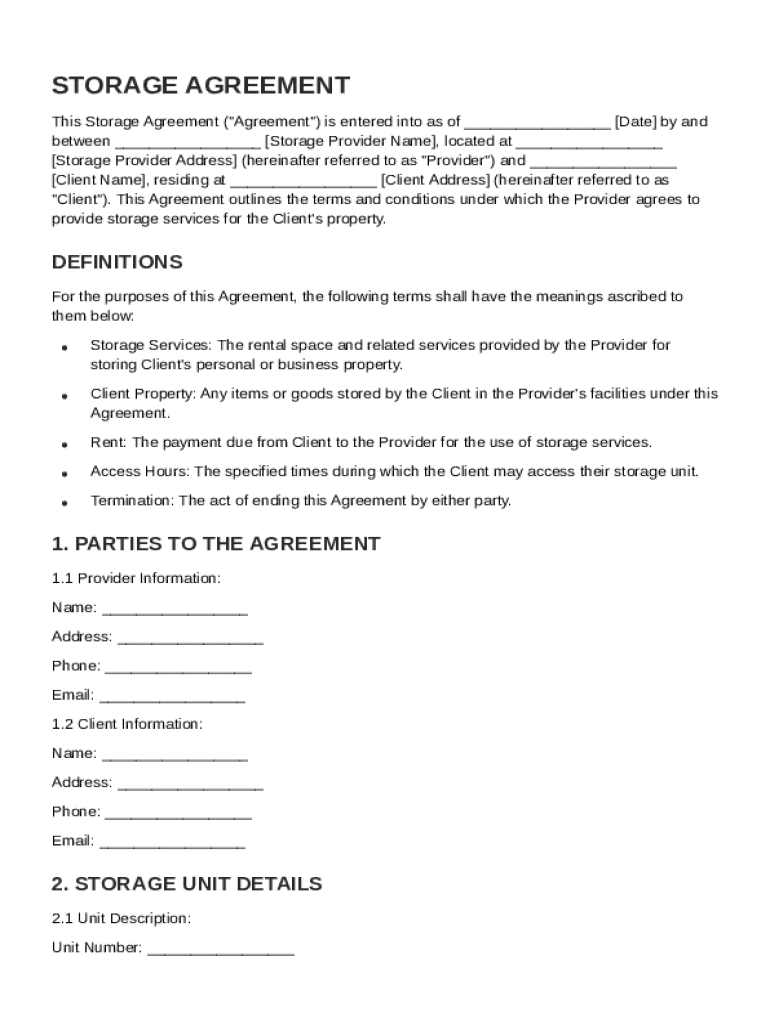
A "Storage Contract Template" serves as a formal agreement between a storage provider and a client, outlining the terms and conditions for the rental of storage space. This legal document ensures that both parties understand their obligations, rights, and responsibilities. It typically includes essential details such as rental terms, payment schedules, responsibilities regarding care and preservation of stored items, and liability issues. By utilizing a storage contract template, you are ensuring that both the provider and the client are protected and that there is a clear roadmap should any disputes arise.
Key Components
- Rental Terms: Outline of the duration and specific conditions under which the storage space will be rented.
- Payment Schedules: Details on when payments are due and the amount required, including any penalties for late payments.
- Use of Space: Specifics on how the storage space can be used, including any restrictions or prohibited activities.
Key Elements of the Storage Contract Template
A well-structured storage contract template includes several crucial elements that provide clarity and protection for both parties.
Basic Information
- Parties Involved: Clear identification of the storage provider and the client.
- Description of Storage Space: Detailed description of the storage unit, including size and location.
Legal Provisions
- Limitation of Liability: Defines the extent of the provider’s liability concerning loss or damage to stored items.
- Termination Conditions: Stipulates the terms under which the contract can be terminated by either party.
Security and Access
- Access Hours: Specifies times when the client can access their storage space.
- Security Measures: Details any security features provided, such as surveillance systems or on-site security personnel.
Steps to Complete the Storage Contract Template
Completing a storage contract template involves several important steps, ensuring all necessary components are addressed.
- Review the Template: Begin by reading through the entire template to understand its structure and required information.
- Fill in Basic Details: Enter names, addresses, and contact information for both the storage provider and the client.
- Define Rental Term: Specify the start and end dates for the storage agreement.
- Set Payment Terms: Clearly outline payment amounts, due dates, and methods of payment.
- Detail Usage Terms: Include any restrictions on the use of the storage space.
- Sign and Date: Ensure that both parties sign and date the contract, confirming their acceptance of the terms.
Important Considerations
- Legal Review: It may be beneficial to have the completed template reviewed by a legal professional to ensure compliance with state laws and completeness.
- Copies: Each party should retain a signed copy of the agreement for their records.
Legal Use of the Storage Contract Template
The storage contract template is legally binding once signed and can be used to enforce rights and obligations in a court of law.
Compliance with Laws
- State Regulations: Ensure that the contract complies with local and state laws governing storage rentals.
- ESIGN Act Compliance: For electronic signatures, ensure the document complies with the Electronic Signatures in Global and National Commerce Act, making the e-signatures legally equivalent to handwritten ones.
Importance
Using a legally compliant storage contract template protects both the provider and the client, minimizes risks, and facilitates smooth resolution of any potential disputes.
Software Compatibility
DocHub offers a versatile platform that supports a range of file formats, making it easy to work with storage contract templates in various formats.
Supported Formats
- PDF, DOC, PPT, XLS, TXT: Users can import and export these file types directly into DocHub.
- Seamless Integration: Files can be imported from and exported to popular cloud services like Google Drive, Dropbox, and OneDrive.
Integration Benefits
- Google Workspace Integration: Users can directly import from Google Drive and Gmail, streamlining the process of editing and managing documents without leaving the Google environment.
State-Specific Rules for the Storage Contract Template
Depending on the location, storage contract templates may need to adhere to state-specific regulations that can impact the terms of the agreement.
Variations by State
- Storage Laws: Different states may have unique requirements regarding the wording of contracts, disclosure obligations, or maximum allowable fees for late payments.
- Legal Obligations: Ensure compliance with any unique insurance or liability clauses required by the state.
Importance of Research
It is crucial to research and understand the specific regulatory requirements in your state to avoid any legal complications when using the storage contract template.
Business Types That Benefit Most from the Storage Contract Template
Various types of businesses can benefit from using a standardized storage contract template to manage their storage needs effectively.
Beneficiary Business Models
- Retailers: Those needing to store excess inventory or seasonal items.
- E-commerce Entities: Businesses requiring space to hold product stock before shipment.
- Document Storage Companies: Companies specializing in the archival storage of documents for clients.
Common Benefits
- Efficiency: Streamlined approach to formalizing agreements with clients.
- Legal Protection: Provides essential legal safeguards and contractual clarity.
Examples of Using the Storage Contract Template
Understanding practical applications of storage contract templates can provide valuable insight into their utility.
Real-World Scenarios
- Startup Businesses: Companies with temporary storage needs during expansions or relocations.
- Event Management Firms: Organizations needing short-term storage for equipment and materials before and after events.
- Art Galleries: Those requiring climate-controlled spaces for art pieces when not on display.
Practical Outcomes
Using the storage contract template in these scenarios facilitates clear communication between parties, ensures all parties are aware of their responsibilities, and promotes efficient and conflict-free transactions.