






Definition & Meaning
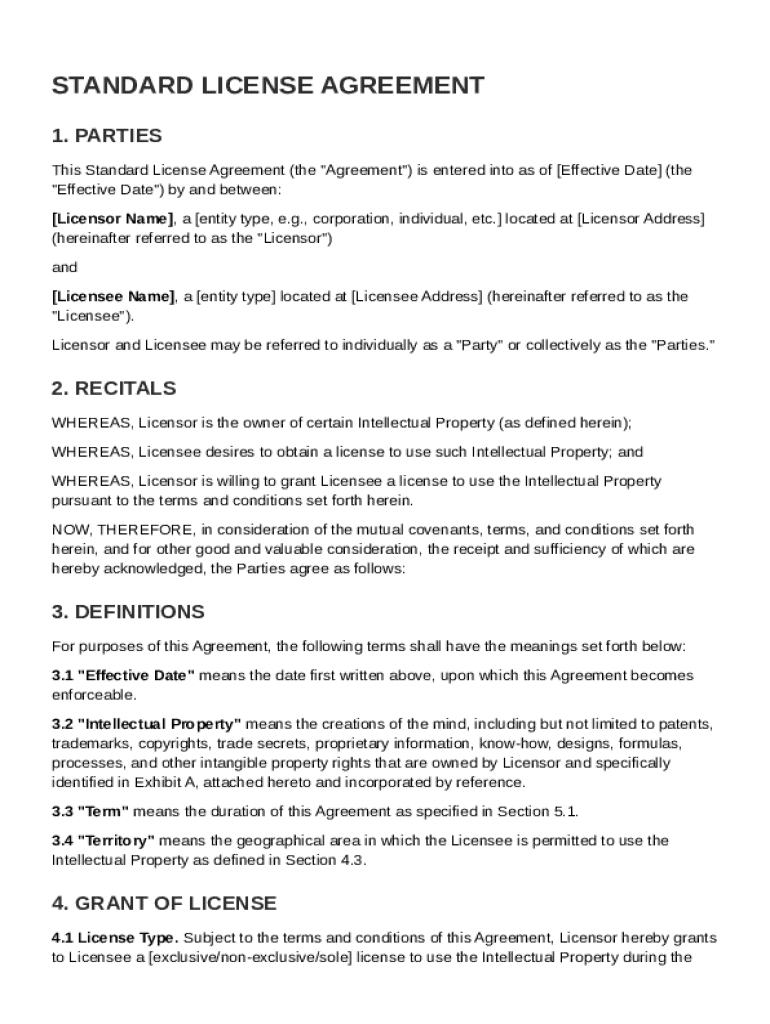
A Standard License Agreement Template serves as a foundational document that outlines the terms and conditions under which a Licensor grants another party, known as the Licensee, the right to use specifically defined intellectual property. This could include patents, copyrights, trademarks, designs, or any other form of proprietary information. The template provides a structured framework that describes the rights, responsibilities, and limitations associated with the license, ensuring that both parties have a clear understanding of their roles and obligations. These documents also address the usage rights, payment details, warranties, indemnification clauses, and confidentiality obligations, making them a critical component in managing and protecting intellectual property rights.
Key Elements of the Standard License Agreement Template
The core elements of a Standard License Agreement Template include several crucial components that define the legal relationship between the Licensor and Licensee. These elements typically consist of:
- Definitions: Precise definitions of terms used throughout the agreement to ensure clarity and prevent misunderstandings.
- Scope of License: Clearly outlines the rights being granted, including any limitations on the use of the intellectual property.
- Payment Terms: Details the financial arrangements, including fees, royalties, payment schedules, and any other fiscal obligations.
- Ownership and Rights: States the ownership of the intellectual property and any reserved rights.
- Warranties and Indemnifications: Specifies the guarantees provided by the Licensor, along with responsibilities for any claims or damages.
- Confidentiality Obligations: Obligations related to the protection of sensitive information disclosed during the tenure of the agreement.
- Dispute Resolution Procedures: Sets forth the mechanisms for resolving any disputes that may arise, such as arbitration or mediation.
How to Use the Standard License Agreement Template
To effectively use the Standard License Agreement Template, users should follow a systematic approach that considers the unique requirements of the parties involved. Begin by carefully reviewing the entire document to ensure comprehensive understanding. Identify sections that require tailoring, such as defining the specific intellectual property involved, customizing the scope of use, and setting appropriate terms and conditions based on the nature of the license.
- Review Default Clauses: Evaluate standard clauses to determine if any modifications are necessary.
- Customize Payment Details: Ensure the financial terms align with the commercial arrangement, including any specific royalties or licensing fees.
- Assess Risk Provisions: Modify warranties, indemnifications, and liability clauses to appropriately reflect the risk assessments of both parties.
Practical real-world examples include software companies granting licenses for their applications or artists allowing the use of their works in marketing campaigns, each necessitating specific customizations to the template.
Steps to Complete the Standard License Agreement Template
Completing a Standard License Agreement Template involves a methodical sequence of steps. Below is a general guide to assist users through this process:
- Identify the Parties: Clearly state the full legal names of the Licensor and Licensee.
- Define the Intellectual Property: Provide precise descriptions of the assets being licensed.
- Customize the Terms: Tailor sections such as the scope of license, duration, and geographic limitations.
- Detail Financial Agreements: Specify the payment amounts, schedule, and method of transfer.
- Finalize Legal Clauses: Review and amend sections concerning liability, warranties, and dispute resolution.
- Review and Sign: Conduct a thorough review before the final signing by authorized representatives of both parties.
It may be beneficial to consult legal counsel during this process to ensure all modifications abide by relevant laws and effectively protect the parties' interests.
Important Terms Related to Standard License Agreement Template
Several key legal and commercial terms are essential in understanding and implementing a Standard License Agreement Template. These include:
- Licensor: The party granting rights to use their intellectual property.
- Licensee: The party receiving the rights to use the Licensor's intellectual property.
- Royalty: A payment made by the Licensee to the Licensor for the ongoing use of the licensed material.
- Indemnification: A contractual obligation for one party to compensate another for certain damages or losses.
- Confidential Information: Proprietary information shared during the licensing term, protected from unauthorized disclosure.
Understanding these terms ensures both parties are adequately informed and can negotiate terms effectively. For instance, a Licensor may demand indemnification clauses to protect against unauthorized use of intellectual property.
Legal Use of the Standard License Agreement Template
In the United States, using a Standard License Agreement Template ensures that licenses are legally binding documents compliant with relevant IP laws, such as the Copyright Act or Patent Act, depending on the type of intellectual property involved. The agreement must be explicit in stating the rights being transferred and adhere to any regulatory requirements for specific industries. For instance, technology licenses often need to comply with export control laws or privacy regulations if personal data is involved.
Failing to align the terms of a license with legal standards can result in unenforceable agreements or expose parties to litigation, making it essential to follow the prescribed legal frameworks and consult with legal professionals as needed.
State-Specific Rules for the Standard License Agreement Template
While the Standard License Agreement Template serves as a universal foundation, certain state-specific rules or modifications might be necessary due to varying state laws and interpretations regarding contract enforcement. States such as California and New York may have unique precedents or interpretations in areas like indemnification clauses or non-compete terms, necessitating amendments to the standard template to remain enforceable in those jurisdictions.
- California: Known for more restrictive non-compete agreements and stricter data privacy laws.
- New York: Often requires distinct provisions for dispute resolutions and may impose additional disclosure requirements for contracts involving technology licensing.
Engaging with legal counsel to adapt the agreement to state-specific guidelines ensures compliance and reduces the risk of unenforceability.
Examples of Using the Standard License Agreement Template
The Standard License Agreement Template is adaptable to numerous scenarios across various industries. Examples include:
- Software Licensing: A tech company granting usage rights to its software to corporate clients.
- Music Licensing: Recording artists may license their music for films or advertisements, with specific terms about royalties and usage.
- Trademark Licensing: A fashion brand licensing its trademark to a manufacturer for production of clothing lines.
Each case involves unique elements such as specifying the intellectual property, delineating the scope of usage, and customizing payment structures, showcasing the versatility and essential nature of the licensing agreement across domains.