






Understanding the Standard Care Agreement
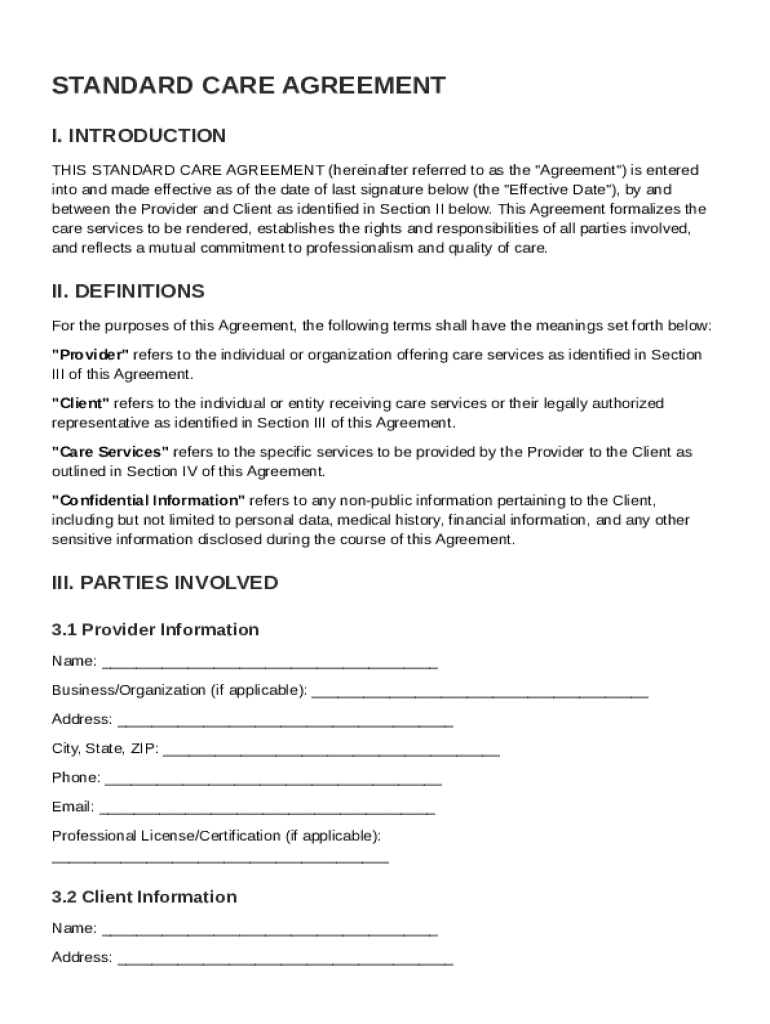
The Standard Care Agreement is a critical document defining the roles, responsibilities, and expectations between a care provider and a client. This agreement outlines service descriptions, payment terms, confidentiality obligations, and dispute resolution processes, ensuring that all parties involved have a clear understanding of their respective obligations and rights. By formalizing the relationship, the agreement serves to protect sensitive information and maintain professionalism.
Key Elements of the Standard Care Agreement
In drafting a Standard Care Agreement, several core components must be included to ensure comprehensiveness:
- Service Descriptions: Clearly outline the specific services the provider will deliver to the client. This includes frequency, scope, and any limitations of the services.
- Payment Terms: Define the payment structure, including rates, due dates, and acceptable payment methods. Terms for late payments and penalties should be clearly stated.
- Confidentiality Obligations: Highlight the importance of confidentiality and specify measures for safeguarding sensitive and personal information shared during the care process.
- Dispute Resolution: Provide a framework for resolving any disagreements, specifying processes like mediation or arbitration as necessary steps before litigation.
- Termination Conditions: Describe the circumstances under which either party can terminate the agreement, including notice requirements and any obligations post-termination.
How to Use the Standard Care Agreement Template
Using a Standard Care Agreement Template can significantly simplify the process of drafting a comprehensive contract. Here's a step-by-step guide to effectively using the template:
- Download the Template: Start by obtaining a copy of the Standard Care Agreement Template, either from a trusted online source or a provider's resource library.
- Customize the Template: Tailor the template to fit your specific needs by filling in the relevant details for each section, such as names, addresses, service descriptions, and payment terms.
- Review the Terms: Carefully read through the template to ensure all terms and conditions align with both parties' expectations and legal requirements. Adjust any sections that require modification.
- Consult Legal Advice: If necessary, seek legal counsel to review the document and ensure its compliance with applicable laws and regulations.
- Sign and Implement: Once both parties agree to the terms, sign the document. Ensure that both the care provider and client have copies of the final signed agreement.
Who Typically Uses the Standard Care Agreement Template
The Standard Care Agreement Template is versatile and utilized by various entities:
- Healthcare Providers: Doctors, nurses, and home health aides use this template to establish clear terms with their patients or clients.
- Care Agencies: Companies providing caregiving services rely on such agreements for clarity and legal protection in their client relationships.
- Individual Caregivers: Independent caregivers can use these agreements to protect their interests and outline job scopes with clients.
- Legal Practitioners: Lawyers assist clients in drafting these agreements as part of establishing care relationships, ensuring legal compliance and clarity.


Legal Use of the Standard Care Agreement Template
Ensuring that a Standard Care Agreement is legally binding is paramount:
- Compliance with Laws: The agreement must adhere to federal and state laws governing care services and contract law to be enforceable.
- Inclusion of Required Clauses: Certain legal clauses, such as confidentiality and liability limitations, enhance the agreement's enforceability.
- Both Parties' Signatures: A signed agreement indicates that both parties consent to the terms, which is crucial for legal validity.
- Document Preservation: Keep a signed copy of the agreement accessible and safe, as it serves as evidence in case of future disputes.
Examples of Using the Standard Care Agreement Template
Real-world scenarios where a Standard Care Agreement might be employed include:
- Home Care Services: A nurse providing in-home care for elderly clients might use the agreement to outline daily tasks, medication schedules, and payment arrangements.
- Therapy Sessions: A therapist offering counseling services can leverage the agreement to detail session lengths, confidentiality rules, and cancellation policies.
- Child Care: Parents hiring a nanny may draft an agreement specifying duties like meal preparation, tutoring sessions, and discipline guidelines.
- Assisted Living Facilities: These institutions might draft agreements for each resident, detailing services such as meal plans, medical care, and recreational activities provided.
State-Specific Rules for the Standard Care Agreement
Understanding state-specific variations is crucial for crafting a legally compliant Standard Care Agreement:
- Licensure Requirements: Some states mandate that care providers possess specific licenses or certifications, which must be noted in the agreement.
- Labor Laws: Differences in state labor laws can affect terms like working hours, overtime, and employee rights.
- Consumer Protection Laws: These laws might influence how service descriptions and payment terms must be communicated to the client.
- Data Privacy Regulations: States may have unique rules regarding how personal and sensitive information is handled, calling for tailored confidentiality clauses.
Alternatives to the Standard Care Agreement Template
While the Standard Care Agreement Template is widely used, there are variations and alternatives to consider:
- Custom Drafted Agreements: Some parties prefer creating custom agreements tailored specifically to their unique circumstances, with assistance from legal professionals.
- Industry-Specific Templates: Templates tailored to particular niches, such as pediatric care or mental health services, provide industry-specific clauses and standards.
- Digital Contracts: Utilizing software platforms for creating and signing digital contracts can ensure faster execution and better document management.
- Pre-Prepared Forms from Professional Associations: Some associations offer their members templates reflecting industry standards and best practices.
Software Compatibility and Digital Tools
Leveraging technology, including platforms like DocHub, to handle the Standard Care Agreement Template can enhance efficiency:
- Seamless Editing and Signing: Use DocHub’s tools to edit document details, annotate sections, and electronically sign agreements.
- Cloud Storage Integration: Store, access, and share the completed agreements through cloud platforms like Google Drive and Dropbox.
- Communication Tools: Enable real-time collaboration with multiple contributors, allowing for instant feedback and adjustments.
- Security Features: Ensure secure document handling with encryption and password protection when sharing sensitive information.
By comprehensively exploring all facets of the Standard Care Agreement Template, users can create binding, clear, and serviceable agreements to foster professional relationships and protect their rights.