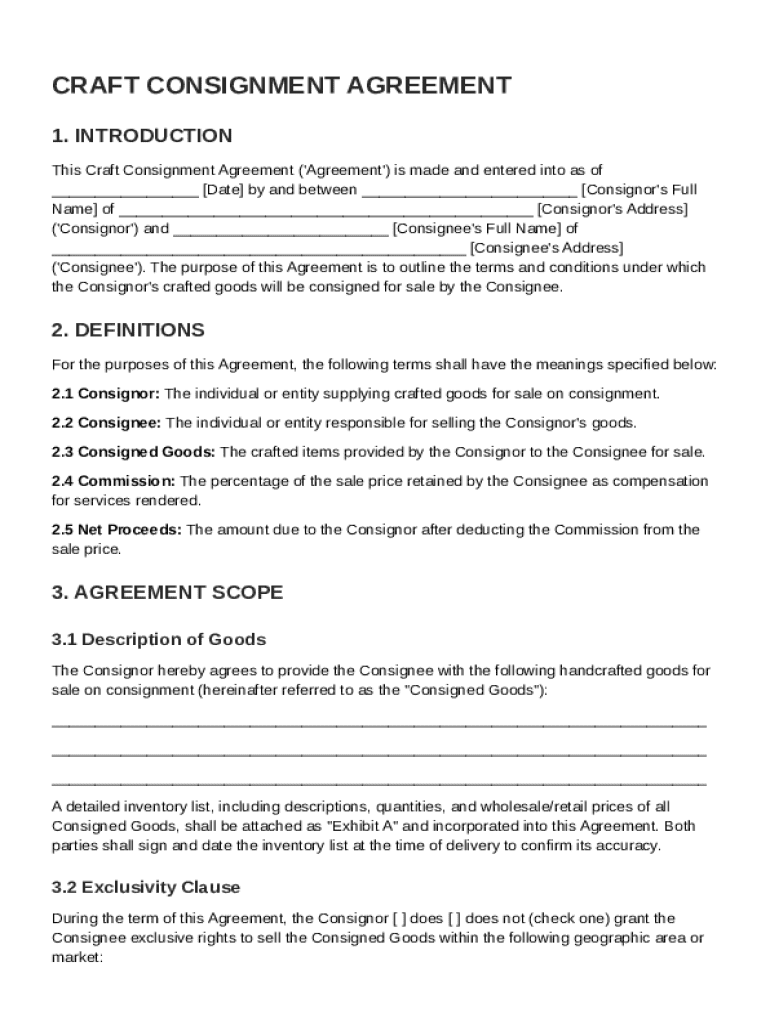







Definition & Meaning
The Craft Consignment Agreement Template is a legally binding document that sets the terms and conditions for consignment arrangements between a consignor, who owns the crafted goods, and a consignee, who sells these goods on behalf of the consignor. This template outlines various aspects of the consignment relationship, such as delivery methods, sales processes, payment schedules, and responsibilities of each party. By detailing these components, the template helps to ensure transparency and mutual understanding, reducing the potential for disputes and misunderstandings.
Key Components
- Consignor and Consignee Roles: Establishes the responsibilities and obligations of both parties.
- Delivery Terms: Details how and when goods are to be transferred from consignor to consignee.
- Pricing and Payments: Specifies the pricing structure for the goods and the payment terms for each sale.
- Commission Details: Outlines the commission rate that the consignee will receive for selling each item.
- Liability and Insurance: Discusses who is responsible for the goods' insurance and how liability is handled.
- Termination Clause: Explains how the agreement can be terminated by either party.
By defining these elements, the template ensures a clear and comprehensive understanding between the parties, facilitating a smooth consignment process.
How to Obtain the Craft Consignment Agreement Template
Finding and acquiring the Craft Consignment Agreement Template can be a streamlined process. It is typically available through various document management platforms such as DocHub, where users can access the template directly from the document repository. To obtain the template, users should follow these steps:
- Access a Document Platform: Visit a document management service like DocHub that provides access to legal templates.
- Search Options: Utilize the search functionality to locate the Craft Consignment Agreement Template.
- Download or Edit Online: Choose to directly download the template in your preferred format (PDF, DOC, etc.) or begin editing the template online.
- Cloud Integration: Import the document from or export it to cloud services like Google Drive or Dropbox, if needed.
Most platforms offer guides or customer support to assist with navigating their systems, ensuring users can effortlessly access and customize the template to meet their specific needs.
Steps to Complete the Craft Consignment Agreement Template
Completing the Craft Consignment Agreement Template requires careful attention to detail to ensure all relevant information is included. Here’s a step-by-step guide on how to accurately fill out the template:
- Fill in Consignor and Consignee Details: Begin by entering the names and contact details of both parties involved.
- Outline the Goods: Provide a detailed description of the crafted items to be consigned, including quantities and any identifying marks or unique features.
- Price and Payment Terms: Set out the sale price for each item or category of items and the terms under which payments will be made to the consignor.
- Commission Structure: Specify the percentage or amount the consignee will earn from each sale.
- Delivery and Insurance: Detail the logistics of how and when the items will be delivered to the consignee, along with the insurance coverages applicable.
- Include Liability Clauses: Clearly state any conditions regarding liability for loss or damage to the goods during the consignment period.
- Termination Conditions: Define the terms under which the agreement can be ended, including notice requirements, if applicable.
Following these steps ensures that the document is fully completed and legally sound, ready to be signed by both parties.
Why Use a Craft Consignment Agreement Template
Utilizing a Craft Consignment Agreement Template offers various benefits that enhance the efficiency and clarity of consignment transactions:
- Legal Protection: The template provides a framework that protects the interests of both consignor and consignee.
- Operational Transparency: Clarifies expectations and obligations, minimizing the risk of disputes.
- Efficiency: Streamlines the creation of detailed contracts without the need to draft from scratch.
- Customizability: Allows for modifications to suit specific agreements or unique conditions.
- Professional Appeal: Conveys professionalism that can enhance business relationships.
Overall, using a template not only saves time but also ensures consistent and comprehensive documentation of consignment conditions.
Important Terms Related to Craft Consignment Agreement Template
Understanding the terminology used within a Craft Consignment Agreement Template is crucial for effective implementation. Here are key terms commonly included in such agreements:
- Consignor: The owner of the goods who supplies them for consignment.
- Consignee: The individual or entity tasked with selling the consigned goods.
- Commission: The fee or percentage of sales retained by the consignee.
- Liability: Responsibility for any damages or losses that occur to consigned goods.
- Exclusive Agreement: A clause that may restrict other parties from selling the goods within a specific territory or timeframe.
- Termination Clause: Conditions under which the consignment agreement may be dissolved.
Familiarity with these terms facilitates a better understanding of the document and assists in more effective negotiations and contract management.
Legal Use of the Craft Consignment Agreement Template
The Craft Consignment Agreement Template should be used in compliance with applicable laws to ensure its enforceability. Here are a few legal considerations:
- Compliance with State Laws: Consignment agreements must adhere to the legal requirements of the state in which the agreement is executed.
- Sales Tax Considerations: Both parties need to be aware of any sales tax obligations arising from consignment sales.
- Consumer Protection Laws: Ensures that goods sold meet the required standards and representations made to customers are accurate.
Using the template responsibly and aligning it with legal requirements safeguards both parties and upholds contractual integrity.
Examples of Using the Craft Consignment Agreement Template
Real-world applications of the Craft Consignment Agreement Template highlight its versatility across various scenarios:
- Art Galleries: Artists consign their works for display and sale by gallery owners, who earn a commission on each sale.
- Craft Fairs: Manufacturers of handcrafted items consign their goods to be sold by fair organizers, allowing for wider distribution to potential buyers.
- Boutiques: Designers consign their creations to boutiques, expanding their reach to audiences frequented by these retail locations.
Each of these scenarios showcases how the template facilitates a clear and fair agreement between the consignor and consignee.
Key Elements of the Craft Consignment Agreement Template
Essential components of a Craft Consignment Agreement Template provide structure and clarity to the agreement:
- Scope of Agreement: Overview of types and quantities of goods to be consigned.
- Financial Terms: Details of pricing, payment schedules, and commission rates.
- Consignment Period: Specific duration for which the goods will be consigned and conditions for extending it.
- Renewal and Termination: Provisions for renewing or terminating the agreement, including notice period requirements.
Incorporating these elements ensures that all parties are aligned and that the agreement fulfills its intended purpose effectively.