






Definition & Meaning
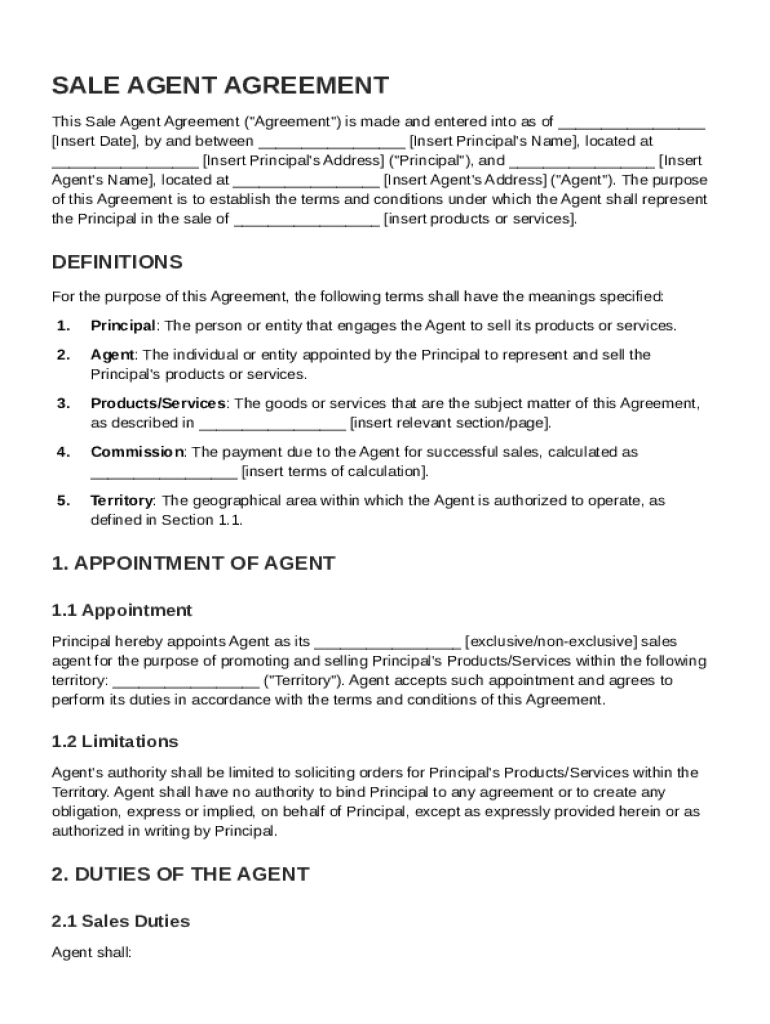
The Sale Agent Contract Template is a formal document used to establish a professional relationship between a principal and an agent for the sale of goods or services. This contract delineates specific terms and conditions, including the roles, rights, and responsibilities of both parties. Its primary purpose is to ensure clarity and mutual understanding, thereby reducing potential disputes. Key elements addressed include commission structures, territory limitations, performance expectations, and the duration of the agency agreement. Additionally, confidentiality obligations and intellectual property rights are often featured to protect sensitive business information.
Key Elements of the Sale Agent Contract Template
The Sale Agent Contract Template is composed of several critical elements to accurately reflect the agreement's scope. These include:
- Parties Involved: Clearly identify the principal and agent, including their legal names and contact information.
- Scope of Agency: Define the products or services the agent is authorized to sell, including any geographical or market-specific limitations.
- Compensation Structure: Outline the commission rates or payment terms. This section may include considerations like bonuses or reimbursement for certain expenses.
- Duration of Agreement: Specify the start and end dates of the contract, including terms for renewal or extension.
- Duties and Obligations: Detail the responsibilities of both parties, including performance targets for the agent.
- Termination Provisions: Address conditions under which either party can terminate the agreement, including notice periods and penalty clauses.
Steps to Complete the Sale Agent Contract Template
Completing the Sale Agent Contract Template involves several structured steps, ensuring accuracy and completeness:
- Gather Information: Collect all relevant details about the principal and agent, including legal names and addresses.
- Define Scope of Work: Clearly specify the products or services the agent will promote, list the relevant markets, and describe any territorial limitations.
- Detail Compensation Arrangements: Document the agreed commission rates, payment schedule, and any related financial incentives.
- Establish Terms: Set the contract’s duration, including the start and end dates, and outline conditions for renewal.
- Outline Responsibilities: Clearly explain each party's responsibilities, including sales targets for the agent.
- Draft Termination Criteria: Specify the conditions under which the contract can be terminated, notice required, and any associated penalties.
- Review and Sign: Both parties should review the agreement for accuracy before signing. Consider legal review to ensure compliance with laws.
Legal Use of the Sale Agent Contract Template
The Sale Agent Contract Template serves as a legally enforceable document if constructed and executed correctly. It provides protection under the law for both the principal and the agent by clearly outlining their rights and obligations. The contract must adhere to applicable federal and state laws, which can vary significantly. Legal use also involves ensuring that all involved parties comprehend the terms fully before signing. It is advisable to consult a legal professional to review the document for compliance and enforceability, especially where state-specific laws and industry regulations might impact its validity or terms.
State-Specific Rules for the Sale Agent Contract Template
Different U.S. states may have specific rules and regulations that affect the Sale Agent Contract Template. These variances might pertain to:
- Contractual Obligations: Some states may require specific clauses or disclosures within the contract to be enforceable.
- Commission Payments: Different states have varying laws concerning payment timelines and structures, affecting how commissions are handled.
- Termination and Renewal: State laws may dictate how an agency relationship can be terminated or renewed, including mandatory notice periods and permissible causes for termination.
For instance, states like California have distinct legislation regarding contract terms due to their robust employee and contractor rights frameworks. It is crucial to modify the contract template to align with local legal requirements.
Who Typically Uses the Sale Agent Contract Template
The Sale Agent Contract Template is primarily employed by businesses seeking to expand their reach through sales agents without directly hiring them as employees. Common users include:
- Manufacturers: Looking to promote and distribute their products more effectively.
- Service Providers: Such as financial or real estate services interested in engaging agents to sell on their behalf.
- Distributors and Retailers: Seeking to increase their market presence through sales representatives.
Organizations of varying sizes and industries may benefit from clearly defining their relationship with independent sales agents, ensuring mutual protection and growth facilitation.


Versions or Alternatives to the Sale Agent Contract Template
Beyond the primary Sale Agent Contract Template, there are several versions or alternatives tailored for different contexts:
- Exclusive Sale Agent Agreement: Where the agent has sole rights to sell specific products in designated territories.
- Non-Exclusive Sale Agent Agreement: Allows multiple agents to represent the principal, often suited to broader distribution strategies.
- Commission-Only Agreement: Emphasizes commission as the sole form of compensation, often appealing to agents willing to work without a base salary.
Each version varies in its stipulations and suitability, depending on the specific needs and business strategy of the principal.
Business Types That Benefit Most from Sale Agent Contract Template
Certain business types gain significant advantages from deploying the Sale Agent Contract Template:
- Startup Companies: Often use these agreements to keep costs low while expanding market presence.
- Large Corporations: Utilize structured agent relationships to strategically manage sales in varied markets.
- Niche Product Developers: Use agent networks to penetrate specific markets where direct sales efforts might be impractical.
Sectors that benefit the most include technology companies, consumer goods manufacturers, and specialized service providers aiming for market agility and a wider outreach through external representatives.