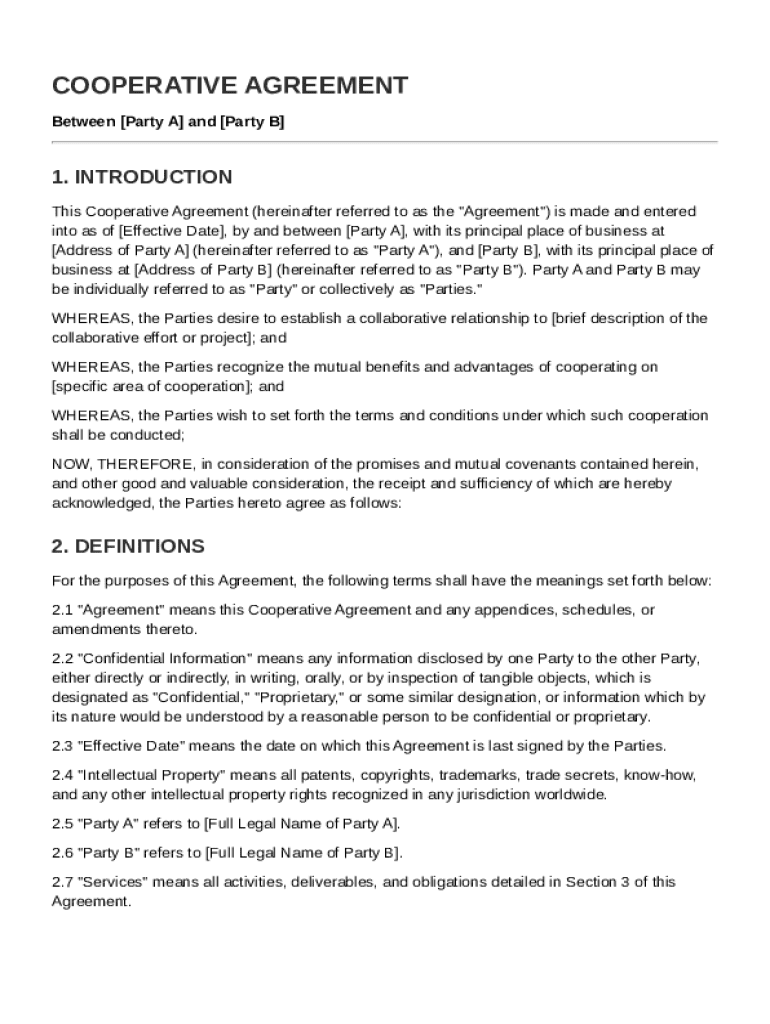







Definition & Meaning
A Cooperative Agreement Template is a formal document that outlines the collaboration between two or more parties, usually organizations or agencies, for a particular project or purpose. Unlike a simple contractual agreement, a cooperative agreement often involves shared responsibilities, resources, and risks between the parties. It delves into mutual objectives, defines roles and duties, and stipulates terms for cooperation. These agreements are crucial in various industries to ensure clear communication and structured partnerships, strengthening collaborative initiatives without ambiguity.
Key Elements of the Cooperative Agreement Template
A comprehensive Cooperative Agreement Template typically includes several fundamental components that ensure clarity and alignment among parties. Key elements often covered are:
-
Scope of Work: Clearly defines the project's boundaries, deliverables, and the tasks each party will undertake.
-
Roles and Responsibilities: Specifies the obligations and duties of each participant, preventing overlaps or neglect.
-
Funding Arrangements: Details financial contributions and allocations, including how costs will be shared and any revenue-sharing models.
-
Communication Plans: Establishes channels, frequency, and protocols for communication to facilitate efficient and clear exchanges.
-
Dispute Resolution: Provides mechanisms to address conflicts amicably, minimizing potential disruptions to the cooperation.
-
Confidentiality Obligations: Outlines the terms for handling sensitive information shared in the process, protecting proprietary and confidential data.
-
Amendments and Termination Conditions: Sets forth the conditions under which the agreement can be modified or ended, ensuring flexibility and long-term sustainability.
How to Use the Cooperative Agreement Template
Utilizing a Cooperative Agreement Template effectively involves a series of steps that ensure all parties' interests and objectives are clearly defined and agreed upon:
-
Identify Parties Involved: Clearly state all organizations or individuals entering into the agreement, including their roles.
-
Outline Mutual Goals: Clarify the shared objectives to ensure alignment and mutual understanding from the outset.
-
Draft Terms and Conditions: Use the template to specify detailed terms, including scope, responsibilities, and financial arrangements.
-
Review and Negotiate: All involved parties should review the draft, suggest changes, and negotiate terms fairly.
-
Finalize and Sign: Once consensus is achieved, finalize the document with signatures from all key stakeholders, ensuring legal enforceability.
Steps to Complete the Cooperative Agreement Template
Completing a Cooperative Agreement Template involves methodical steps to ensure comprehensive coverage and clarity:
-
Gather Initial Information: Collect details about the project, parties, objectives, and preliminary terms.
-
Fill in Standard Clauses: Use the template to input predefined sections, ensuring consistency and conformity to standard practices.
-
Customize Specific Sections: Tailor sections to reflect unique aspects of the cooperation, such as specific roles or financial arrangements.
-
Include Additional Provisions: Add specialized clauses relevant to the project, like intellectual property rights or compliance standards.
-
Conduct a Thorough Review: All parties should critically review the filled template to identify any gaps or unclear aspects.
-
Adjust Based on Feedback: Incorporate feedback to refine the document, making necessary adjustments for clarity and completeness.
-
Finalize the Document: Once the template is agreed upon, formally finalize it with authorized signatures from all parties involved.
What is the Legal Use of the Cooperative Agreement Template?
The legal use of a Cooperative Agreement Template revolves around facilitating structured partnerships with clearly defined terms. This document is pivotal for ensuring that each party understands their legal obligations, minimizing risks of misinterpretation or breaches. Contracts falling under cooperative agreements are subject to legal scrutiny to verify compliance with applicable laws and regulations. They often include enforceable measures like penalties for non-compliance and legal recourse for breaches, further safeguarding all parties' interests by creating a legally binding framework that supports the agreed-upon collaboration.
Examples of Using the Cooperative Agreement Template
Cooperative Agreement Templates find application in a variety of scenarios where mutual collaboration and shared objectives are the focus:
-
Research Partnerships: Universities and research institutions use cooperative agreements to collaborate on joint research projects, sharing resources, data, and personnel.
-
Non-Profit Initiatives: Non-profit organizations partner with government agencies or businesses to tackle community issues, making effective use of collective resources and expertise.
-
Industry Collaborations: Companies from related industries collaborate to innovate or improve product offerings, leveraging each other's strengths and market presence.
-
International Aid Projects: Governments and international organizations enter cooperative agreements for foreign aid distribution, ensuring transparency and accountability in resource allocation.
Important Terms Related to Cooperative Agreement Template
Understanding specific terms associated with a Cooperative Agreement Template clarifies its components and functionality:
-
Collaboration: The process of working collectively towards a common goal, often essential in cooperative agreements.
-
Stakeholder: Any party with an interest or involvement in the cooperative agreement, including beneficiaries.
-
Execution: The formal signing or enactment of the agreement, making it legally enforceable.
-
Liability: The legal responsibility each party has in the event of a breach or failure to fulfill obligations.
-
Benchmarking: Setting standards for performance evaluation, an integral part of many cooperative agreements to assess progress and outcomes.
-
Mediation: A method for resolving conflicts that may arise during the execution of the agreement, promoting amicable settlements.
Who Typically Uses the Cooperative Agreement Template?
Cooperative Agreement Templates are widely used across diverse sectors, often where collaboration and shared responsibilities are paramount:
-
Government Agencies: For public-private partnerships or joint ventures with other governmental bodies to tackle large-scale projects.
-
Academic Institutions: In collaborative research projects that require pooled knowledge, resources, and intellectual input.
-
Non-Profit Organizations: Partnering with businesses or government entities to effectively deliver community services or interventions.
-
Corporate Entities: In joining forces with other businesses to enhance service offerings or expand market reach without merging operations.
-
International Organizations: To create frameworks for global cooperation on issues like climate change, health, and development aid.