






Definition & Meaning
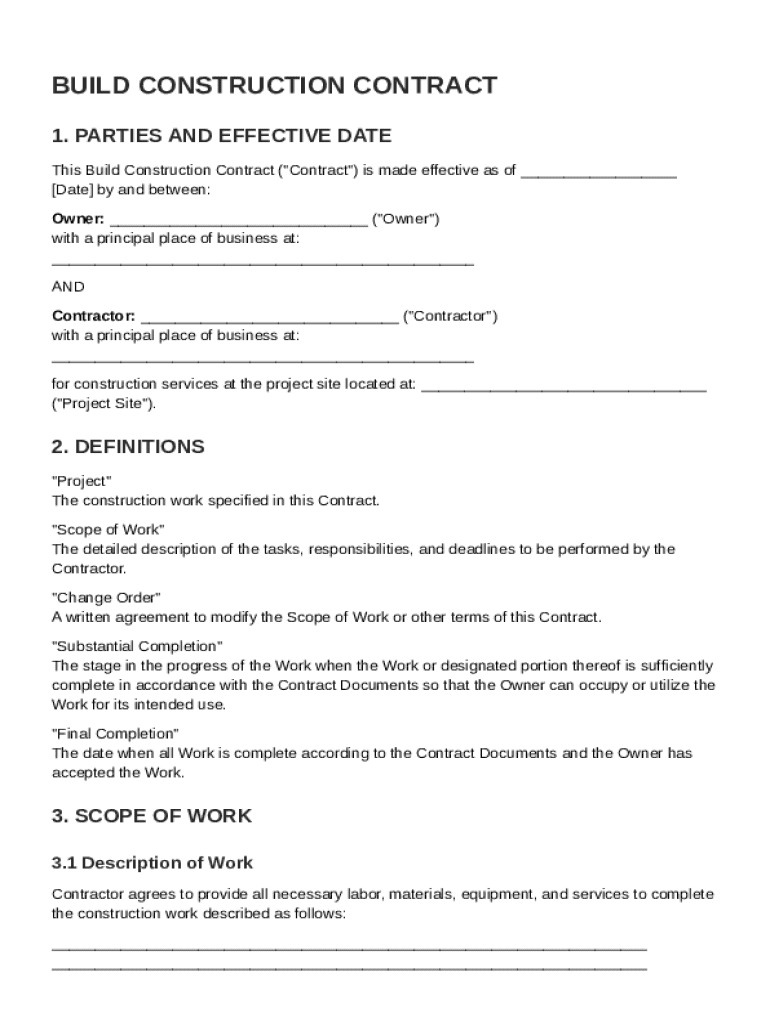
A Build Construction Contract Template is a formal agreement between an owner and a contractor that outlines the expectations and responsibilities for a construction project. This contract serves as a legal document that defines the project scope, timelines, payment terms, and other essential elements. Its primary purpose is to ensure both parties are clear about their obligations and to mitigate potential disputes. Construction contracts can vary in complexity, depending on the scale and nature of the project, but they typically include specific clauses to protect all parties involved.
Key Components
- Parties Involved: Identifies the owner and the contractor, including their legal names and contact details.
- Scope of Work: Describes in detail the work to be performed, including materials and workmanship standards.
- Project Timelines: Sets the start and completion dates for the project, along with any milestones.
- Payment Terms: Specifies the total contract value, payment schedule, and conditions for payment.
- Responsibilities: Outlines the duties of each party, ensuring clarity in roles and delivery expectations.
Key Elements of the Build Construction Contract Template
A comprehensive Build Construction Contract Template should include several key sections to ensure clarity and coverage of all necessary legal and operational aspects.
Scope of Work
The scope of work is a critical section that details the tasks and responsibilities required to complete the project. It includes specifications of the materials, workmanship quality, and any specific methods to be employed. A well-defined scope of work helps prevent scope creep and disputes between the owner and contractor.
Payment Terms
This section outlines the compensation the contractor is entitled to receive. It includes payment schedules, methods of payment, and any conditions or milestones required before payments are made. Clear payment terms ensure that both parties understand financial obligations and prevent payment-related disputes.
Duration and Deadlines
Construction contracts should include specific timelines, including start and end dates, and any critical milestones within the project. This section is crucial for project planning and ensures that both parties are aligned on project progress and completion expectations.
Legal Use of the Build Construction Contract Template
When using a Build Construction Contract Template, it's crucial to ensure that the document complies with relevant legal standards and industry practices. While the template can serve as a starting point, it may require customization to fit specific project requirements and state laws.
Compliance with Laws
Construction contracts must adhere to federal, state, and local laws regarding construction practices, safety regulations, and labor laws. Understanding these laws helps in tailoring the template to avoid legal issues.
Mediating Disputes
The contract should include a clause outlining procedures for dispute resolution. Options may include mediation, arbitration, or litigation, depending on the parties' preferences. Clearly defined dispute resolution processes can reduce the risk of protracted legal battles.
Steps to Complete the Build Construction Contract Template
Filling out a Build Construction Contract Template involves several steps to ensure that all details and requirements are accurately captured.
- Identify the Parties: Begin by filling out names, addresses, and contact information for both the owner and the contractor.
- Define the Scope: Provide a detailed description of the work to be performed, including specifications and standards.
- Establish Timelines: Clearly state the project's start and completion dates, as well as any important milestones.
- Outline Payment Terms: Detail the contract's financial aspects, including the total price, payment schedule, and any contingencies.
- Assign Responsibilities: Allocate roles and responsibilities for each party to avoid confusion.
- Legal Review: Consult a legal professional to ensure the contract complies with applicable laws and fulfills all project needs.
Review and Finalization
- Accuracy Confirmation: Verify all data for accuracy and completeness before finalizing the document.
- Signatures: Acquire signatures from all parties to make the contract legally binding.
- Distribution: Ensure copies of the signed contract are shared with all involved parties for reference and future enforcement.
Who Typically Uses the Build Construction Contract Template
The Build Construction Contract Template is predominantly used by individuals and businesses engaged in construction projects.


Contractors
Contractors use this template to establish clear agreements regarding their roles and responsibilities, payment terms, and project timelines, ensuring they meet client expectations while safeguarding business interests.
Property Owners
Property owners and developers utilize the template to secure agreements with contractors, ensuring projects are completed on time, within budget, and to the desired specifications. This helps mitigate risks and manage capital investments effectively.
State-Specific Rules for the Build Construction Contract Template
Construction laws can vary significantly by state, affecting the use and content of construction contracts. It's essential for parties involved to understand these variations to create a contract that is both effective and compliant.
Licensing Requirements
Some states have specific licensing requirements for contractors that must be met and verified within the contract. Including these requirements helps in maintaining legal compliance and ensuring contractor credibility.
Regulatory Compliance
State-specific building codes and safety regulations may require special considerations or inclusions in the contract template. Ensuring compliance with these rules is critical to legally executing construction projects and avoiding fines or delays.
Important Terms Related to the Build Construction Contract Template
Familiarity with key legal and technical terms used in construction contracts can significantly aid in understanding and drafting these agreements effectively.
Liquidated Damages
This term refers to a predetermined amount of compensation the owner is entitled to if the contractor fails to complete the project on time. Including liquidated damages in contracts helps motivate timely completion.
Retention
A portion of the contract payment may be held back until significant milestones are completed or the entire project is finished. This serves as a financial incentive for contractors to complete the project as per the agreed standards and timelines.