






Definition & Purpose of the Security Deposit Agreement Template
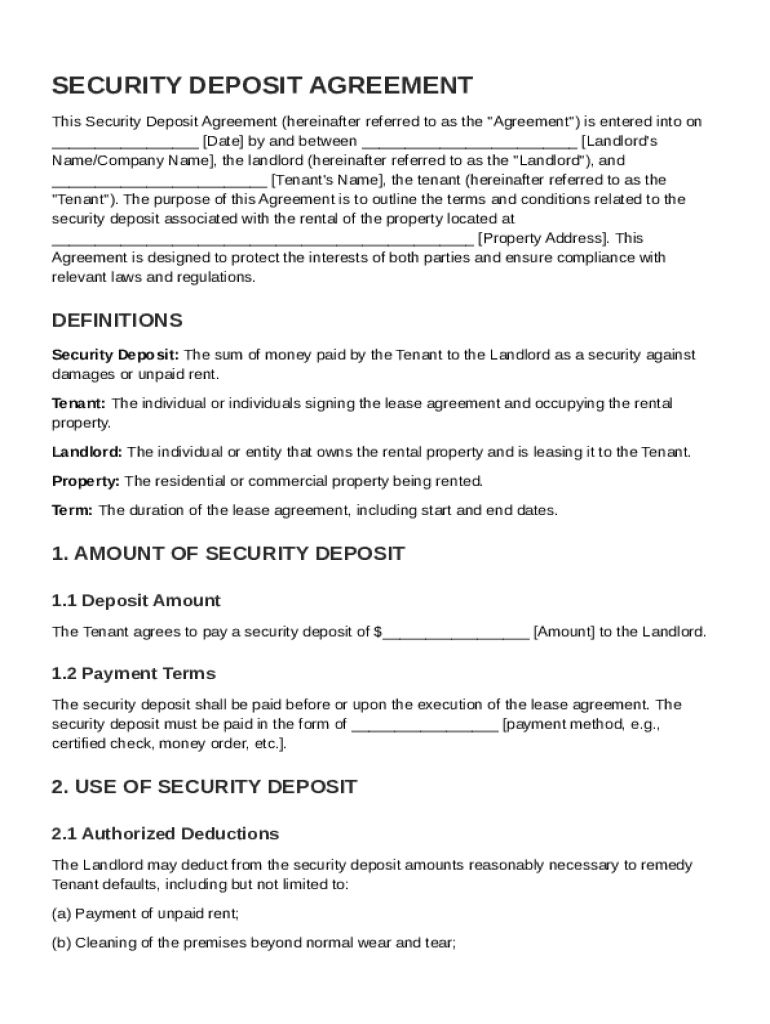
The Security Deposit Agreement Template serves as a foundational document in rental agreements, clearly outlining the terms and conditions related to the security deposit between a landlord and tenant. This legal document ensures that both parties understand their rights and obligations concerning the deposit during the tenancy. It typically includes details on the deposit amount, payment terms, permissible deductions, and procedures for returning the deposit at the end of the lease. By providing a structured framework, this template helps prevent disputes and ensures compliance with applicable state laws governing landlord-tenant relationships.
Types of Agreements Covered
- Residential Leases: Typically used in residential rental agreements to secure against damages or rent defaults.
- Commercial Leases: Utilized in renting business premises, often with unique stipulations tailored to commercial property use.
- Vacation Rentals: Ensure that short-term rental properties are protected against potential damages during the booking period.
Importance in Tenant-Landlord Relations
A well-drafted Security Deposit Agreement is crucial for establishing trust and clarity between landlords and tenants. It prevents misunderstandings by stipulating guidelines on handling the security deposit, fostering a smooth tenancy experience.
How to Use the Security Deposit Agreement Template
Using a Security Deposit Agreement Template involves several key steps to ensure that it is correctly completed and legally binding. This guides landlords and tenants on how to appropriately utilize the template for effective property management.
Step-by-Step Process
- Obtain the Template: Access a reliable Security Deposit Agreement Template from trusted platforms, such as DocHub, to ensure legal compliance and accuracy.
- Enter Party Details: Fill in the names and addresses of the landlord and tenant at the beginning of the template to identify the involved parties.
- Specify Deposit Amount: Clearly state the security deposit amount being held, along with any payment terms or conditions.
- Outline Deduction Conditions: List permissible deductions, such as damages or unpaid rent, ensuring each condition is precisely and lawfully detailed.
- Detail Return Process: Include instructions on how and when the deposit is to be refunded, aligning with state regulations.
- Sign & Share: Have both parties review, sign, and store copies of the document, either digitally via platforms like DocHub or in physical form.
Key Considerations
Ensure the language is clear and free from ambiguity, and verify all personal details are current and correct. Both parties should review the agreement thoroughly to ensure mutual understanding and acceptance.
Key Elements of the Security Deposit Agreement Template
The structure of the Security Deposit Agreement Template is crucial in defining roles and responsibilities, which helps avoid potential legal conflicts during and after the tenancy.
Essential Components
- Property Details: Include property address and description to avoid any ambiguity regarding the leased space.
- Deposit Terms: Clearly outline the deposit amount, including how it is collected and stored by the landlord during the tenancy.
- Conditions for Deductions: Specify scenarios that justify deductions to safeguard landlords against property damages or unpaid rent.
- Return Timelines: Establish clear timelines for returning the deposit post-tenancy, in accordance with relevant state laws.
- Signatures: Ensure that the document is signed by both the landlord and tenant to confirm agreement and understanding.
Examples of Stipulated Conditions
- Unpaid rent or utility bills at the end of the tenancy
- Property damages beyond normal wear and tear
- Cleaning fees if the property is not returned in its original condition
Important Terms Related to Security Deposit Agreement Template
Understanding the terminology used within the Security Deposit Agreement Template can aid in the proper execution and enforcement of the agreement.
Key Legal Terms
- Tenant: The individual renting the property who agrees to the terms laid out within the agreement.
- Landlord: The property owner who receives the security deposit as protection against potential tenant-related issues.
- Deductions: Legitimate charges deducted from the security deposit, as predefined in the agreement, for property repair or rent fulfillment.
- Escrow Account: A separate account where the security deposit may be held to ensure it is not wrongly used by the landlord.
Clarity in Language
Ensuring that both parties understand these terms is crucial for maintaining transparency and preventing misunderstandings related to deposit management.
State-Specific Rules for Security Deposit Agreement Template
In the United States, security deposit laws vary significantly from state to state. It is crucial for landlords and tenants to be aware of these differences to ensure compliance.
State-Specific Considerations
- Deposit Limits: Some states cap the amount landlords can charge for a security deposit, often calculated as a multiple of the rent.
- Interest on Deposits: States like Illinois require landlords to pay interest on held deposits, which must be returned to the tenant.
- Return Timelines: Time frames for returning the deposit after the lease ends vary, with places like New York requiring return within 14 days, while California allows 21 days.
Legal Resources
Consulting state-specific landlord-tenant laws and legal resources or consulting with a real estate attorney can clarify obligations and rights.
Legal Use of the Security Deposit Agreement Template
The Security Deposit Agreement Template acts as a legally binding contract that helps enforce the rights and obligations of both landlords and tenants under the law.
Legal Obligations
- Adherence to Fair Housing Laws: Landlords must ensure that the agreement complies with federal and state fair housing regulations.
- Proper Execution: The agreement must be executed with the informed consent of both parties, supported by accurate and truthful information.
- Resolution Mechanisms: The agreement should include provisions for resolving disputes, such as mediation or arbitration, to address issues amicably.
Compliance Monitoring
Regularly updating the agreement to incorporate changes in the law ensures ongoing compliance and legal protection for all parties involved.
Examples of Using the Security Deposit Agreement Template
Real-world scenarios demonstrate the practical application of a Security Deposit Agreement Template in different settings and the benefits of its proper implementation.
Scenario Examples
- Residential Tenancy: A landlord in California uses the template to detail a $2000 deposit, refundable within 21 days post-tenancy, subject to deductions for damage or cleaning.
- Commercial Lease: A business rents office space and the agreement specifies conditions under which utility bill delinquencies may be deducted from a $5000 deposit.
- Vacation Rental: Short-term residential agreements highlight a $300 deposit on Airbnb properties, noted for potential excessive cleaning or repair costs.
Lessons Learned
These scenarios illustrate the importance of tailored agreement terms and knowledgeable adherence to state laws for successful tenancy management operations.