
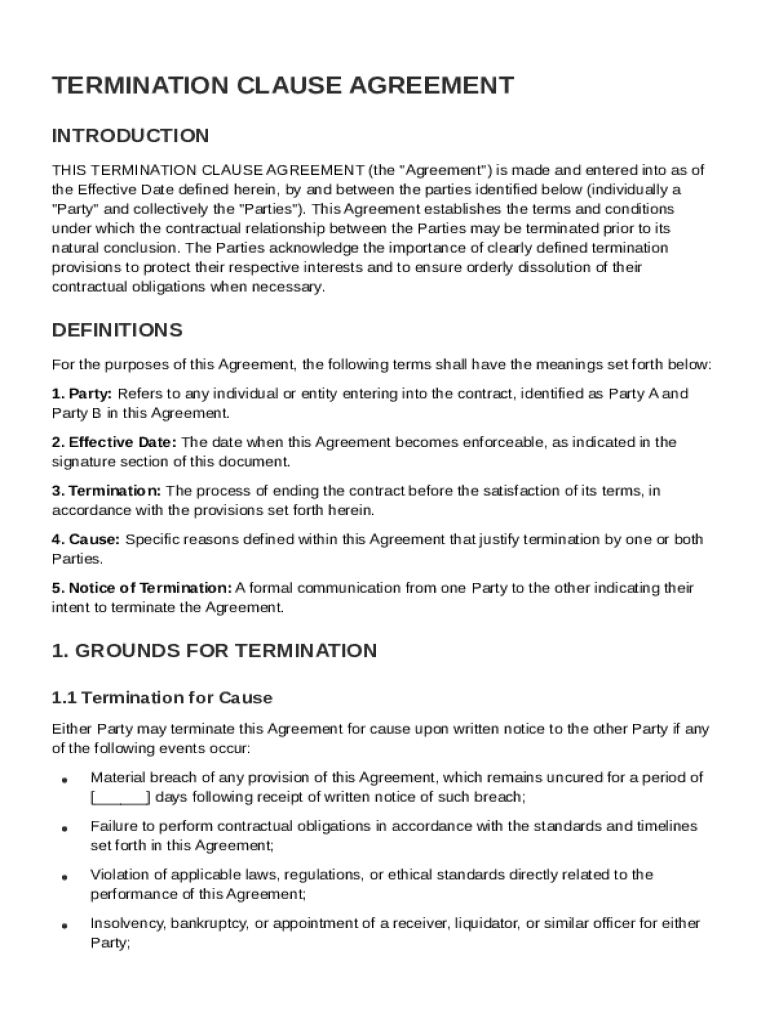







Definition & Meaning
A Termination Clause Contract Template is a legally structured document used to outline the terms under which a contractual relationship between two parties can be terminated. This template serves as a crucial component in any contract by providing clear instructions on the circumstances and processes for ending the agreement. It details various conditions such as termination for cause, which might include breaches or other serious infractions, and termination for convenience, which allows a party to end the agreement without specific cause. This ensures both parties have mutual understanding and protection against abrupt or unfair contract dissolutions.
Examples of Use Cases
- Termination for Cause: If a party continuously fails to deliver agreed services or materials, the other party might execute a termination for cause, using the template to document breaches that justify ending the contract.
- Termination for Convenience: A company might decide to terminate a contract early due to a strategic shift that makes the existing terms unnecessary or burdensome, using the template to ensure all legal bases are covered.
Key Elements of the Termination Clause Contract Template
The Termination Clause Contract Template is composed of several critical components designed to ensure clarity and legal enforceability. Understanding these elements is essential for any party entering a contract to safeguard their interests and navigate potential disputes.
Core Components
- Grounds for Termination: Specifies the conditions under which either party can terminate the contract. These might include non-performance, sustained breaches, or external factors such as regulatory changes.
- Notice Requirements: Details the procedure for notifying the other party of the intent to terminate, including timeframes and methods of communication. This ensures transparency and gives the other party time to respond or rectify issues.
- Obligations upon Termination: Outlines the responsibilities of each party once a termination notice has been served, such as finalizing accounts, returning materials, or maintaining confidentiality.
Practical Scenarios
- Final Settlements: When a contract is terminated, final settlements ensure that outstanding payments or obligations are addressed per predefined terms.
- Confidentiality Clauses: Post-termination obligations often include confidentiality agreements to prevent the misuse of proprietary information shared during the contractual relationship.
Steps to Complete the Termination Clause Contract Template
Accurately completing a Termination Clause Contract Template is crucial to ensure it serves its intended purpose. Below is a step-by-step guide to handling this process effectively.
- Identify Parties Involved: Clearly state the names and contact information of both contractual parties.
- Specify Contract Details: Reference the original contract, including its date and scope, to ensure clarity on what is being terminated.
- Determine Grounds for Termination: Clearly outline the reason(s) for terminating the contract, whether for cause or convenience.
- Outline Notice Procedures: Detail how and when the termination notice will be communicated, adhering to any original terms set in the existing contract.
- Define Post-Termination Obligations: List any actions required following termination, including financial settlements and return of property or documents.
- Include Dispute Resolution Methods: Specify how potential disputes regarding the termination will be addressed, whether through arbitration, mediation, or litigation.
Common Pitfalls
- Insufficient Documentation: Failing to provide comprehensive reasons or documentation for termination can lead to disputes and potential legal action.
- Vague Notice Requirements: Undefined notice methods or timelines can result in misunderstandings and claims of improper termination.
Legal Use of the Termination Clause Contract Template
The Termination Clause Contract Template is a legal document, and its use must align with prevailing laws and guidelines to ensure enforceability. Parties should be aware of specific legal considerations when utilizing this template.
Compliance with Laws
- Governing Law: The contract should specify which jurisdiction's laws govern the agreement, often related to where the company operates or where the contract is executed.
- Adherence to ESIGN Act: If the termination is managed electronically, signatures and documents must comply with the ESIGN Act to ensure they are legally binding.
Dispute Resolution
- Arbitration Clauses: Templates often include arbitration clauses to resolve disputes outside of court, saving time and costs associated with litigation.
- Court Jurisdiction: In cases where litigation is necessary, the contract will generally specify which court has jurisdiction, providing a roadmap for dispute resolution.
Who Typically Uses the Termination Clause Contract Template
Different industries and business entities utilize Termination Clause Contract Templates to manage contractual relationships and potential dissolutions effectively. Identifying who commonly uses these templates can offer insight into their practical applications.


Typical Users
- Corporations and Large Enterprises: Often use these templates in complex agreements where multiple parties and substantial investments are involved.
- Small Businesses and Startups: Utilize templates to formalize partnerships and service agreements, ensuring protection while navigating growth and changes.
- Legal Professionals and Consultants: Draft and customize termination clauses for clients, ensuring compliance with industry standards and regulatory requirements.
Industry Examples
- Real Estate: Firms may use termination clauses in lease agreements to handle tenant breaches or property abandonment.
- Technology Sector: Software companies could employ these clauses within service contracts to address circumstances like unmet deliverables or data breaches.
Important Terms Related to the Termination Clause Contract Template
Understanding specific terminology is critical when handling Termination Clause Contract Templates. Knowing these terms provides clarity and helps avoid potential misinterpretations or legal challenges.
Key Terms
- For Cause Termination: A termination triggered by one party's breach or failure to meet contractual obligations.
- For Convenience Termination: Allows a party to terminate the contract without needing to prove breach or fault, often following specific notice and cost reimbursement.
- Confidentiality Obligations: Legal requirement to maintain secrecy on proprietary information even after contract termination.
Application in Use
- Breach Clauses: Clearly defined breach clauses articulate what constitutes a breach and the resulting ramifications, crucial for enforcing for-cause terminations.
- Compensation Terms: Address payments due following termination, including potential penalties or severance for unfinished obligations.
State-Specific Rules for the Termination Clause Contract Template
State-specific regulations can significantly impact how Termination Clause Contract Templates are crafted and enforced. Awareness of these differences is necessary for compliance and effective contract management.
State Variations
- California: Emphasizes detailed notice requirements and often includes stipulations on what constitutes a reasonable lead time for terminations.
- New York: May require additional language to address unique employment termination laws, especially in contracts involving worker relationships.
Key Considerations
- Employment vs. Commercial Contracts: Some states differentiate how termination clauses are treated in employment versus commercial contracts, affecting language and enforceability.
- Consumer Protections: States like Massachusetts might enforce additional consumer protection laws, impacting service-oriented contracts and their termination provisions.
Software Compatibility and Digital Usage
With digital transformation, the integration of Termination Clause Contract Templates into various software platforms becomes critical. Understanding compatibility with digital tools streamlines contract management and use.
Compatibility Options
- Document Editing Software: Templates should be compatible with editors like Microsoft Word and Google Docs for easy customization and sharing.
- Online Signature Platforms: Electronic signature tools like DocHub and Adobe Sign should integrate seamlessly to facilitate legally binding digital agreements.
Benefits of Digital Use
- Real-Time Editing: Allows multiple users to edit and comment on contracts simultaneously, increasing efficiency in drafting and finalizing terms.
- Secure Sharing: Digital platforms often provide encrypted sharing options, maintaining confidentiality and ensuring that only authorized individuals can access the document.
By understanding these aspects of the Termination Clause Contract Template, users can effectively manage contractual relationships and navigate potential challenges with clarity and legal security.




