






Definition and Purpose of the Temporary Worker Contract Template
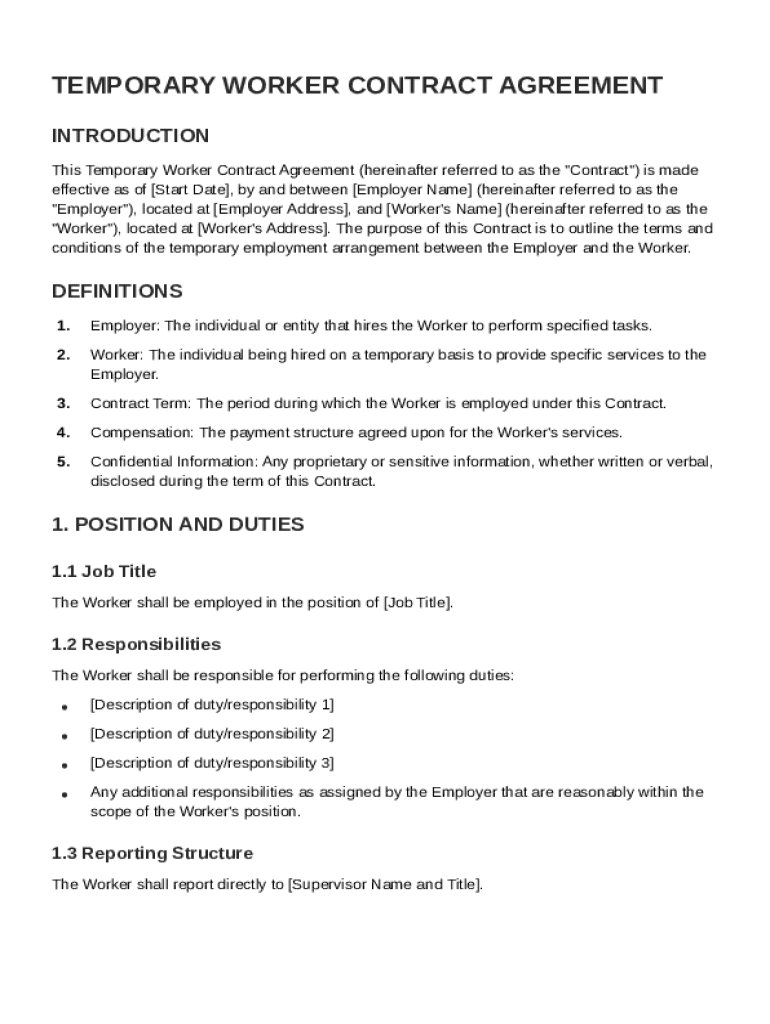
The Temporary Worker Contract Template serves as a formal agreement between an employer and a temporary worker. It delineates the specific terms under which the worker will be employed for a defined period. Typical elements include job responsibilities, compensation details, work schedule, and confidentiality obligations. This document sets clear expectations and legal protections for both parties during the temporary employment period, minimizing potential conflicts.
How to Use the Temporary Worker Contract Template
To use the Temporary Worker Contract Template effectively, both the employer and temporary worker should carefully review each section. Start by filling in the names and contact details of both parties. Define the job responsibilities and expectations to avoid ambiguity. Include specific terms regarding compensation, such as hourly rates or salary. Double-check that all information is accurate before both parties sign to ensure clarity and mutual understanding.
Step-by-step Guidance
- Review Responsibilities: Clearly outline the temporary worker's role and duties.
- Specify Duration: Define the start and end dates of employment.
- Compensation Details: Include hourly rates or salary, as well as payment frequency.
- Confidentiality Clauses: Ensure both parties understand any confidentiality obligations.
- Sign and Date: Both employer and worker must sign and date the document to make it legally binding.
How to Obtain the Temporary Worker Contract Template
The Temporary Worker Contract Template can typically be obtained from legal platforms, HR software, or directly from employee management software like DocHub. It's important to choose a reliable source to ensure that the templates are compliant with current legal standards. Platforms such as DocHub offer easy access to downloadable templates that can be customized to fit specific organizational needs.
Key Elements of the Temporary Worker Contract Template
The template includes several critical components crucial for protecting both parties:
- Job Description: Clearly described duties help avoid misunderstandings.
- Compensation Plan: Details on payment amounts and schedules.
- Term of Employment: Start and end dates or duration of the temporary position.
- Termination Conditions: Events that can lead to early termination of the contract.
- Confidentiality Obligations: Requirements for maintaining discretion with proprietary information.
Legal Use of the Temporary Worker Contract Template
Utilizing the Temporary Worker Contract Template requires adherence to federal and state employment laws. For instance, while drafting, ensure that the contract complies with anti-discrimination laws and wage regulations. Employers must also verify that their confidentiality clauses and termination conditions do not infringe upon worker rights. Consulting with a legal expert can ensure compliance and help avoid potential legal pitfalls.
State-specific Rules for the Temporary Worker Contract Template
State laws can significantly impact the terms and enforceability of a Temporary Worker Contract. For example, states like California have unique regulations around worker classification and benefits. Employers must consider state-specific employment laws regarding minimum wage, worker classification, and benefits requirements.
Common State Variations
- Worker Classification: Differentiating between employees and independent contractors.
- Minimum Wage: Compliance with state or local minimum wage laws.
- Leave Entitlements: Laws pertaining to sick leave and other absences.
Who Typically Uses the Temporary Worker Contract Template
This template is often employed by businesses that rely on flexible staffing solutions. Industries such as retail, hospitality, healthcare, and construction frequently employ temporary workers and thus benefit from using standardized contracts. Additionally, staffing agencies utilize these templates to ensure consistent terms across various employers and assignments.


Digital vs. Paper Version of the Temporary Worker Contract Template
The choice between a digital and paper version of the contract depends on the needs and capabilities of the employer and worker. Digital contracts facilitate ease of access and modification, and platforms like DocHub ensure secure signatures and document management. In contrast, paper versions may appeal to organizations or individuals preferring physical documentation; however, digital versions offer a more efficient workflow and are environmentally friendly.