






Definition and Purpose of a Renewal of Tenancy Agreement Template
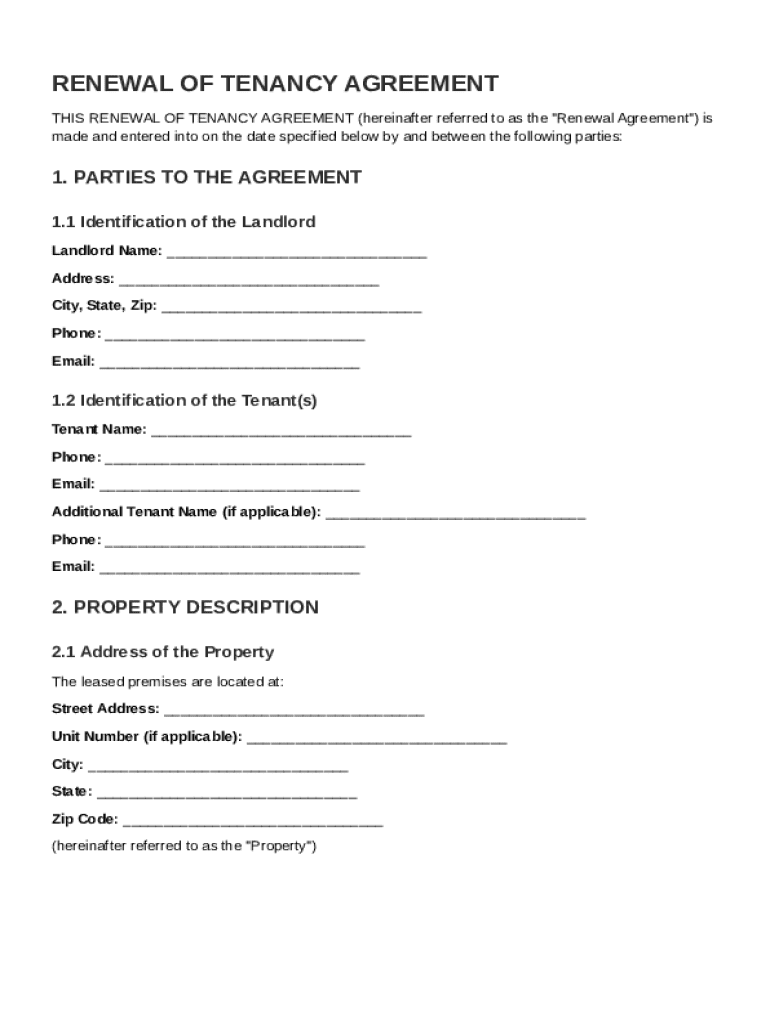
A Renewal of Tenancy Agreement Template is a document that formalizes the continuation of an existing lease between a landlord and tenant. It specifies the terms agreed upon for the new leasing period, ensuring clarity and legal protection for both parties. Typically, these agreements reaffirm the property details, rental amounts, security deposits, and the responsibilities of each party. The template provides a structured framework for addressing potential changes and maintaining the continuity of living arrangements without the need for drafting a completely new lease.
Examples
- Extension of Lease Duration: Extending the lease by another year under the same terms as the original agreement.
- Modification of Rent: Increasing the rent to reflect current market conditions, while retaining other terms.
- Updating Responsibilities: Adjusting maintenance responsibilities to reflect changes in property or tenant needs.
How to Use the Renewal of Tenancy Agreement Template
Using the Renewal of Tenancy Agreement Template effectively involves a few key steps:
-
Review the Existing Lease: Examine the current tenancy agreement to understand the terms that need renewal or modification. This helps in identifying any clauses requiring updates, such as rent adjustments or changes in property rules.
-
Customize the Template: Personalize the template with the specific details of both the landlord and the tenant, the property in question, and any updated terms. This customization ensures that the agreement accurately reflects current arrangements.
-
Consult Both Parties: Arrange a discussion between the landlord and tenant to go over the terms outlined in the renewal. This is crucial for addressing any disagreements and modifying language to avoid future disputes.
-
Execute the Document: Once finalized, ensure both parties sign the agreement to formalize the renewal. This execution symbolizes mutual consent and legal commitment to the specified terms.
Key Elements of the Renewal of Tenancy Agreement Template
This template includes several crucial components that ensure comprehensive coverage and legal robustness:
-
Party Identification: Clear delineation of the landlord and tenant, including contact information and any legal representatives involved.
-
Lease Duration: The period for which the renewal is valid, often described in months or years, with specific start and end dates.
-
Rental Amount and Payment Terms: Details concerning the modified rent, any escalations, and the schedule for payments to avoid confusion.
-
Security Deposit Details: Information on security deposit handling, including adjustments, deductions, or returns, important for maintaining trust.
Additional Components
- Additional Provisions: Clauses for additional terms specific to the property or situation, such as pet policies or grounds for lease termination.
- Governing Law: Mention of the state laws applicable, which guide the legality and enforceability of the agreement.
Steps to Complete the Renewal of Tenancy Agreement Template
Completing the template involves several structured steps:
-
Gather Required Information: Collect details such as contact information, property description, and current lease terms to populate the template accurately.
-
Draft Initial Terms: Begin by inputting agreed-upon terms and new changes into the template, giving equal focus to all sections for consistency.
-
Review and Revise: Carefully review the draft to ensure accuracy and compliance with state laws. Both parties should participate to incorporate mutual revisions.
-
Finalize and Sign: Upon final review, have both parties sign the document to enact the tenancy renewal, ensuring each retains a copy for their records.
Advantages of Using a Renewal of Tenancy Agreement Template
Opting for a template offers numerous benefits, notably in terms of efficiency and clarity:
-
Time Saving: Streamlined process reduces preparation time compared to drafting documents from scratch.
-
Consistency and Standardization: Offers a reliable structure that ensures all key terms are uniformly addressed.
-
Risk Mitigation: Reduces potential legal disputes by thoroughly documenting all agreed terms.
Real-World Applications
- Property Management Companies: Manage numerous leases efficiently while maintaining consistency across documents.
- Individual Landlords: Easily renew leases without needing detailed legal expertise.
State-Specific Rules and Considerations
Different states may have distinct requirements affecting tenancy agreements:
-
Security Deposit Regulations: Varied rules about maximum limits, interest obligations, and return timelines.
-
Rent Control Regulations: Some states enforce rules on maximum rent increases, influencing renewal negotiations.
-
Notarization Laws: While not universally required, some states may mandate notarized agreements to be enforceable.
State Examples
- California: Rent increases limited by state law, affecting negotiations in renewal agreements.
- New York: Specifics on lead paint disclosures must be included in renewal terms.
Legal Implications and Usage of the Template
Utilizing this template supports legal compliance while safeguarding both parties' rights and obligations.
-
Court Validity: Properly executed agreements are more likely to be upheld in court disputes.
-
Preventive Legal Measure: Limits misunderstandings and potential litigation by clearly defining responsibilities and terms.
Edge Cases
- Tenant Vacating Prematurely: Needs stipulated conditions in the agreement to address potential penalties.
- Property Sale: Legal reassignment of the lease obligation to new ownership when the property changes hands.
Important Terms Related to the Renewal of Tenancy Agreement Template
Understanding the associated terminology is crucial for effective use of the template:
-
Lease Addendum: Supplements or modifies an existing lease, often used for more specific changes not covered in the renewal.
-
Tenancy Continuance: Legal term for the ongoing relationship reenacted by the renewal agreement.
-
Escalation Clause: Provisions within a lease that allow for rent adjustment based on predetermined criteria, important for long-term agreements.
Incorporating these elements ensures the renewal template provides a comprehensive, legally sound framework for continuing tenancies.