






Definition and Meaning
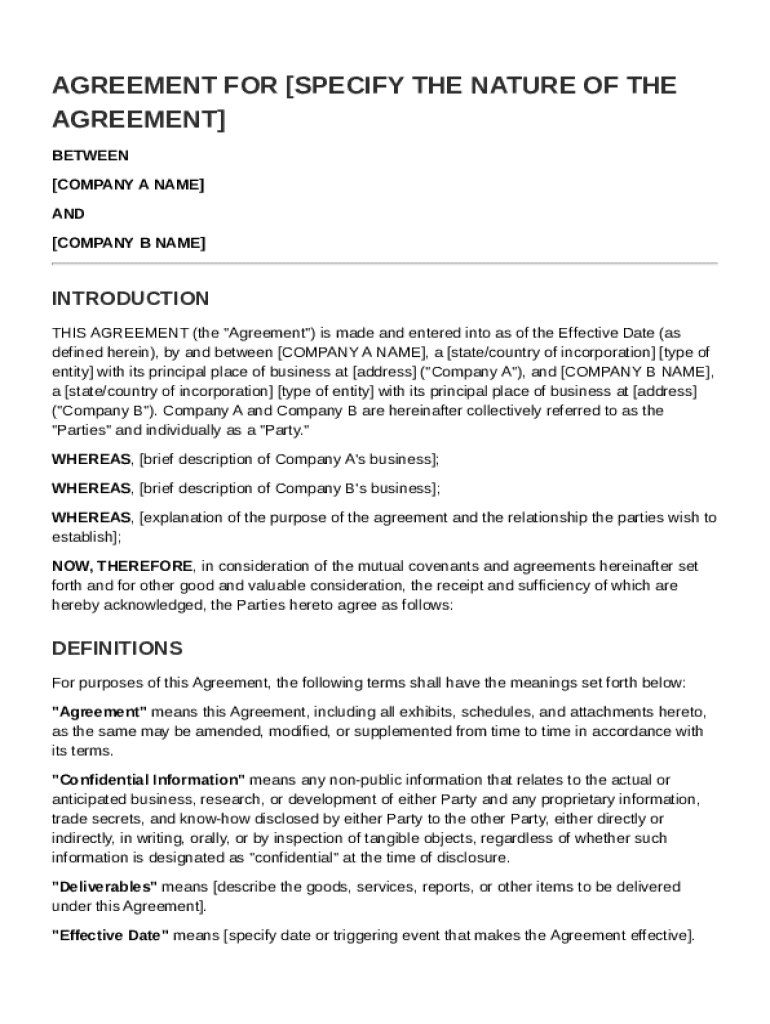
A "Between Two Companies Contract Template" is a standardized document designed to establish a formal agreement between two business entities. It serves as a framework to outline the terms and conditions of their collaboration. This template typically encompasses various sections such as the scope of work, compensation arrangements, confidentiality obligations, intellectual property rights, and provisions for dispute resolution. The primary objective of utilizing this template is to ensure that both parties are clear about their responsibilities and commitments, thereby mitigating potential conflicts. This type of contract helps in clearly defining the legal relationship between the entities, ensuring compliance with applicable laws and protecting mutual interests.
How to Use the Between Two Companies Contract Template
Using the "Between Two Companies Contract Template" involves several steps to ensure that the document accurately reflects the intent and agreements of both parties. Initially, both companies should review the template in detail to understand each clause. This review should focus on customizing sections pertinent to their specific arrangement, such as details about the services or products being exchanged, timelines for deliverables, and the mechanism of payment. After mutual agreement, parties should make alterations to standard clauses to align with their particular needs. This process ensures that the resulting agreement is comprehensive and specific. Stakeholders from both companies, such as legal advisors, should review any modifications before the final version is signed to confirm legal compliance and completeness.
Steps to Complete the Between Two Companies Contract Template
- Preparation: Gather all necessary information, including company names, addresses, and the specific terms of the agreement, such as service types and delivery expectations.
- Customization: Modify the template sections to accurately reflect specifics such as compensation, confidentiality clauses, and intellectual property rights.
- Review: Both parties should thoroughly review the amendments to confirm accuracy and adequacy.
- Consultation: Engage legal experts to ensure that all additions meet legal and regulatory standards.
- Finalization: Incorporate changes based on feedback and finalize the contract.
- Signatures: Both companies' authorized representatives should sign the document to make it legally binding.
- Distribution: Each party should retain a copy of the signed contract for their records.
Key Elements of the Between Two Companies Contract Template
- Scope of Work: Defines what tasks or services will be performed, including specific responsibilities of each party.
- Compensation Details: Outlines how and when payments will be made, including any penalties for late payments.
- Confidentiality: Establishes the extent to which information shared between the parties must remain private.
- Intellectual Property Rights: Specifies ownership and usage rights of any creations or inventions made during the collaboration.
- Liability and Indemnification: Details the extent of liability each party has in case of breach or third-party claims.
- Termination Conditions: Identifies circumstances under which the contract can be terminated and processes for handling disputes.
Who Typically Uses the Between Two Companies Contract Template
This contract template is ideal for businesses of various kinds that intend to engage in formal partnerships or collaborations. Common users include:
- Small and Medium Enterprises (SMEs): For partnerships that require clear terms without needing bespoke legal documents.
- Large Corporations: In situations where standardized agreements are used for efficiency across departments or projects.
- Startups: For establishing partnerships with vendors, customers, or other startups, particularly in fast-moving industries.
- Consultants and Freelancers: When entering into partnerships or subcontracting work to other businesses.

Legal Use of the Between Two Companies Contract Template
The legal use of the "Between Two Companies Contract Template" ensures compliance with relevant laws and regulations applicable to business agreements in the United States. The template includes legally binding clauses aligned with the Uniform Commercial Code (UCC), which governs commercial transactions across states, and accommodates state-specific nuances. Users must ensure compliance with federal, state, and local laws pertaining to their industry. For example, contracts involving data exchange or intellectual property must adhere to privacy laws like the California Consumer Privacy Act (CCPA) or industry-specific legislation.
State-Specific Rules for the Between Two Companies Contract Template
State-specific rules can significantly alter interpretation and enforcement of contract terms. For instance, states like California may impose additional requirements for employment-related contracts under the California Labor Code. Similarly, New York's General Obligations Law may impact contract enforceability for businesses operating there. Companies should adjust standard templates to reflect regional legal frameworks. Consulting with legal professionals experienced in local law is advisable to ensure alignment with specific state regulations, and to prevent disputes related to jurisdictional variances.
Digital vs. Paper Versions
Digital versions of the "Between Two Companies Contract Template" are increasingly used for efficiency and integration with document management platforms like DocHub. Digital contracts can be signed electronically, making them legally binding per the ESIGN Act, which recognizes electronic signatures as equivalent to traditional handwritten signatures in the U.S. The advantages of digital versions include easier storage, retrieval, and sharing with stakeholders. However, some businesses may still prefer physical copies for archival purposes or when dealing with partners not yet transitioned to digital processes.
Versions or Alternatives to the Between Two Companies Contract Template
While the "Between Two Companies Contract Template" offers a comprehensive foundation, there are alternative versions and templates that cater to specific business needs or industries. These include:
- Non-Disclosure Agreements (NDAs): Used when confidentiality needs to be the contract's primary focus.
- Partnership Agreements: Detailed templates for joint ventures or partnerships that involve shared ownership or revenue models.
- Service-Level Agreements (SLAs): Used when service quality and performance standards are crucial, often in tech and service sectors.
- Master Service Agreements (MSA): For long-term relationships that involve multiple projects or collaboration phases over time.
Exploring these alternatives depends on the unique needs of the collaboration and can complement the primary contract template where more specific details are required.