
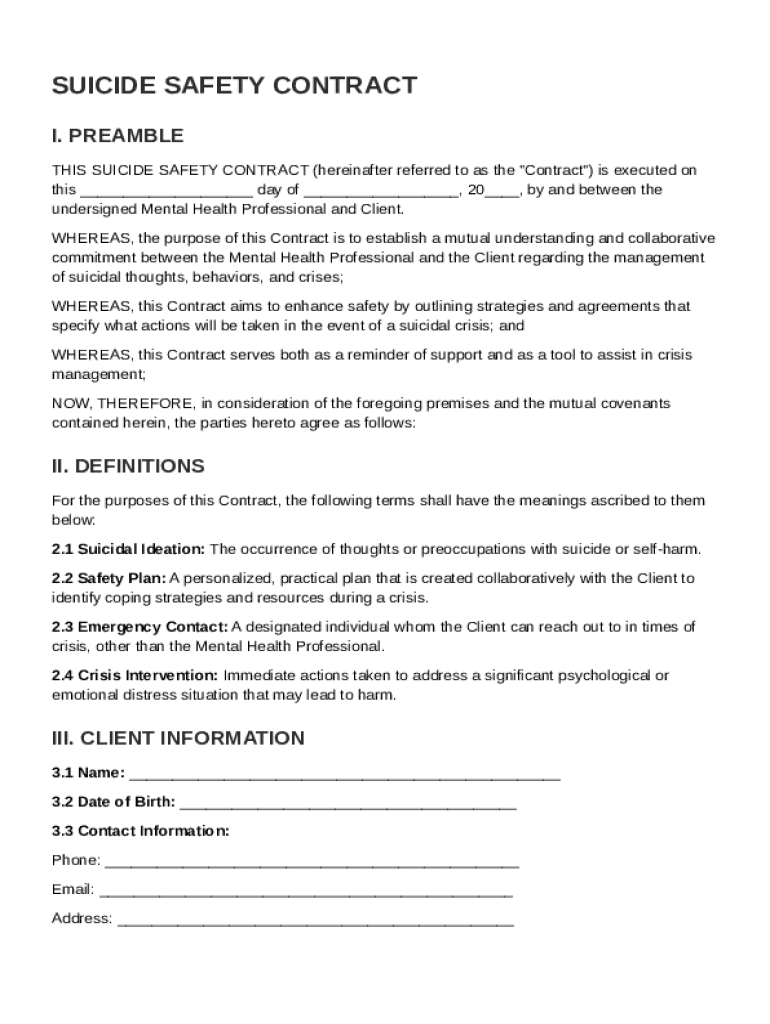







Definition of the Suicide Safety Contract Template
The Suicide Safety Contract Template is a formal agreement crafted to foster a structured safety plan between a mental health professional and a client experiencing suicidal thoughts or behaviors. This contract delineates the roles, responsibilities, and specific steps both parties must follow to manage and mitigate risks associated with suicidal ideation. By focusing on a collaborative approach, it emphasizes the critical importance of ongoing communication and setting clear guidelines for crisis intervention.
Purpose and Importance
- Role Clarification: It establishes the duties of both the healthcare provider and the client, outlining expectations and commitments to ensure a supportive environment.
- Risk Management: Acknowledges the risks inherent in dealing with suicidal thoughts, providing a strategy to reduce these risks through a structured plan.
- Emergency Procedures: Details specific actions to be taken in case of a crisis, enhancing the readiness and rapid response capabilities in emergencies.
Components
- Client Information: Personal details about the client to ensure the contract is tailored to their specific needs and circumstances.
- Commitment to Safety: A pledge by the client to engage in agreed-upon activities or reach out for help when suicidal thoughts occur.
- Coping Strategies: Lists practical coping mechanisms and strategies to manage distress and reduce suicidal ideation.
- Resource List: Provides a curated list of resources such as hotlines and support groups that the client can access for immediate assistance.
How to Use the Suicide Safety Contract Template
Using the Suicide Safety Contract Template effectively requires a clear understanding of its elements and purpose. This template lays the groundwork for a proactive approach to suicide prevention.
Key Steps
- Understanding Objectives: Begin with a comprehensive briefing on how the contract supports the client's mental health journey.
- Personalization: Customize the template to the client’s specific risk factors and support needs.
- Communication: Maintain an open dialogue with the client to adapt the contract as needed, reinforcing their commitment to safety.
- Review and Adjust: Regularly update the contract to align with the client's evolving circumstances and feedback.
Tips for Effective Implementation
- Involve the Client: Ensure that the client plays an active role in crafting the contract to enhance their commitment.
- Address Specific Concerns: Tackle any hesitations or questions the client may have, fostering trust in the process.
- Continuous Support: Provide consistent follow-ups to monitor compliance and provide additional support if necessary.
Steps to Complete the Suicide Safety Contract Template
Completing this template involves several steps designed to tailor the contract to the client's unique situation while ensuring it thoroughly covers all necessary aspects.
Detailed Process
- Gather Client and Professional Information: Start by entering essential details about both parties involved in the contract.
- Discuss and Agree on Safety Commitments: Engage in a dialogue to identify what commitments both parties should make to ensure the client's safety.
- Outline Coping Strategies: Collaborate with the client to list effective coping mechanisms that will help manage their suicidal thoughts.
- Identify Resources: Select appropriate external resources that can offer additional support, such as crisis hotlines or community groups.
- Establish Emergency Procedures: Clearly define the steps to be taken in the event of an emergency to ensure swift and effective intervention.
Common Challenges
- Resistance from the Client: Address concerns empathetically and employ motivational interviewing techniques to obtain buy-in.
- Incomplete Templates: Double-check that all sections are filled out completely to avoid gaps in the safety plan.
Key Elements of the Suicide Safety Contract Template
Understanding the key components of the Suicide Safety Contract Template is crucial to its effective implementation. These elements collectively help in constructing a robust, actionable safety plan.
Core Components
- Client and Professional Information: Accurate identification details that personalize and authenticate the contract.
- Commitment to Safety: An explicit assertion by the client to safeguard their well-being by adhering to the outlined plan.
- Coping Strategies: Tactics personalized to the client’s experiences, helping them manage distress.
- Emergency Contacts: A list of individuals or services to be contacted during a crisis, ensuring timely responses.
- Compliance Verification: Methods to ensure both parties adhere to the commitments made.
Optional Elements
- Periodic Review Schedule: Establish a timetable for regular reviews and updates to ensure the contract remains relevant and effective.
- Alternative Support Options: Explore additional therapies or interventions that may augment the safety plan.
Legal Use of the Suicide Safety Contract Template
In the United States, the legal framework governing the use of documents like the Suicide Safety Contract Template underscores its role in suicide prevention and risk management.
Legal Considerations
- Confidentiality: Ensure that all discussions and agreements within the contract remain confidential, respecting client privacy laws.
- Legally Binding Nature: While not legally enforceable, the contract serves as a moral and ethical agreement to safeguard the client’s life.
- Responsibility: Both parties must acknowledge their responsibilities toward the agreement, with the mental health professional adhering to duty of care standards.
Legal Protections
- Professional Guidelines: Adhering to established mental health legal guidelines further legitimizes the contract and enhances its applicability.
- Crisis Intervention Protocols: Aligning the contract with local and national crisis intervention standards provides an additional layer of effectiveness.
Examples of Using the Suicide Safety Contract Template
Illustrating real-world applications of the template can help in understanding its importance and versatility.
Client Scenarios
- Adolescents in Crisis: A high school student battling depression uses the contract with their counselor to navigate difficult periods.
- Returning Veterans: A veteran employs the template to manage PTSD-related suicidal thoughts with the guidance of a VA counselor.
- Chronic Mental Health Issues: Individuals with a history of mental health problems use the contract as part of a broader therapeutic strategy.
Success Stories
- Enhanced Safety: Case studies where clients have successfully averted crisis situations by adhering to the plan.
- Increased Engagement: Clients reported a greater sense of security and involvement in their treatment with the contract in place.
Who Typically Uses the Suicide Safety Contract Template
Identifying the typical users of this form can provide insight into its practical utility and applicability across diverse settings.


Common Users
- Mental Health Professionals: Therapists and counselors who integrate the contract as part of their therapeutic process for high-risk clients.
- Hospitals and Clinics: Health institutions seeking to provide comprehensive care for patients exhibiting suicidal behavior.
- Support Groups: Organizations assisting at-risk individuals employ the contract to offer structured support.

Contextual Use Cases
- Schools and Universities: Educational counselors collaborate with students to mitigate risks and provide support through the contract.
- Workplaces: HR departments in workplaces implement the contract for employees showing signs of high stress or mental health challenges.
State-Specific Rules for the Suicide Safety Contract Template
The legal and procedural aspects of the Suicide Safety Contract Template can vary across different states in the U.S., requiring attention to specific guidelines and regulations.
State Guidelines
- Mandatory Reporting Laws: Be aware of and comply with state laws regarding the mandatory reporting of suicidal behavior.
- Crisis Intervention Protocols: Some states have unique protocols for crisis intervention that should be incorporated into the contract.
Adjustments and Modifications
- State-Specific Amendments: Modify the contract to align with state-specific requirements for mental health emergency procedures.
- Local Resources: Tailor resource lists to include local hotlines, services, or support groups pertinent to the client’s location.
Who Issues the Form
The Suicide Safety Contract Template is typically issued by mental health professionals and organizations as part of their effort to provide structured support to individuals at risk.
Issuing Entities
- Individual Therapists: As part of private practice, therapists may create and utilize these contracts to facilitate individual therapy sessions.
- Mental Health Clinics: Larger organizations formalize the issuance of these contracts as part of their risk management protocols.
- Educational Institutions: School counselors and university health centers adopt these templates to address student mental health.
Distribution Methods
- Digital Platforms: Online mental health services and platforms offer downloadable versions of the contract for ease of use.
- Printed Formats: Physical copies are often distributed during face-to-face therapy sessions or group therapy classes for immediate implementation.




