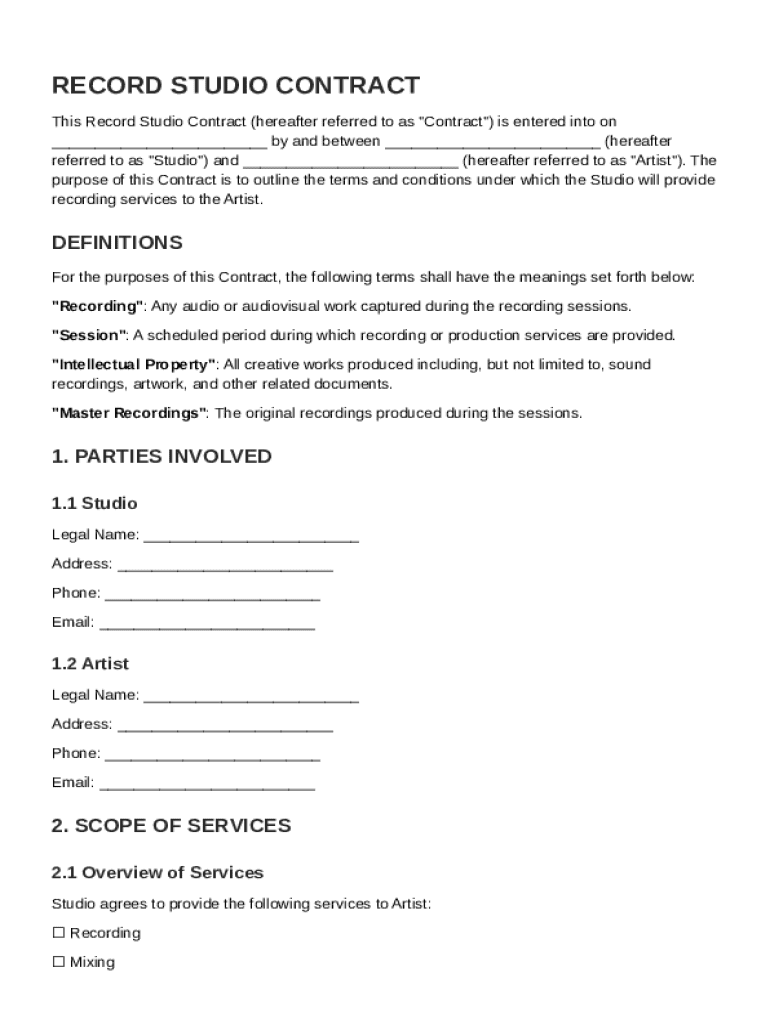







Definition and Purpose of the Record Studio Contract Template
The Record Studio Contract Template serves as a legal framework detailing the terms and conditions under which a recording studio provides services to an artist. This contract is crucial in establishing clear expectations, roles, and responsibilities for both parties involved in the recording process. It generally covers a wide range of essential topics such as compensation, rights to the master recordings, confidentiality, and various warranties. By clearly outlining these elements, the template aims to prevent misunderstandings or disputes, ensuring a smooth and professional working relationship between the artist and the studio.
Key Elements of the Record Studio Contract Template
1. Payment and Compensation
Understanding the payment structure is integral to the contract. This section details how and when the artist will pay for the studio's services. It may include:
- Hourly rates or flat fees.
- Payment schedules.
- Any deposit requirements before services commence.
2. Rights to Master Recordings
This section outlines who holds the rights to the final recordings. The terms can vary significantly depending on the agreement, potentially stating:
- Exclusive ownership by the artist.
- Shared rights between the studio and the artist.
- Revenue sharing from distribution or sales.
3. Confidentiality Obligations
Ensuring confidentiality is vital, especially when working with unreleased music. The contract typically includes clauses to:
- Restrict the studio from sharing or using recordings for any purpose not explicitly permitted by the artist.
- Protect sensitive information about the artist and the production process.
Steps to Complete the Record Studio Contract Template
- Review Clauses: Carefully examine each clause to ensure it reflects the agreed terms.
- Customize Details: Fill in specific information such as names, dates, payment terms, and rights assignments.
- Legal Compliance: Confirm that the contract complies with relevant laws and regulations in your state.
- Consult Legal Advice: If possible, have a legal expert review the contract to address any potential issues.
- Sign the Contract: Once both parties agree on the terms, sign the document to make it legally binding.
How to Obtain the Record Studio Contract Template
The template can often be obtained from:
- Legal document services online.
- Specialized music industry resources.
- Legal advisors familiar with entertainment or music law.
These sources ensure that the template is both comprehensive and compliant with industry standards.
Legal Use of the Record Studio Contract Template
To be legally binding, the Record Studio Contract must meet specific legal criteria, such as:
- Consent: Both parties must sign the contract voluntarily.
- Clarity: The terms should be clear and unambiguous.
- Legal Capacity: Both parties must have the legal capacity to enter into the agreement.
Failure to adhere to these standards may void the contract, rendering it unenforceable in a court of law.
Important Terms Related to the Record Studio Contract
1. Warranties
Refers to the assurances both parties give regarding their abilities and intentions, such as:
- The artist warrants the originality of the work.
- The studio warrants the provision of a professional service standard.
2. Termination Conditions
Defines how the contract can be ended prematurely, including:
- Specific events that lead to automatic termination.
- Notice period requirements for termination.
3. Governing Law
Specifies the jurisdiction under which any legal disputes will be resolved, which is critical for legal clarity.
Who Typically Uses the Record Studio Contract Template
These contracts are primarily used by:
- Independent artists entering the music industry.
- Recording studios offering their facilities and expertise.
- Producers who facilitate the recording sessions.
Each of these parties relies on the contract to protect their legal and financial interests in the recording process.


Examples of Using the Record Studio Contract Template
In practice, these contracts can be used in various scenarios, such as:
- An independent artist negotiating a project with a local studio to record their debut album.
- A record label arranging a studio session for one of its signed artists.
- A freelance producer securing terms for the production and recording of tracks for multiple artists.
Each example highlights how flexible and essential these contracts are in facilitating smooth operations within the music industry.