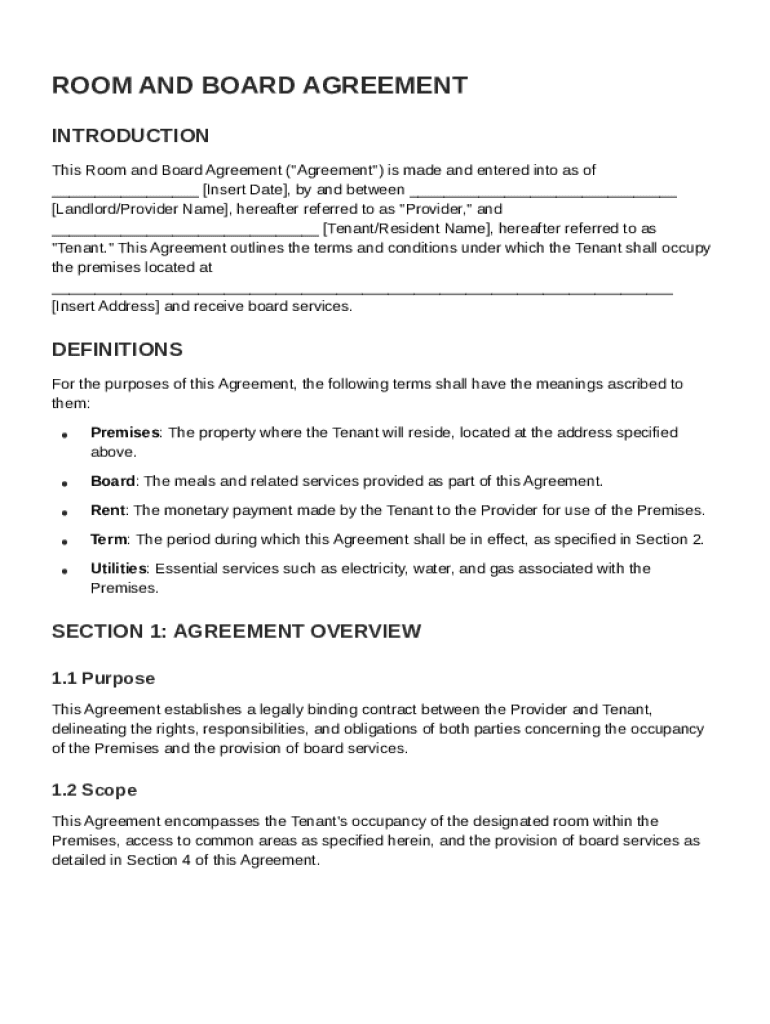







Definition and Meaning
The Room and Board Agreement Template is a legal contract used to define the terms of living arrangements between a provider and a tenant. This agreement stipulates various conditions, including occupancy terms, payment details, meal provisions, and utilities management. It plays a critical role in ensuring that both parties understand their responsibilities and obligations in the living arrangement. By adhering to this agreement, potential disputes can be minimized, and a harmonious living situation can be maintained.
Key Components of the Agreement
- Occupancy Terms: Clarifies the duration of residency and specific conditions for occupancy.
- Payment Details: Outlines rent payment schedules, including due dates and accepted payment methods.
- Meal Provisions: Specifies how meal services will be provided and any associated costs.
- Utility Management: Determines how utilities such as electricity, water, and internet will be managed and billed.
- Liability Waivers: Discusses risk management and liability disclaimers for both parties.
How to Use the Room and Board Agreement Template
To effectively use the Room and Board Agreement Template, start by downloading the template from a trusted site. Once acquired, review each section to ensure that the template fits the specific requirements of your agreement. Be prepared to customize different sections such as rent details, meal options, and any additional terms unique to your arrangement. Edit the document by filling in all necessary information such as names, dates, and conditions agreed upon by both parties. Ensure all fields are completed to avoid ambiguity and potential disputes.
Customizing the Template
- Names and Contact Information: Ensure the personal details of both parties are accurately entered.
- Agreement Duration: Set the start and end dates of the agreement, considering any renewal options.
- Specific Conditions: Include any unique provisions like pet policies or guest restrictions.
- Signature Fields: Add signature fields for all involved parties to agree to the terms.
Steps to Complete the Room and Board Agreement Template
Completing the Room and Board Agreement Template involves a series of straightforward steps that ensure all parties are in agreement before occupancy begins.
- Gather Information: Collect all necessary details from both provider and tenant, such as personal information and specific living arrangement terms.
- Personalize the Document: Customize the template to reflect the specific agreement, including any additional clauses relevant to the arrangement.
- Review Legal Compliance: Ensure the document complies with local and federal housing regulations to avoid any legal complications.
- Sign and Date: Have both parties sign and date the document once all terms have been agreed upon and properly documented.
- Distribute Copies: Once signed, distribute copies to all parties for their records.
Practical Example
John, a property owner in California, uses the template to draft a detailed agreement with his tenant, Emily. They discuss occupancy rules, payment plans, and meal options, ensuring each clause reflects their mutual consent. The document is signed electronically, and copies are stored securely via a document management platform like DocHub.
Key Elements of the Room and Board Agreement Template
Understanding the core elements of the agreement template is crucial for creating a binding contract that outlines all expectations clearly. These elements typically include:
- Rent Payment Terms: Define how and when payments should be made and any penalties for late payments.
- Meal Provisions and Costs: Agree on the type and frequency of meal services, including included or additional costs.
- Maintenance and Repairs: Assign responsibility for upkeep and the process for reporting repair needs.
- House Rules: Establish guidelines for noise levels, cleanliness, and other day-to-day living conditions.
- Termination Clause: Define how the agreement can be terminated by either party and any notice required.
State-Specific Rules for the Room and Board Agreement Template
State-specific rules can significantly impact the terms and enforceability of room and board agreements. Awareness of these differences ensures compliance with local regulations.
- California: Requires explicit agreements regarding security deposits, with a notice requirement for entry.
- New York: Mandates specific tenant protections and disclosures.
- Florida: Emphasizes landlord obligations for habitability and tenant rights.
Considerations for Compliance
- Research local laws to account for mandated disclosures.
- Adapt agreement terms to accommodate state-required tenant rights.
- Consult a local attorney if necessary to review the agreement for legality in the specific jurisdiction.
Who Typically Uses the Room and Board Agreement Template
This agreement is commonly used by a variety of individuals and organizations:


Common Users
- Property Owners: Landlords managing small- to medium-sized accommodation settings.
- Educational Institutions: Colleges providing housing to students.
- Corporate Housing Providers: Companies offering temporary living arrangements for employees.

User Characteristics
- Need for structured terms in shared living situations.
- Desire to formalize the living arrangement to prevent disputes.
- A preference for clarity in payment and responsibility allocations.
State-by-State Differences
Understanding variations in room and board agreements across different states is essential for ensuring that contracts adhere to relevant laws. Each state may impose unique requirements concerning rental agreements and tenant rights.
Notable State Differences
- Lease Termination Requirements: Vary widely between states concerning notice periods and grounds for termination.
- Security Deposit Regulations: Differences in maximum allowable deposits and guidelines for return.
- Tenant Privacy Rights: Some states enforce stricter privacy protections, influencing the terms included in the agreement.
Addressing these state-specific requirements is paramount to creating a legally sound agreement. Being informed of these differences will protect both parties and promote fair housing practices.
Legal Use of the Room and Board Agreement Template
The Room and Board Agreement serves as a legally binding contract that aims to protect the interests of both the provider and tenant. It establishes clear terms and conditions, helping to avoid potential legal issues.
Essential Legal Considerations
- Enforceability: Ensure both parties fully understand and agree to the terms.
- Disclosure Requirements: Comply with federal and state regulations for tenant-landlord agreements.
- Modification Rights: Clearly state how and when the agreement can be modified or terminated.
Utilizing a legally compliant template provides peace of mind and facilitates a smoother living arrangement process.