






Definition & Meaning
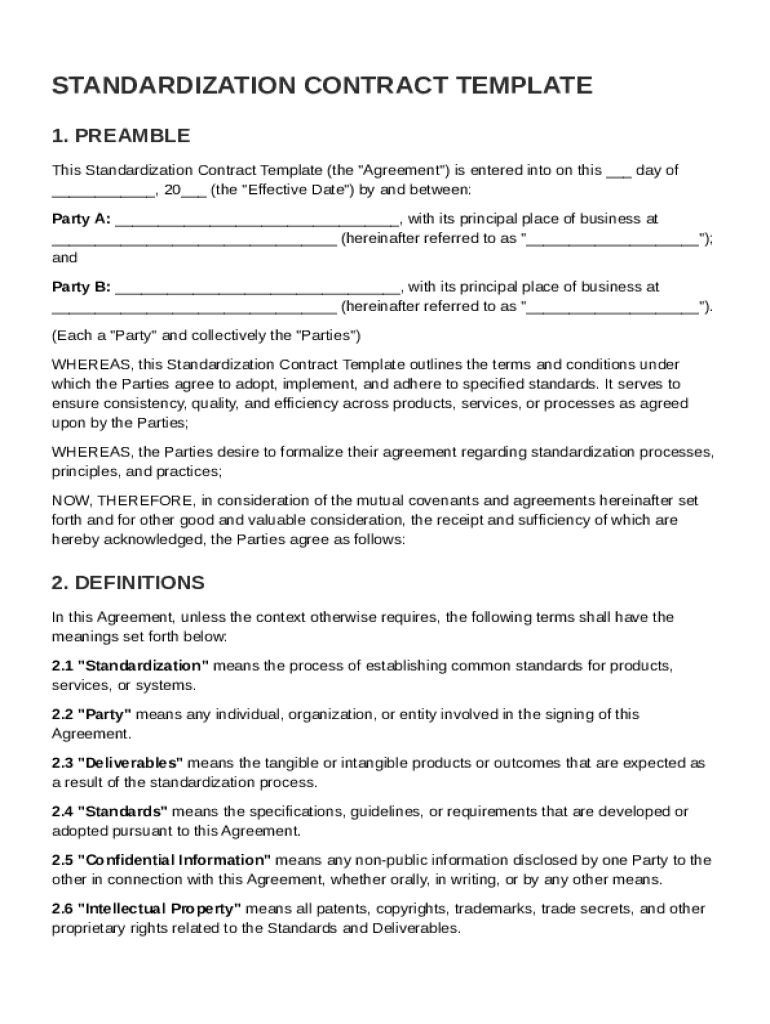
A Standardization Contract Template serves as a formal agreement between two or more parties, intending to adopt shared standards across various business processes, products, or services. This document details the specific norms and criteria that must be met, ensuring consistency and quality. By defining roles, responsibilities, and compliance expectations, it helps to avoid discrepancies or misunderstandings between involved parties. Its purpose extends beyond just setting standards; it acts as a guiding document for long-term collaboration and efficiency in standardization efforts.
Practical Examples
- In the automotive industry, a manufacturer and its suppliers might use a standardization contract to ensure that parts and materials meet uniform safety standards.
- Tech companies may standardize software development protocols to maintain interoperability between different teams' contributions.
Key Elements of the Standardization Contract Template
A comprehensive Standardization Contract Template includes several key elements that collectively define the boundaries and expectations of the contract. Some primary components are:
- Definitions: Clear explanations of terms used throughout the contract to avoid ambiguity.
- Scope of Work: An outline detailing the specific standards and processes to be adopted.
- Roles and Responsibilities: A detailed description of each party's obligations and duties.
- Compliance Mechanisms: Procedures to ensure adherence to the agreed standards.
- Confidentiality Obligations: Clauses protecting sensitive information shared between parties.
- Intellectual Property Rights: Provisions governing the use and ownership of intellectual property.
- Amendments and Dispute Resolution: Processes for modifying the contract and resolving conflicts.
Steps to Complete the Standardization Contract Template
Completing a Standardization Contract Template involves a systematic approach to ensure accuracy and thoroughness:
- Identify the Parties: Clearly state all parties involved in the agreement along with their contact information.
- Outline Standards: Specify the standards being adopted and the areas they cover within the business operations.
- Define Roles: Establish roles and responsibilities, ensuring mutual understanding and agreement.
- Draft Compliance Procedures: Develop mechanisms and guidelines for compliance and monitoring.
- Include Confidentiality and IP Clauses: Protect sensitive data and intellectual property rights with robust clauses.
- Review and Amend: Circulate the draft among involved parties for review and incorporate any necessary amendments.
- Finalize and Sign: Upon agreement, finalize the contract and obtain signatures from all parties.
Legal Use of the Standardization Contract Template
Using a Standardization Contract Template is legally binding once agreed upon and signed by all parties involved. These contracts must comply with relevant federal and state laws, ensuring that the agreed standards do not violate any existing legal obligations or intellectual property rights. Parties must ensure that the contract's terms are enforceable and seek legal counsel if necessary to confirm compliance with applicable laws.
Case Studies
- A healthcare provider and a software company created a standardization contract that met HIPAA regulations, ensuring legal compliance in managing patient data.
- Two manufacturing firms in different states used a template to align their operations legally under differing state laws.
How to Obtain the Standardization Contract Template
Standardization Contract Templates are typically available through several channels:
- Online Legal Services: Websites offering templates that can be customized according to specific business needs.
- Professional Associations: Industry groups often provide templates tailored to sector-specific standards.
- Legal Firms: Many law firms offer bespoke contract solutions that facilitate standardization across industries.
Important Terms Related to the Standardization Contract Template
Understanding terms commonly used in Standardization Contract Templates is crucial for clarity:
- Compliance: Adherence to the set standards by all involved parties.
- Intellectual Property Rights: Rules about the ownership and use of creations and inventions.
- Amendment: A formal change or addition to the contract's terms.
- Dispute Resolution: The method by which disagreements under the contract will be settled.
State-Specific Rules for the Standardization Contract Template
While a Standardization Contract Template may serve as a universal starting point, state-specific rules can influence its final structure. Each state may have unique regulations regarding confidentiality, dispute resolution, and intellectual property rights. It's essential for parties to adapt the template to the specific legal requirements of the states in which they operate.
Edge Cases
- California's strict privacy laws may necessitate additional clauses related to data protection.
- States like New York may have specific intellectual property stipulations that require careful adaptation.
Examples of Using the Standardization Contract Template
Standardization Contract Templates are versatile and applicable across various industries. They are often used to:
- Align Product Specifications: Between a manufacturer and distributor to ensure zero defects and compliance with industry standards.
- Integrate Systems: For companies merging IT systems to facilitate seamless operation and communication.
- Consistent Branding: Across franchises to ensure that every location adheres to the same quality and presentation standards.
Real-World Scenario
- A food and beverage franchise utilizes a standardization contract to ensure that all its outlets conform to the same quality and hygiene standards, enhancing brand consistency across locations.
Who Typically Uses the Standardization Contract Template
The Standardization Contract Template is frequently used by:
- Manufacturers and Suppliers: To establish consistent production and delivery standards.
- Franchises: Ensuring uniformity in operations and branding across all locations.
- Collaborative Partnerships: Companies working on joint ventures to define mutually agreed processes and standards.
These users rely on standardization contracts to promote efficiency, quality control, and collaboration in their operations.