






Definition and Purpose of an Architect Contract Template
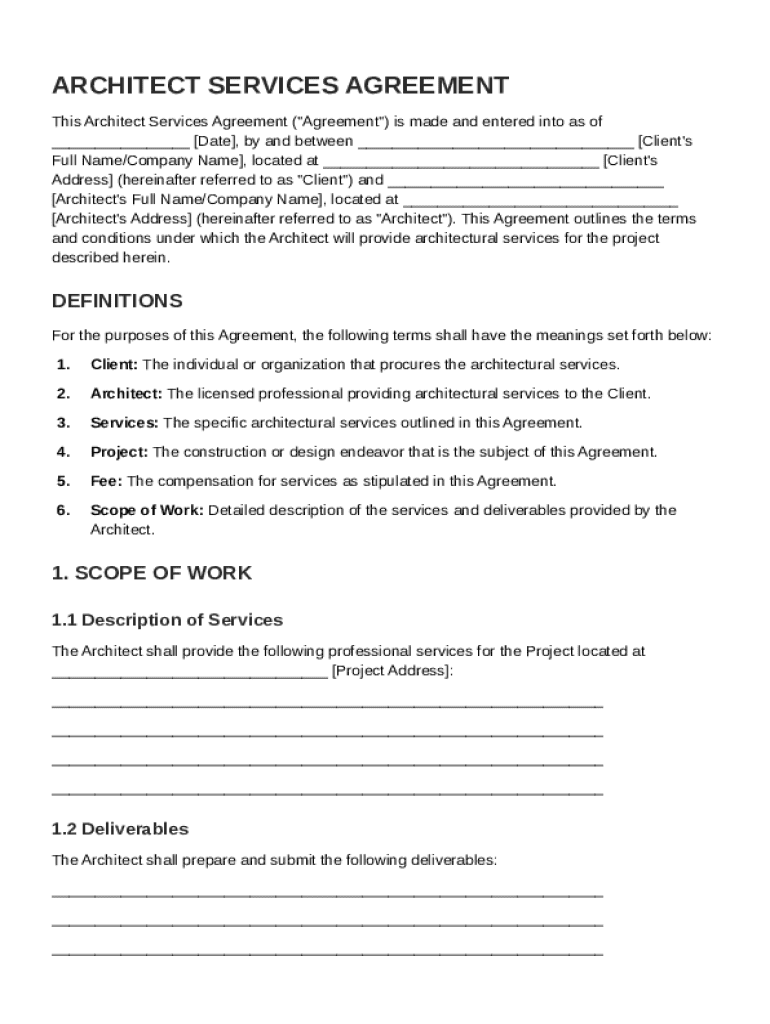
An Architect Contract Template is a standardized document that outlines the terms under which an architect provides professional services to a client for a specific project. The document serves as an official agreement, ensuring that both parties understand their rights, responsibilities, and obligations before beginning the project. Key elements typically included in the template are the scope of work, compensation, project timeline, intellectual property rights, termination clauses, indemnification, and the governing law. This comprehensive contract framework ensures clarity and mitigates potential disputes by establishing mutual expectations.
Key Components of the Template
- Scope of Work: Clearly defines the tasks and responsibilities the architect is expected to perform.
- Compensation: Outlines the fee structure, payment schedule, and any additional costs.
- Project Timeline: Specifies the start and completion dates for the project phases.
- Termination Clauses: Details the conditions under which the contract can be terminated by either party.
- Indemnification: Discusses liability protections for both parties.
- Governing Law: Identifies the jurisdiction whose laws will govern the contract.
How to Use the Architect Contract Template
Utilizing the Architect Contract Template involves multiple steps to ensure both parties' needs and legal requirements are adequately addressed. Start by customizing the template to reflect the specific project details. Insert the project's scope of work, detailed responsibilities of both the architect and client, and set milestones for progress reviews. Review the predefined clauses for payment terms and ensure they align with your project's budget and timeline.
Step-by-Step Process
- Customization: Personalize the template with project-specific details such as client name, address, and project location.
- Scope Definition: Clearly outline the services to be provided, and any deliverables.
- Compensation Details: Specify how, when, and under what conditions payment will be made.
- Review Legal Clauses: Ensure that legal terms such as indemnification and intellectual property rights are coherently defined.
- Finalize and Agree: Both parties should review, agree upon, and sign the document.
Steps to Complete the Architect Contract Template
Completing the Architect Contract Template accurately is crucial for ensuring it serves its intended legal function. Start by gathering all necessary information, including project title, detailed descriptions, and client contact information. Ensure every part of the template is thoroughly filled out and that no sections are left ambiguous or incomplete.
Detailed Steps
- Information Gathering: Collect all pertinent details related to the project.
- Edit Document Parts: Using the DocHub editor, insert specific information about the project scope, architect duties, and client expectations.
- Incorporate Legal Provisions: Include necessary legal clauses relevant to the agreement.
- Collaborate and Review: Engage in a review process with both parties to ensure clarity and mutual understanding.
- Sign and Store: Once agreed upon, both parties should sign the document electronically using DocHub's secure signing tools and store it within their document management system for future reference.
Importance of Using an Architect Contract Template
Implementing an Architect Contract Template provides a foundational structure to manage expectations and legal protections in architect-client relationships. It ensures that both parties are aligned on important project details, timelines, and outcomes. The template acts as a preventive tool, reducing the possibility of misunderstandings and legal disputes by having all terms documented clearly and comprehensively.
Benefits
- Clarity in Communication: Sets clear expectations and reduces the risk of miscommunications.
- Legal Protection: Provides a documented legal framework protecting the interests of both parties.
- Efficiency: Streamlines the documentation process by providing a ready-made, adaptable format.
- Professionalism: Demonstrates a professional approach to project management and client relationships.
Who Typically Uses the Architect Contract Template
The Architect Contract Template is predominantly used by architectural firms, freelance architects, and clients seeking architectural services for various projects like residential homes, commercial buildings, or public infrastructure. The template caters to both small-scale projects and large, complex architectural endeavors.


Typical Users
- Architectural Firms: For standardizing their project contracts with clients.
- Freelance Architects: To ensure legal protection and clear project terms.
- Clients: Seeking clarity and assurance in the services provided by the architects.
Legal Use and Considerations of the Architect Contract Template
Using the Architect Contract Template entails adhering to specific legal requirements, ensuring the document meets contractual standards applicable in the United States. The template must be tailored to comply with local and state-specific laws, and it's advisable for users to consult with a legal professional to align the contract within the jurisdiction's legal guidelines.
Important Legal Considerations
- Compliance with State Laws: Adjust the template to reflect state-specific requirements, potentially impacting contract clauses.
- Intellectual Property Rights: Clearly address rights concerning design documents and proprietary information.
- Dispute Resolution: Include provisions for arbitration or mediation as preferred methods for conflict resolution.
Important Terms Related to the Architect Contract Template
There are several essential terms that users of an Architect Contract Template need to be familiar with to fully grasp the document's implications. Understanding these terms facilitates the interpretation and application of the contract terms.
Key Terms
- Scope of Work: The tasks and services the architect commits to deliver.
- Compensation Structure: How and when payments will be dispensed.
- Indemnification: agreements regarding liability and risk distribution between parties.
- Termination Clause: Conditions under which the agreement can be concluded prematurely.
Examples of Using an Architect Contract Template
Examining real-world applications of the Architect Contract Template provides practical insights into its use. For instance, an architectural firm engaged to design a residential skyscraper would utilize the template to encapsulate all project aspects from design philosophy to the final execution. Similarly, freelance architects working on home renovation projects can use the template to outline detailed specifications and timelines with individual homeowners.
Real-World Scenarios
- Commercial Projects: Documenting comprehensive designs and obligations when constructing office complexes.
- Residential Projects: Creating detailed renovation plans involving explicit owner and architect obligations.
- Public Infrastructure: Contracting for large-scale public architectural works such as bridges or government buildings to delineate responsibilities clearly.