







Definition & Meaning
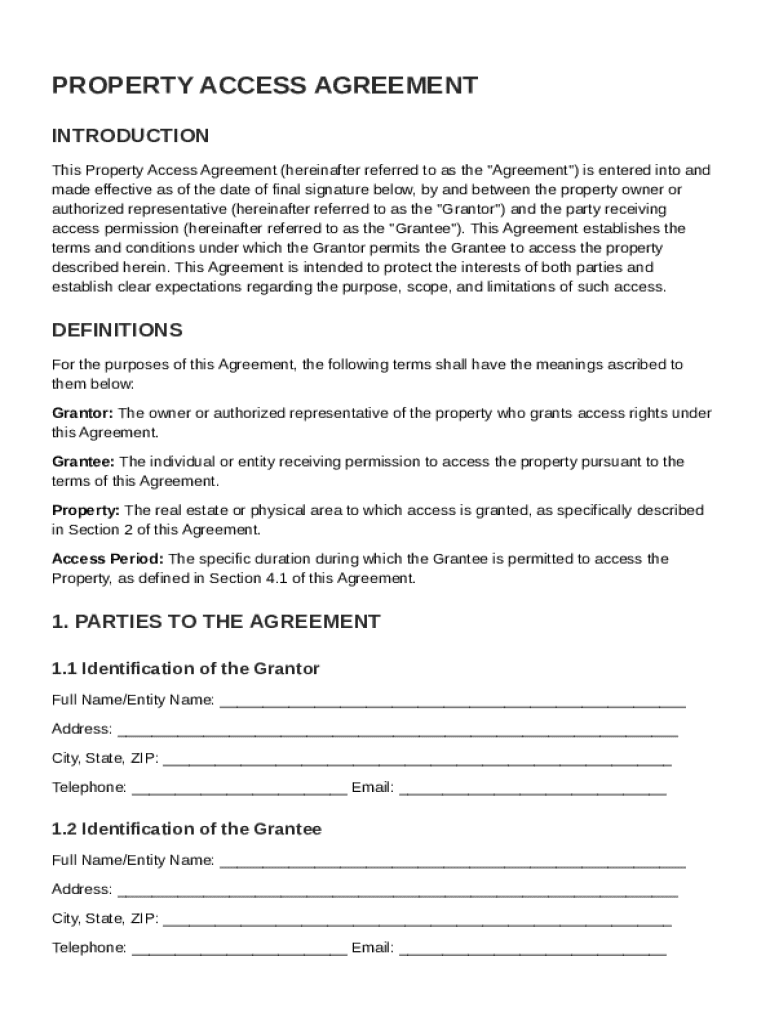
A Property Access Agreement Template is a legal document that outlines the conditions under which a property owner, referred to as the Grantor, allows another party, known as the Grantee, to access the property for specific purposes. This agreement delineates the responsibilities, rights, and limitations of both parties, ensuring clarity and legal protection. It covers various elements such as the description of the property, the nature of access, and the duration for which access is granted. By establishing these terms, the document aims to avoid misunderstandings and potential disputes between the involved parties.
Common Components of the Agreement
- Grantor and Grantee Information: Clearly identifies both parties involved in the agreement.
- Property Description: Provides detailed information about the property, including its location and any relevant identifiers.
- Purpose of Access: Outlines the specific reasons for which access is granted, such as maintenance, inspection, or rehabilitation.
- Duration of Access: Specifies the time frame during which access is permitted.
- Responsibilities and Obligations: Defines the duties and expectations from both the Grantor and Grantee.
Key Elements of the Property Access Agreement Template
The Property Access Agreement Template encompasses several critical components that are necessary for a comprehensive and enforceable document. These elements provide the framework within which the agreement operates and ensures that both parties are aware of their rights and obligations.
Insurance and Liability Provisions
- Insurance Requirements: Details any mandatory insurance coverage that the Grantee must maintain during the access period to safeguard against potential damages or injuries.
- Liability Clauses: Establishes which party is liable for accidents or property damage that might occur during the access.
Termination and Amendments
- Termination Conditions: Specifies the circumstances under which the agreement can be terminated by either party, including any required notice period.
- Amendment Procedures: Provides guidelines for making modifications to the agreement after its initial execution. This typically involves mutual consent and written documentation.
Steps to Complete the Property Access Agreement Template
Completing a Property Access Agreement Template involves several systematic steps to ensure accuracy and comprehensiveness. Proper completion of each section is critical to the effectiveness of the agreement.
- Fill in the Personal Details: Include the full names and contact information of both the Grantor and Grantee.
- Describe the Property: Clearly outline the property’s legal description and any pertinent characteristics.
- Define the Purpose of Access: State the specific intentions behind granting property access, such as inspections or repairs.
- Outline Access Duration and Frequency: Specify the start and end dates of the access period and any specific time frames or frequency of access.
- Specify Insurance Requirements: Indicate any necessary insurance policies and coverage limits.
- Discuss Liability and Indemnification: Agree on which party is responsible for accidents or damages and the circumstances under which indemnification is applicable.
- Establish Governing Law: Determine which state’s laws will govern the terms of the agreement.
Important Terms Related to the Property Access Agreement Template
Understanding key terminology is crucial for comprehending the Property Access Agreement Template and fully grasping its implications. These terms are often used within the document and require precise interpretation.
Grantor and Grantee
- Grantor: The property owner who permits access.
- Grantee: The party receiving access rights.
Governing Law
- Definition: The legal framework and jurisdiction governing the agreement.
- Application: Typically determined by the property’s location or the residence of the Grantor.
Indemnification
- Purpose: Protects one party against claims or damages arising from the other party’s actions.
Amendments
- Usage: Changes to the agreement that must be agreed upon by both parties.
Legal Use of the Property Access Agreement Template
The Property Access Agreement Template functions as a binding legal contract, ensuring that the terms and conditions stipulated are enforceable in a court of law. It provides clarity and security, reducing the likelihood of legal disputes.
When Is the Agreement Enforceable?
- Signed by Both Parties: The document becomes legally binding once both the Grantor and Grantee sign it.
- Compliance With State Laws: Must adhere to local jurisdiction laws and property regulations.
Consequences of Non-Compliance
- Legal Action: Non-adherence to the contract by either party may lead to civil lawsuits or penalties.
- Financial Liabilities: Potential for financial damages or reparations if contractual terms are violated.
Examples of Using the Property Access Agreement Template
Practical scenarios illustrate the wide applicability of the Property Access Agreement Template within various contexts, offering insight into typical use cases.
Maintenance and Repair Access
- Scenario: A property owner allows a contractor to access their land for essential repairs to a utility line.
- Agreement Role: Defines specific periods when the contractor can enter the property and outlines insurance responsibilities.
Real Estate Inspections
- Scenario: A prospective buyer needs to conduct a thorough inspection of a property before purchase.
- Agreement Role: Specifies inspection dates and maintains the buyer's liability for any damages incurred.
State-Specific Rules for the Property Access Agreement Template
Property access agreements may require adjustments based on the laws and regulations specific to each state. This variability ensures compliance with state-specific legal obligations and standards.
Variations in Property Description Requirements
- Example: Some states mandate detailed geographical coordinates or property plot numbers.
- Reason: Ensures precise identification and legal agility within local frameworks.
Differences in Governing Law
- Example: States like California may have additional environmental regulations impacting property access.
- Importance: Ensures adherence to local legal criteria, avoiding potential conflicts or penalties.
State-by-State Differences
Understanding state-by-state differences in property access agreements is essential for fulfilling legal requirements and tailoring agreements to specific localities.
Impact on Liability and Insurance
- Example: States may vary in terms of minimum liability coverage for property damages.
- Significance: Ensures that agreements meet legal obligations while protecting both parties effectively.
Specific Content Adjustments
- Example: Text requirements or disclosures may differ, necessitating modifications to the standard template.
- Benefits: Enables the creation of valid and enforceable agreements that respect local regulations.
Each section should contain valuable information that enhances understanding and provides practical guidance for stakeholders involved in creating and executing a Property Access Agreement.




