Key Elements of the Private Party Restaurant Contract Template
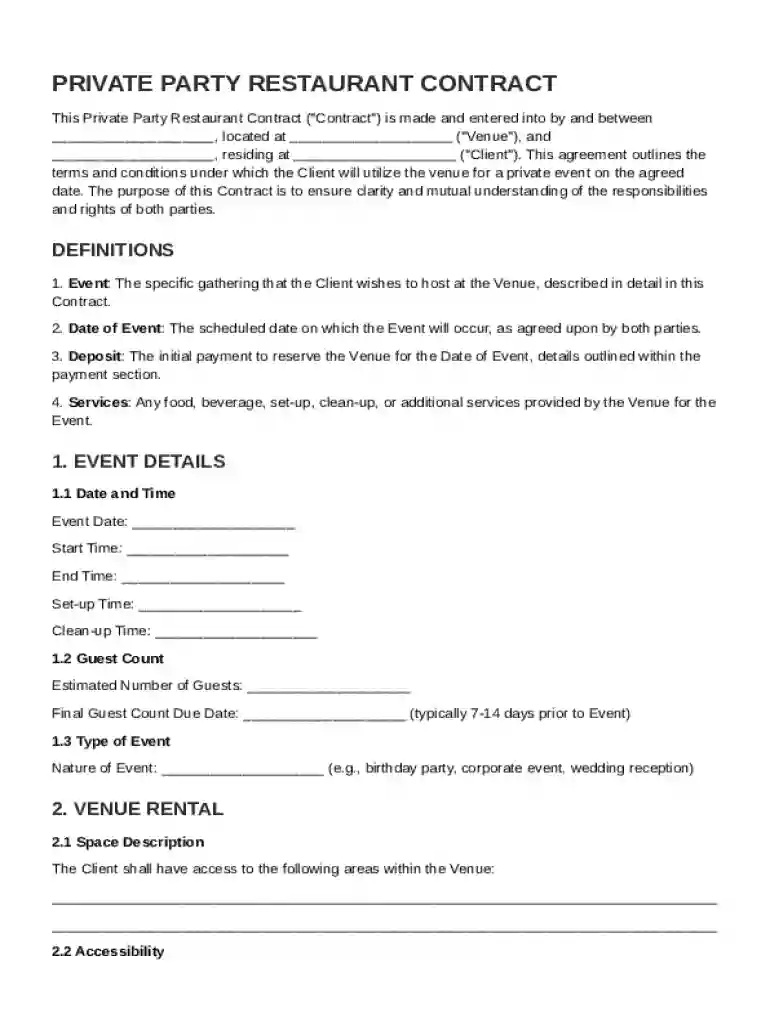
The Private Party Restaurant Contract Template incorporates several essential elements to ensure comprehensive coverage for both the Venue and the Client. These elements include:
- Event Specifics: Details about the date, time, and nature of the event. This section ensures clarity on what the Venue is expected to provide and what the Client can anticipate.
- Payment Terms: Information about fees, deposit amounts, and payment schedules. Payment terms often specify due dates and any penalties for late payments.
- Services Provided: A clear list of services covered by the contract, such as catering, decoration, and staffing. This ensures that both parties have aligned expectations.
- Responsibilities of Both Parties: Outlines duties such as setup, cleanup, and management during the event, highlighting who is responsible for each aspect.
- Liability and Insurance Requirements: Specifies the insurance coverage needed by both parties and mentions who is liable for any potential damages or accidents.
- Governing Law and Jurisdiction: Determines which state’s laws will apply in interpreting the contract, ensuring compliance with relevant legal standards.
- Modification Clauses: Provides guidelines for making changes to the contract, ensuring that all modifications are documented and agreed upon by both parties.
How to Use the Private Party Restaurant Contract Template
Utilizing the Private Party Restaurant Contract Template effectively involves several steps:
- Review the Template: Carefully go through the entire document to understand each section and ensure it aligns with your specific event needs.
- Customize Relevant Sections: Adjust sections such as event specifics, payment terms, and services provided to fit the particular details of your event.
- Consult Both Parties: Engage in a discussion with the other party to agree on any specific modifications required for unique circumstances.
- Fill Out All Required Fields: Complete all mandatory fields, ensuring no section is left blank or incomplete.
- Secure Approvals: Obtain necessary approvals from both your side and the other party, confirming all details are accurate and agreeable.
- Save a Copy: Keep a copy of the completed and signed contract for your records, using it as a reference throughout the event planning process.
Steps to Complete the Private Party Restaurant Contract Template
- Gather Event Details: Compile all necessary information, including dates, times, and service requirements.
- Populate Contract Sections: Write down the gathered information into the respective sections of the template.
- Verify All Clauses: Ensure all clauses reflect the mutual agreement and do not contain any discrepancies.
- Confirm Information Accuracy: Double-check that every piece of information is accurate and up-to-date.
- Sign the Document: Both parties must provide legally binding signatures to ratify the contract.
- Distribute Copies: Share copies with all involved parties to guarantee everyone is informed about the contract specifications.
Legal Use of the Private Party Restaurant Contract Template
The legal application of this template is crucial to ensure it is enforceable and compliant:
- Compliance with Local Laws: Verify that the contract adheres to local and state regulations applicable to private parties and events.
- Legally Binding Signatures: Ensure that the signatures collected are from authorized representatives and follow legal guidelines.
- Coverage of Required Clauses: Include all necessary clauses covering indemnification, cancellation policies, and force majeure to protect both parties.
- Consideration of Required Permits: Investigate if any governmental approvals or permits are required for holding a private event and mention them in the contract.
Important Terms Related to Private Party Restaurant Contract Template
- Indemnification: A clause that outlines how each party will handle losses or damages, protecting them against future claims.
- Force Majeure: Details the conditions under which the contract obligations may be suspended due to unforeseen events.
- Deposit: Specifies the upfront payment required to secure the Venue for the event, often non-refundable.
- Breach of Contract: Indicates the actions that constitute a contract violation and the respective repercussions.
State-Specific Rules for the Private Party Restaurant Contract Template
In the U.S., contract requirements can vary significantly between states:
- Different Legal Rulings: Laws governing contracts differ, affecting matters like maximum deposit amounts or cancellation notice requirements.
- Insurance Requirements: Some states might mandate specific insurance coverage levels that must be referenced within the contract.
- Cultural Considerations: Regional traditions and expectations might influence event planning terms, necessitating local adjustments to the template.
Software Compatibility for Managing the Private Party Restaurant Contract Template
Using digital tools can streamline the handling of the contract:
- Cloud Storage Solutions: Platforms like Google Drive or Dropbox can store the contract, making it accessible to all parties involved.
- Document Editing Software: Utilizing DocHub, Microsoft Word, or similar tools enables easy editing, annotation, and sharing of the template.
- Electronic Signature Services: Incorporating e-signature providers like DocHub allows for legally binding online signing, expediting the process without physical meetings.