
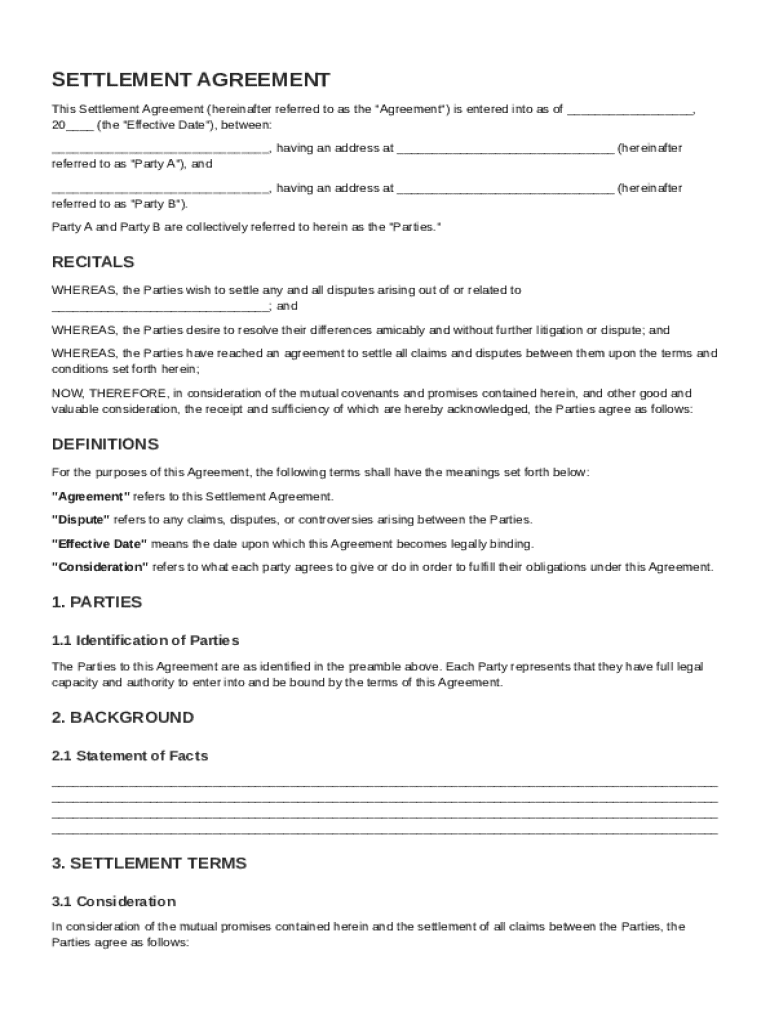







Definition and Purpose of the Settlement Contract Template
A Settlement Contract Template is a predefined document outline used to formalize an agreement between parties that resolves a dispute without proceeding to litigation. This contract acts as a written assurance that all involved parties agree to settle their differences under the specified terms. It is crucial for establishing a mutual understanding to avoid further legal confrontations. Typically, this template includes essential details such as the identification of the parties, the nature of the dispute, the terms of the settlement, and signatures from the involved entities.
Key Elements of a Settlement Contract
- Party Identification: Clearly outlines who the contracting parties are, often referred to as Party A and Party B.
- Dispute Description: A brief account of the issue that the parties are settling, ensuring transparency.
- Settlement Terms: Specific agreements and obligations that each party agrees to in order to resolve the dispute.
- Confidentiality Clause: Ensures that the details of the settlement remain private, protecting the interests of both parties.
- Governing Law: States the jurisdiction under which the settlement will be interpreted and enforced.
- Release of Claims: Mutual release of any legal claims related to the dispute, preventing future litigation on the matter.
How to Use the Settlement Contract Template
Step-by-Step Instructions
- Download the Template: Obtain the Settlement Contract Template from a trusted source like DocHub, ensuring it's tailored to your needs.
- Fill in Party Details: Input the full names and contact information of the parties involved in the settlement.
- Describe the Dispute: Clearly articulate the nature of the dispute that led to the settlement.
- Define Settlement Terms: Specify what each party will do to settle the dispute, including any financial compensation, obligations, or timeline for completion.
- Add Confidentiality and Legal Terms: Use the template’s clauses to maintain confidentiality and specify the governing law.
- Review and Sign: Before finalizing, ensure all details are correct. Sign the document alongside witnesses if required.
Practical Examples
- Company Dispute Resolution: When a vendor and a client disagree on contract terms, they may use this template to formalize a revised agreement that resolves the conflict.
- Employment Settlement: An employee and employer might draft a settlement to avoid legal action following a wrongful termination claim.
Legal Use of the Settlement Contract Template
Compliance with U.S. Laws
The template’s use must comply with U.S.-centric legal standards, especially in terms of enforceability and confidentiality. Adhering to the ESIGN Act, electronic signatures are generally recognized as legally binding. However, it's advisable to consult with a legal professional to ensure the document meets all local, state, and federal laws.
Important Legal Considerations
- Non-Admission of Liability: The settlement should explicitly state that agreeing to the settlement is not an admission of wrongdoing by either party.
- Enforceability: Ensure the agreement includes provisions that make it enforceable under U.S. law.
State-Specific Rules for the Settlement Contract Template
Variations by Jurisdiction
Different states may have specific requirements influencing the content and enforceability of settlement agreements. It is crucial to tailor the template to meet local statutory requirements.
Notable State Differences
- State of California: Requires particular language related to the waiver of unknown claims (Civil Code Section 1542).
- New York: Strong emphasis on ensuring adequate consideration to support the settlement agreement.
Consult Legal Resources
Consider engaging legal counsel or state-specific legal resources to adjust the settlement contract template according to state-specific regulations, ensuring compliance and legitimacy.
Examples of Using the Settlement Contract Template
Real-World Scenarios
- Business Litigation: Companies embroiled in patent disputes may choose to sign settlement contracts to conclude lengthy and costly litigation proceedings, allowing them to focus on business productivity.
- Employment Law Conflicts: Often, wrongful termination or discrimination cases are resolved via settlement agreements, allowing the employee to receive compensation without the complexities of a court case.
Case Study
An electronics firm facing potential litigation from a former employee over contract disputes used a settlement agreement to resolve the matter amicably. The resolution included compensation and a mutual agreement to confidentiality, preserving the firm’s reputation and financial stability.
Key Terms Related to Settlement Contract Template
Comprehensive Terminology Guide
- Amicable Resolution: A settlement agreement often aims for a peaceful and mutually satisfactory resolution.
- Mutual Release: Legal term indicating that all parties agree not to pursue further claims over the dispute.
- Obligation Fulfillment: The required actions each party must complete as stipulated in the document.
Clarification of Legal Terminology
Understanding these terms is critical to effectively manage and execute a settlement, ensuring both parties’ expectations are clearly outlined and understood.
Software Compatibility and Digital Signing Options
Compatible Platforms
DocHub’s settlement contract template is compatible with multiple formats including DOC, PDF, and can be opened using software platforms like Microsoft Word and Adobe Acrobat. This flexibility ensures the template can be integrated into the digital tools most commonly used in legal and business environments.
Electronic Signing
- DocHub Integration: The platform allows for seamless functionality with Google Workspace, enhancing user experience by facilitating digital signatures directly within Google Docs and Gmail.
- Legally Compliant: Electronic signatures applied to settlement contracts through DocHub are legally binding under the ESIGN Act, providing a secure and efficient method to finalize agreements.
Important Considerations for Form Use
Penalties for Non-Compliance
Failure to adhere to the terms outlined in a settlement contract can lead to penalties, including potential court actions or reinstating disputes. Ensuring clear understanding and compliance with all defined terms is essential to prevent further legal complications.
Nuanced Implications
Settlements are sensitive agreements, and legal interpretations might vary, so it's crucial to draft them accurately, reflecting all participant expectations and any jurisdictional conditions that might affect enforceability.




