Definition and Meaning
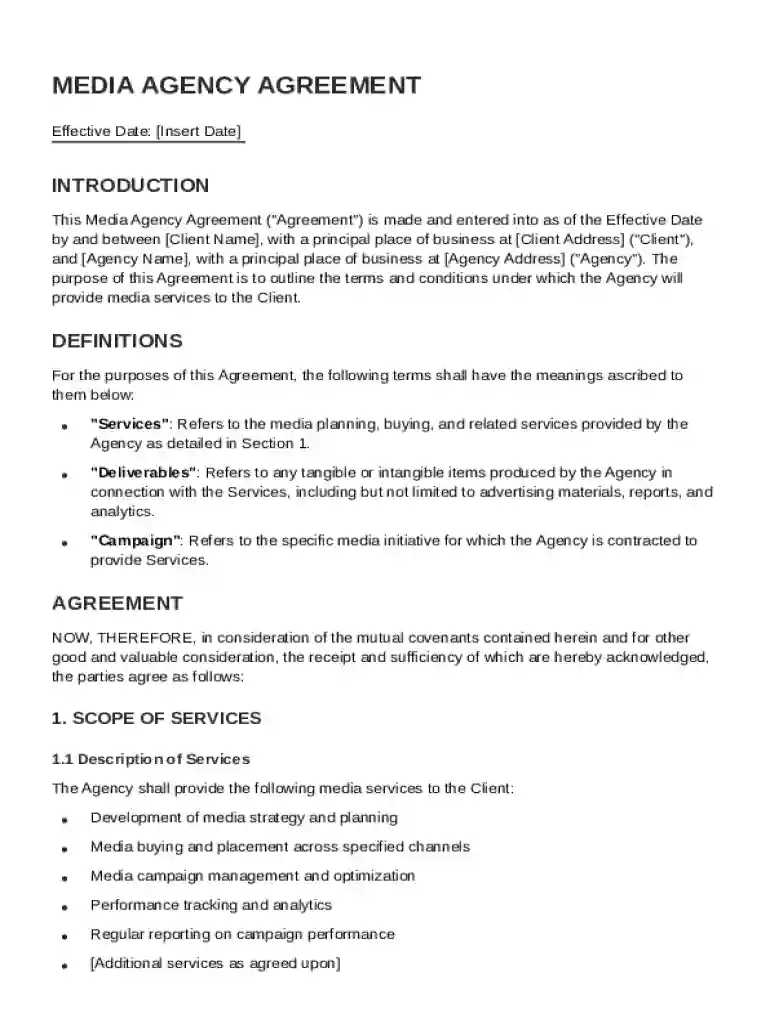
A Media Agency Contract Template serves as a formal agreement outlining the terms and conditions under which a media agency provides services to a client. It encompasses media planning, buying, and campaign management services. This template defines crucial terms like 'Services', 'Deliverables', and 'Campaign', thereby establishing a clear framework for expectations between the agency and the client. The contract ensures mutual understanding of roles and responsibilities, minimizing potential disputes and fostering a cooperative professional relationship.
Key Elements of the Media Agency Contract Template
The Media Agency Contract Template comprises several essential components necessary to structure a comprehensive agreement. These elements include:
- Scope of Services: Outlines the specific responsibilities and services that the agency will perform, ensuring aligned expectations.
- Compensation Structure: Details how the agency will be compensated, be it through fixed fees, percentage rates, or performance-based incentives.
- Intellectual Property Rights: Specifies the ownership rights of content created during the campaign, protecting both parties' interests.
- Confidentiality Obligations: Comprises clauses to safeguard sensitive information shared between the agency and the client.
- Indemnification Clauses: Protects each party from potential liabilities resulting from the other party’s actions.
- Liability Limitations: Sets boundaries on the extent of financial liability each party may incur.
- Dispute Resolution Processes: Provides methods for resolving conflicts, such as mediation or arbitration.
Steps to Complete the Media Agency Contract Template
To effectively complete the Media Agency Contract Template, follow these comprehensive steps:
- Identify Parties Involved: Clearly state the names and contact details of the agency and the client.
- Define Services and Deliverables: Specify the detailed scope of services and anticipated outcomes.
- Agree on Payment Terms: Outline the method, frequency, and conditions of payment.
- Establish Operational Guidelines: Include project timelines, milestones, and relevant operational details.
- Specify Terms for Ending the Contract: Detail the termination conditions and notice periods.
- Review Legal Provisions: Ensure all legal stipulations, such as jurisdiction and compliance requirements, are incorporated.
- Finalize with Signatures: Secure signatures from authorized representatives of both parties to validate the agreement.
Legal Use of the Media Agency Contract Template
The legal validity of using a Media Agency Contract Template depends on its adherence to federal and state-specific regulations in the U.S. The contract must comply with applicable laws regarding contract enforcement and fair practice standards. Legal use necessitates:
- Inclusion of All Necessary Clauses: Ensuring no essential legal clause is omitted, which could render parts of the contract unenforceable.
- Compliance with State Laws: Adapting the contract to reflect state-specific amendments, given the variance in regulations across different jurisdictions.
Important Terms Related to Media Agency Contract Template
Understanding key terminologies within the Media Agency Contract Template ensures effective communication and reduces ambiguities. Important terms include:
- Campaign: Specific marketing efforts conducted during a defined period.
- Services: The tasks agreed upon that the agency is responsible for delivering.
- Deliverables: The tangible or intangible outcomes resulting from the agency's services.
Why Use a Media Agency Contract Template
Utilizing a Media Agency Contract Template offers numerous advantages for both agencies and clients, such as:
- Clarity and Precision: Provides a well-defined structure that clarifies roles, responsibilities, and expectations.
- Risk Mitigation: Helps outline risks and establish protocols for dispute resolution, limiting potential legal entanglements.
- Professionalism and Credibility: Enhances reputability by showcasing organized and formalized business operations.
State-Specific Rules for the Media Agency Contract Template
When employing a Media Agency Contract Template, it is vital to consider state-specific regulations that could affect how the contract is structured or enforced. Various states may have unique stipulations regarding:
- Contractual Validity: Different states have distinct requirements for contract formation, such as attestations or notarizations.
- Enforceability of Non-Compete Clauses: Variability in state laws regarding restrictive covenants may influence how such clauses are constructed.
- Dispute Resolution Methods: Certain states may mandate or prohibit specific dispute resolution procedures.
Examples of Using the Media Agency Contract Template
Using the Media Agency Contract Template in practical scenarios often includes:
- Campaign Planning for a Retail Brand: Establishing a contract with a media agency to execute and manage seasonal advertising campaigns.
- Digital Marketing Services for Startups: A startup engaging a media agency to increase online visibility through strategic campaigns.
- Agency Partnerships for Non-Profit Campaigns: Non-profit organizations formalizing relationships with media agencies for outreach and fundraising initiatives.