




Definition and Purpose of the Experience Level Agreement Template
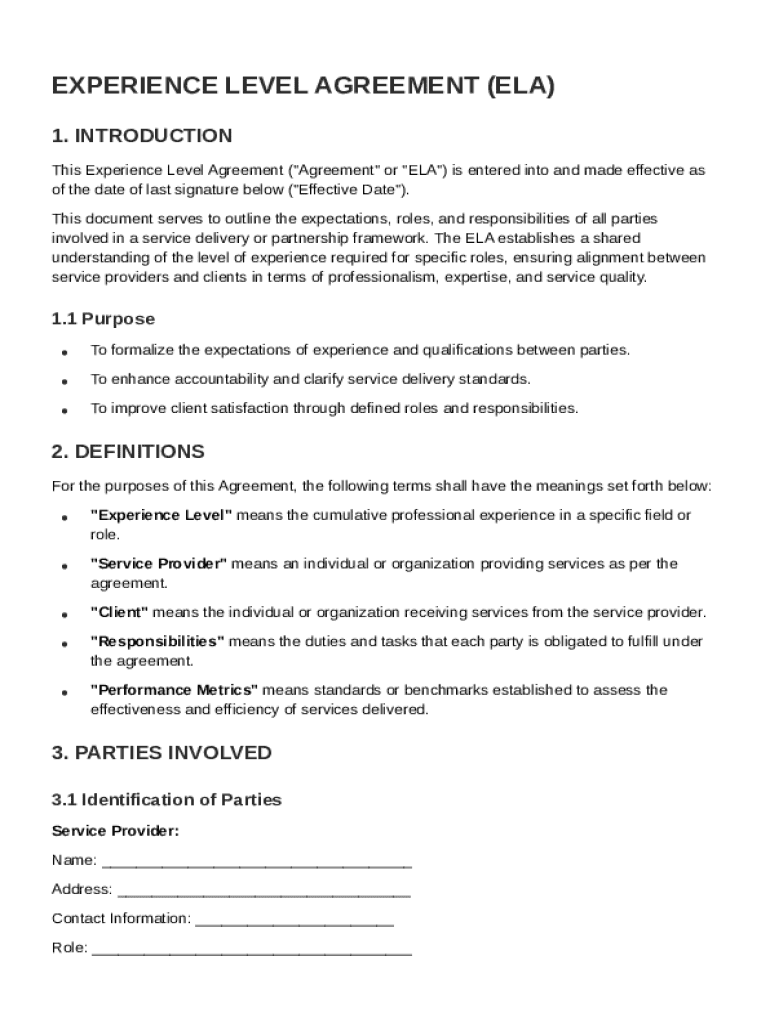
The Experience Level Agreement (ELA) Template is a formal document that outlines the expectations between service providers and clients regarding performance levels in service delivery. It specifies roles and responsibilities, ensuring both parties have a clear understanding of their duties to enhance accountability and client satisfaction. This template is essential for setting qualification standards, performance monitoring criteria, and establishing a framework for ongoing collaboration.
Key Features:
- Role Clarification: Clearly defines roles for service providers and clients, providing a mutual understanding of responsibilities.
- Performance Standards: Sets experience and qualification benchmarks to guide service delivery and measure performance.
- Expectation Management: Aligns client-provider expectations to minimize disputes and enhance satisfaction.
Using the Experience Level Agreement Template
Successfully adopting the Experience Level Agreement Template involves a step-by-step approach tailored to specific business needs. Here are steps to ensure effective deployment.
- Identify Requirements: Analyze your service delivery expectations and client needs to customize the template accordingly.
- Customize the Template: Tailor the predefined sections to match industry-specific standards and include any unique elements of your contract.
- Consult Stakeholders: Engage with all relevant parties, ensuring both sides understand their roles and agree on the terms.
- Review Legal Aspects: Verify that the template complies with applicable legal standards to maintain its enforceability.
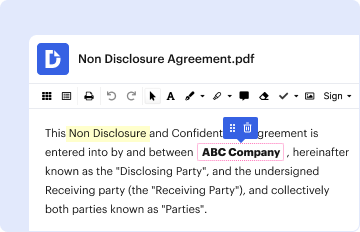
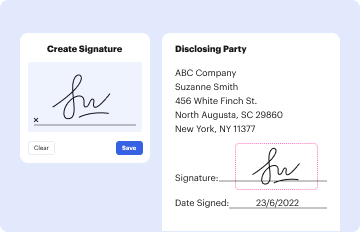
- Finalize and Implement: Obtain signatures from all parties to legally bind the agreement and execute the responsibilities as outlined.
Practical Example:
- A software development firm might use this template to clearly define project milestones, delivery timelines, and client feedback cycles, ensuring smooth execution from concept to deliverable.
How to Obtain the Experience Level Agreement Template
Accessing a reliable Experience Level Agreement Template involves several avenues to ensure you select the right version for your needs.
- Online Document Platforms: Websites like DocHub offer a variety of customizable templates designed for different industries.
- Legal Advisors: Consulting legal professionals can provide industry-specific templates that adhere to jurisdictional standards.
- Business Network: Engage with peers or industry forums to obtain widely accepted templates suited for your sector.
Steps to Complete the Experience Level Agreement Template
Completing an Experience Level Agreement Template requires gathering necessary information, input from all parties involved, and meticulous attention to detail.
- Gather Information: Collect all relevant details about services, parties involved, and performance expectations.
- Input Data: Fill out the template sections with precise data, emphasizing clarity and accuracy.
- Review by Stakeholders: Allow all parties to review the document, ensuring any discrepancies are resolved.
- Finalize: Make any necessary revisions before obtaining signatures from involved parties to validate the agreement.
Importance of the Experience Level Agreement Template
Utilizing an Experience Level Agreement Template brings multiple benefits by streamlining processes and enhancing professional relationships.
- Enhanced Clarity: Establishes a clear framework that reduces the potential for misunderstandings between parties.
- Risk Management: Minimizes risk associated with service delivery by formally documenting all agreed-upon responsibilities and expectations.
- Performance Enhancement: By setting concrete standards and performance metrics, service quality and client satisfaction improve.
Important Terms in the Experience Level Agreement Template
Understanding key terms within an Experience Level Agreement Template is crucial for both parties to grasp the document's scope and requirements.
- Service Levels: Describes benchmarks for performance that the service provider must meet.
- Client Obligations: Details client responsibilities to ensure that the service provider can perform their duties effectively.
- Term and Termination: Specifies the duration of the agreement and conditions under which it can be terminated.
Legal Use of the Experience Level Agreement Template
The legal integrity of your Experience Level Agreement is paramount; therefore, ensuring it conforms to legal standards is essential.
- Compliance: Ensure the document adheres to relevant industry regulations and includes necessary legal terminology.
- Validity: Use legally acceptable language to ensure the agreement’s enforceability and prevent void or contestable clauses.
- Review: Regular consultations with a legal advisor are recommended to update the template according to any legal changes.
Key Elements of the Experience Level Agreement Template
Critical sections within an ELA Template ensure that all necessary components are covered for its function and enforceability.
- Scope of Services: Outlines the specific duties and services the provider will deliver.
- Performance Metrics: Defines measurable indicators that assess service quality and effectiveness.
- Dispute Resolution: Offers methods for resolving conflicts, such as mediation or arbitration.
- Amendment and Review: Details how changes to the agreement can be proposed and implemented.
Practical Applications and Examples of the Experience Level Agreement Template
Experience Level Agreements cater to a wide array of industries, offering diverse applications that demonstrate their versatility.
- IT Services: Clearly designating uptime requirements and support response times for IT service level agreements.
- Consulting: Defining project deliverables and timelines to ensure consultancy services are delivered as expected.
- Manufacturing: Setting production quality standards and delivery timelines with material suppliers to maintain supply chain efficiency.