
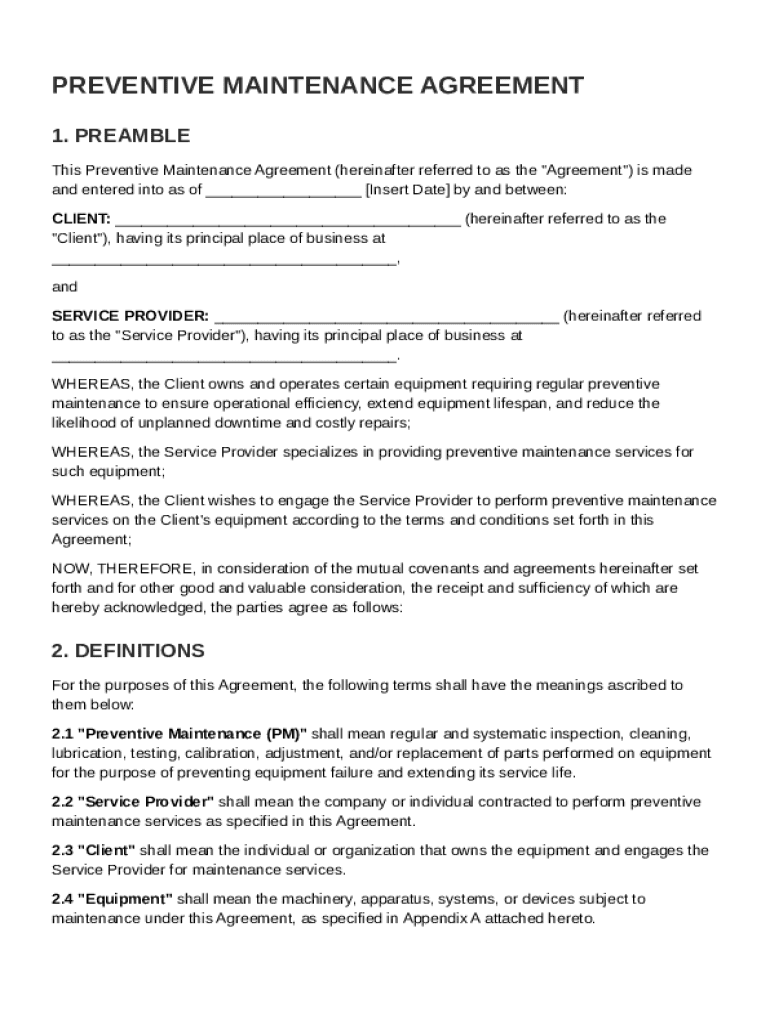







Definition & Purpose of a Preventive Maintenance Agreement Template
A Preventive Maintenance Agreement Template serves as a crucial document establishing a formal agreement between a client and a service provider for ongoing maintenance of equipment. The primary goal of the agreement is to ensure the equipment's operational efficiency, minimize unexpected failures, and extend its lifespan. This contract outlines clear responsibilities for both parties, stipulating the scope and frequency of maintenance activities. Examples include regular inspections, cleaning, repairs, and component replacements. By defining these elements, the agreement provides a structured approach to equipment care, helping prevent costly downtime that could disrupt operations.
How to Use a Preventive Maintenance Agreement Template
To utilize a Preventive Maintenance Agreement Template effectively, start by thoroughly reviewing its components to ensure it aligns with your specific needs. Typically, the template will have sections for basic details such as the names of the parties involved, the effective date, and the equipment covered. Inspect each section, customizing the template by filling out the necessary information, including:
- Client and service provider names and contact information
- Detailed description of the equipment and the services required
- Maintenance schedule and frequency of tasks
- Payment terms and invoicing details
It’s advisable to involve legal counsel during this process to ensure all terms comply with local regulations and fully protect both parties' interests.
Steps to Complete the Preventive Maintenance Agreement Template
-
Identification Section:
- Input the client and service provider’s full legal names.
- Include contact details and addresses for both parties.
-
Description and Scope of Services:
- Detail the specific equipment covered under the agreement.
- Enumerate the maintenance services, such as tuning, inspections, part replacements, etc.
-
Maintenance Schedule:
- Specify dates and times for routine preventive checks.
- Include a calendar view for better visualization, if applicable.
-
Payment and Fees:
- Outline the cost structure, whether hourly, per service, or a fixed fee over time.
- Mention any penalties for missed or late payments by the client.
-
Legal and Compliance Clauses:
- Add clauses on confidentiality, liability, and termination conditions.
- Ensure all legal terms align with both parties' understanding.
-
Final Review:
- Go through the filled template carefully to avoid errors.
- Obtain signatures from authorized representatives of both parties.
Key Elements of the Preventive Maintenance Agreement Template
The Preventive Maintenance Agreement Template comprises several essential elements that define its structure:
- Scope of Work: Clearly outlines the services provided, from routine checks to emergency repairs, ensuring all maintenance tasks are performed to standard specifications.
- Duration and Termination: Defines the contract's effective period and conditions under which it can be terminated prematurely by either party.
- Warranties and Insurance: Specifies any warranties provided on services and the necessary insurance coverages required from the service provider.
- Confidentiality Obligations: Ensures sensitive information, particularly related to proprietary equipment, is protected against unauthorized disclosure.
Legal Use of the Preventive Maintenance Agreement Template
When establishing a Preventive Maintenance Agreement, it is imperative to recognize its legal implications to both safeguard your interests and fulfill any statutory requirements. In the United States, this agreement is typically regulated by contract law, which varies by state. Therefore, it’s crucial to:
- Adhere to applicable federal and state laws that relate specifically to preventive maintenance in your industry.
- Ensure compliance with any safety standards and regulations pertinent to the equipment under maintenance.
By integrating these legal stipulations, a well-drafted agreement can avert disputes and provide a solid framework for legal recourse if necessary.
Examples of Using the Preventive Maintenance Agreement Template
Preventive Maintenance Agreements are commonly used across various industries. Some practical examples include:
- Manufacturing Plants: Regular tune-ups of assembly line machinery to prevent production delays.
- Healthcare Facilities: Routine inspections of medical devices to ensure they remain compliant with healthcare standards.
- IT Services: Scheduling regular server maintenance to prevent data loss and ensure network reliability.
Each of these scenarios demonstrates how such agreements function to sustain operational continuity and mitigate risks associated with equipment failure.
State-Specific Rules for the Preventive Maintenance Agreement Template
The enforceability and specific provisions of a Preventive Maintenance Agreement Template can differ based on state regulations. Given this variability, businesses should:
- Consult with legal experts familiar with state-specific requirements, such as licensing for the service provider or particular contract clauses enforced in that jurisdiction.
- Be aware of any stipulations related to warranty or insurance that may differ in different states, potentially affecting how maintenance services are provided and compensated.
Understanding these regulations helps customize the agreement to be both legally binding and appropriately comprehensive for the designated location.
Business Types That Benefit Most from a Preventive Maintenance Agreement Template
Certain businesses are particularly well-suited to implementing a Preventive Maintenance Agreement:
- Hotels and Hospitality: Regular maintenance of HVAC systems, elevators, and plumbing to ensure guest comfort and operational efficiency.
- Logistics and Transportation: Continuous upkeep of vehicles and cargo handling equipment to minimize service outages.
- Retail Outlets: Maintenance of refrigeration units and other point-of-sale systems to prevent sales disruptions.
Implementing such agreements in these sectors can significantly aid in enhancing service delivery standards while maintaining customer satisfaction through reliable operational functionality.







