




01. Edit your form online
Type text, add images, blackout confidential details, add comments, highlights and more.

Type text, add images, blackout confidential details, add comments, highlights and more.

Draw your signature, type it, upload its image, or use your mobile device as a signature pad.

Send it via email, link, or fax. You can also download it, export it or print it out.
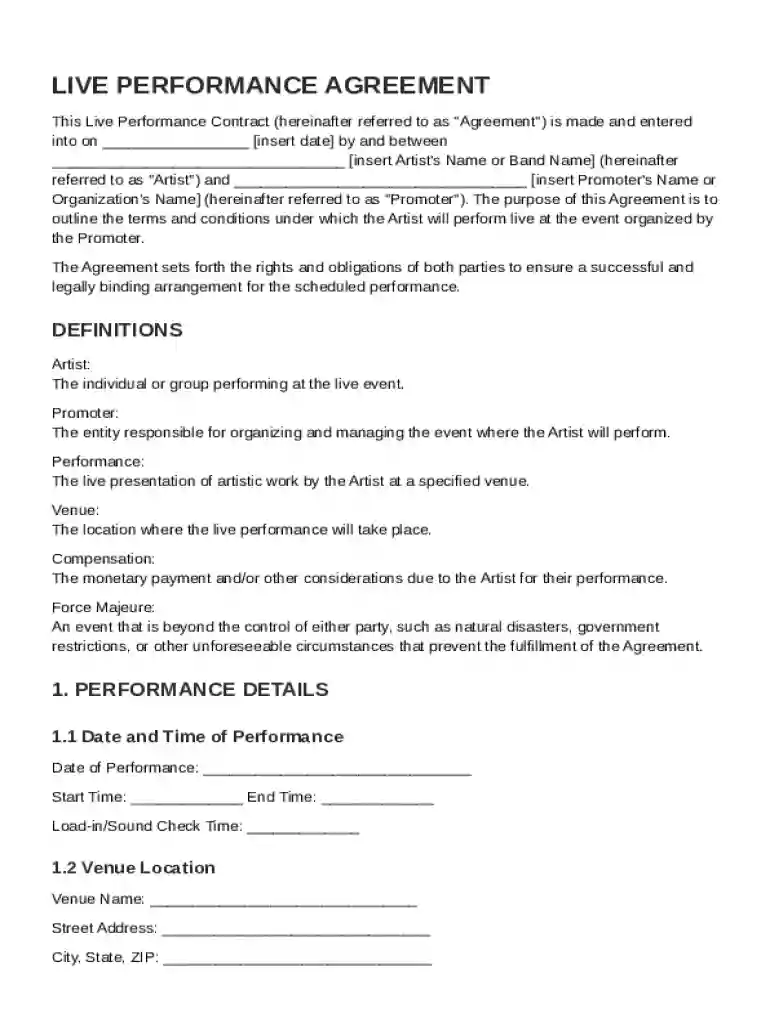
The Live Performance Contract Template is a legal document used to outline the rights and responsibilities of both an artist and a promoter when arranging a live performance. This agreement ensures clarity and security for both parties, covering various aspects from performance details to legal obligations. It acts as a foundational document that prevents misunderstandings and disputes by defining terms related to compensation, duties, and event management. Through its structured provisions, the contract serves to facilitate a smooth business transaction, safeguarding the interests of the artist while also providing the promoter with specific expectations to ensure the success of the event.
Using the Live Performance Contract Template involves several steps, beginning with a clear understanding of the terms applicable to the specific performance situation. Begin by gathering all relevant information regarding the performance, such as dates, times, and venue specifics.
Customization: Adjust the template to suit the specific needs of the event. This includes filling in details about the performance, parties involved, compensation arrangements, and any particular aspects unique to the event.
Review: Both parties should thoroughly review the document to ensure that all agreements have been accurately captured. This is also the stage to confirm that all mandatory sections are completed.
Signatures: Once both parties are satisfied with the terms, the contract needs to be signed. This can be done electronically using platforms like DocHub, which provides tools for legally binding electronic signatures.
Distribute Copies: Ensure that all parties involved receive a copy of the signed agreement for their records.
Completing the template involves a systematic approach to ensure all critical information is accurately and comprehensively recorded. Follow these steps to efficiently complete the document:
Identify Parties: Clearly state the names and contact details of the artist and promoter.
Outline Performance Details: Include precise information such as the performance location, date, and time. It's essential to specify equipment needs and other technical requirements.
Define Financial Terms: Clearly document agreed-upon compensation, including deposit amounts, deadlines for payment, and any bonus structures.
Establish Responsibilities: Clearly delineate duties for each party related to promotions, on-site management, and compliance with venue policies.
Finalize Terms: Ensure all additional clauses, such as cancellation policies and liabilities, are detailed and agreed upon by both parties.
Sign and Secure: Once finalized, both parties must sign the document. Use a secure platform for electronic signatures to ensure legal compliance.
Understanding the fundamental components of a Live Performance Contract is crucial for drafting a comprehensive agreement. Key elements typically include:
Identifying Information: Names and roles of all involved parties.
Performance Specifications: Include venue, date, time, and technical requirements such as audiovisual and lighting needs.
Compensation Details: Define payment structure, including deposits, full payment, and any additional payments.
Legal Clauses: Incorporate terms related to cancellation, liability, and insurance to protect all parties involved.
Signatures: Completed agreements should include signatures from all parties, verifying their agreement to the terms.
Each state may have specific regulations affecting live performance agreements. It’s advisable to consult legal counsel to understand state-specific requirements. For example:
Governing Law: Contracts should stipulate the state law that governs their terms.
Permits and Licenses: Some states may require special permits for live performances, impacting the responsibilities outlined in the contract.
Insurance Requirements: Liability and workers' compensation insurance requirements vary by state and may affect the contract terms.
The Live Performance Contract Template is recognized legally once all sections are completed and signed by all parties. It provides a binding agreement that is enforceable in court, if necessary. Key legal considerations include:
Consent: Ensure that all signed parties are legally competent to commit to the agreement.
Alterations: Any changes to the contract must be made with the consent of all parties, typically requiring initials to acknowledge any amendments.
Dispute Resolution: Include a clear process for resolving disputes, whether through mediation, arbitration, or litigation.
Real-world scenarios can help illustrate the utility of a Live Performance Contract Template. For instance:
Concerts: An artist and a venue promoter agree on equipment needs, performance time, and a 50% deposit, ensuring transparent expectations.
Theater Productions: A theater group uses the template to document sharing costs for costumes and set design, with clear cancelation terms in case of ticket sales shortfalls.
Corporate Events: An entertainment company and a corporation outline responsibilities and compensation for a company party, focusing on punctuality and specific song lists requested by the client.
This template is applicable to a variety of professionals within the entertainment industry, such as:
By providing the artist and promoter with a structured process for negotiations, this contract template helps streamline the planning of live events, allowing all parties to focus on creating successful and memorable performances.


At DocHub, your data security is our priority. We follow HIPAA, SOC2, GDPR, and other standards, so you can work on your documents with confidence.
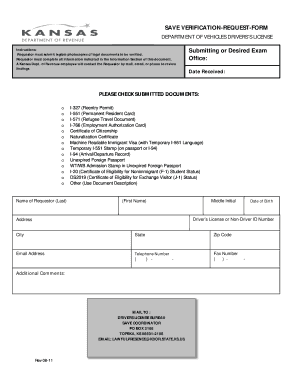




LIVE PERFORMANCE AGREEMENT. FOR EVENTS UNDER $10,000. A LIVE PERFORMANCE IS DEFINED AS A COMEDIAN, MUSICAL ACT, POET, OR OTHER ENTERTAINER WHO PERFORMS AN ACT
The amendments to the JCT Standard Building Contract. (without Quantities) 2016, set out in the Schedule of. Amendments attached to this Contract are hereby
This is a standard, basic booking agreement meant to offer a structure for a booking contract based on various booking contracts that the FMC have devised.


