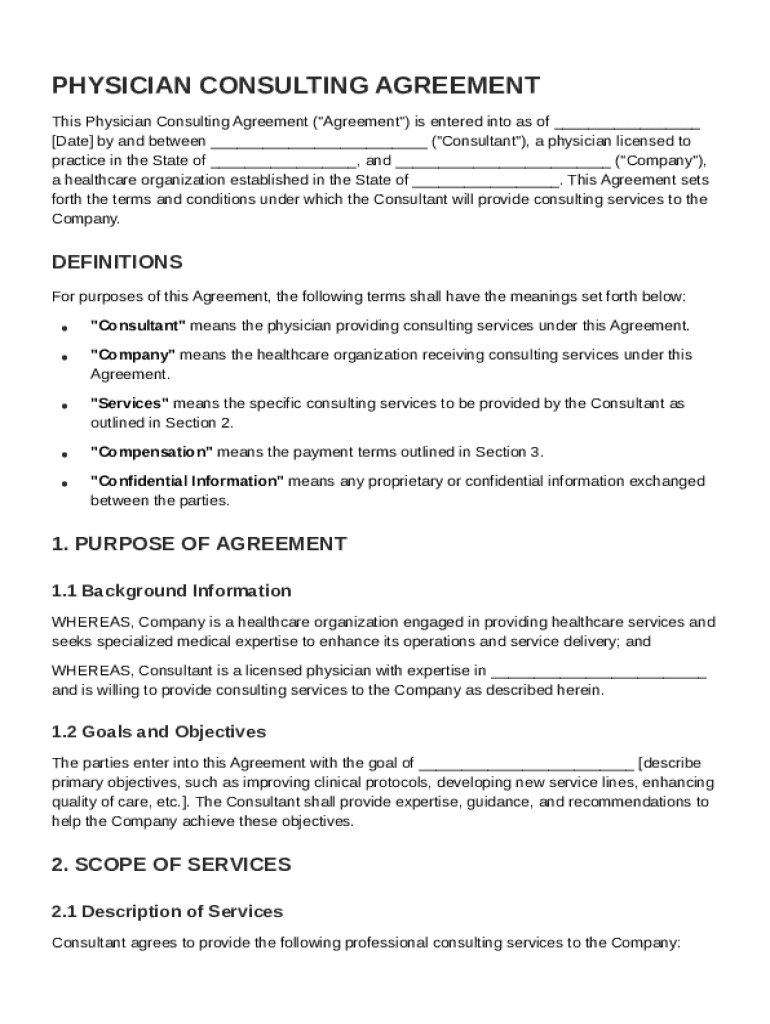







Definition and Purpose of a Physician Consulting Agreement
The Physician Consulting Agreement serves as a comprehensive document outlining the terms under which a licensed physician, referred to as the Consultant, offers consulting services to a healthcare organization, known as the Company. This agreement is integral in defining the parameters of the consulting relationship, ensuring that both parties have a clear understanding of their roles and responsibilities. It typically includes several critical components, such as definitions, the scope of services, compensation details, confidentiality obligations, and governing laws. This ensures that the engagement enhances the Company’s operations through the specialized medical expertise of the Consultant.
Key Terms and Clauses
Scope of Services
The agreement delineates the specific services the Consultant will provide, ensuring there is no ambiguity in expectations. These services may range from providing medical advice and expertise to conducting research or training programs for the Company’s staff. By clearly defining the scope, both parties acknowledge the boundaries of the Consultant's responsibilities, which helps prevent any potential conflicts or misunderstandings during the engagement.
Compensation and Payment Terms
Compensation is a pivotal aspect of the agreement, outlining how the Consultant will be remunerated for their services. This section specifies the payment structure, whether it is hourly, monthly, or project-based, as well as the mode of payment. Additionally, provisions regarding reimbursement for expenses incurred during the consulting activities are often included to provide clarity on what is covered by the Company.
Legal Use and Compliance
Confidentiality and Non-Disclosure Obligations
Confidentiality clauses are essential in protecting sensitive information that may be shared in the course of the consulting arrangement. This section binds the Consultant to maintain the confidentiality of proprietary information, trade secrets, or any other confidential data belonging to the Company. These obligations often extend beyond the duration of the agreement to safeguard the Company’s interests comprehensively.
Termination Rights
Termination clauses outline the conditions under which the agreement can be concluded by either party. Common grounds for termination include breach of contract, non-performance, or mutual agreement. This section ensures that both parties can exit the relationship without undue hardship, while also detailing any severance processes, notice periods, or consequences of termination.
Steps to Complete the Agreement
- Define the Relationship: Clearly outline the roles and responsibilities of the Consultant and the Company to avoid any future disputes.
- Detail the Scope of Services: Specify the services to be provided to ensure mutual understanding and alignment of expectations.
- Determine Compensation: Agree on the financial aspects, including payment schedules and expense reimbursements.
- Establish Confidentiality Provisions: Draft clauses to protect sensitive information exchanged during the consultancy.
- Set Termination Conditions: Agree on the terms under which the agreement can be terminated by either party.
- Seek Legal Review: It is often advisable to have a legal professional review the agreement to ensure compliance with applicable laws.
Application and Usage in the Healthcare Industry
The Physician Consulting Agreement Template is widely used across various healthcare establishments, including hospitals, clinics, and medical research facilities. Physicians engaging with health tech companies for product development or advisory roles on medical board panels frequently employ such agreements. These templates are specifically designed to cater to the unique requirements of the healthcare industry, ensuring that consulting relationships are legally sound and mutually beneficial.
Examples and Practical Applications
Real-World Scenario
A healthcare technology company may enlist the expertise of a licensed physician to provide insights into the development of a new medical device. Through a Physician Consulting Agreement, the physician contributes their medical knowledge to ensure the device meets clinical requirements, benefitting both the company in product validation and the medical community in having a viable new technology.
Variations and Alternatives
Alternative versions of this template might be adapted to fit specific state regulations or to accommodate different types of consulting engagements, such as those focusing on pharmaceutical advisory or public health consulting. These variations ensure that the agreement is tailored to meet distinct legal and procedural needs.
Business Entities Benefiting from the Agreement
Healthcare Organizations
Hospitals, private practices, and healthcare networks that require specialized expertise for initiatives like improving patient care strategies, implementing new healthcare technologies, or conducting clinical trials.
Health Technology Companies
Tech firms developing health-related applications or devices often need consultant physicians to validate their solutions and provide insight into regulatory compliance, clinical efficacy, and market acceptance.
By encompassing these various aspects, the Physician Consulting Agreement Template ensures a well-defined and effective consulting relationship within the healthcare domain, tailored to the specific needs and expectations of both the consultant and the company.