






Key Elements of the Coworking Agreement Template
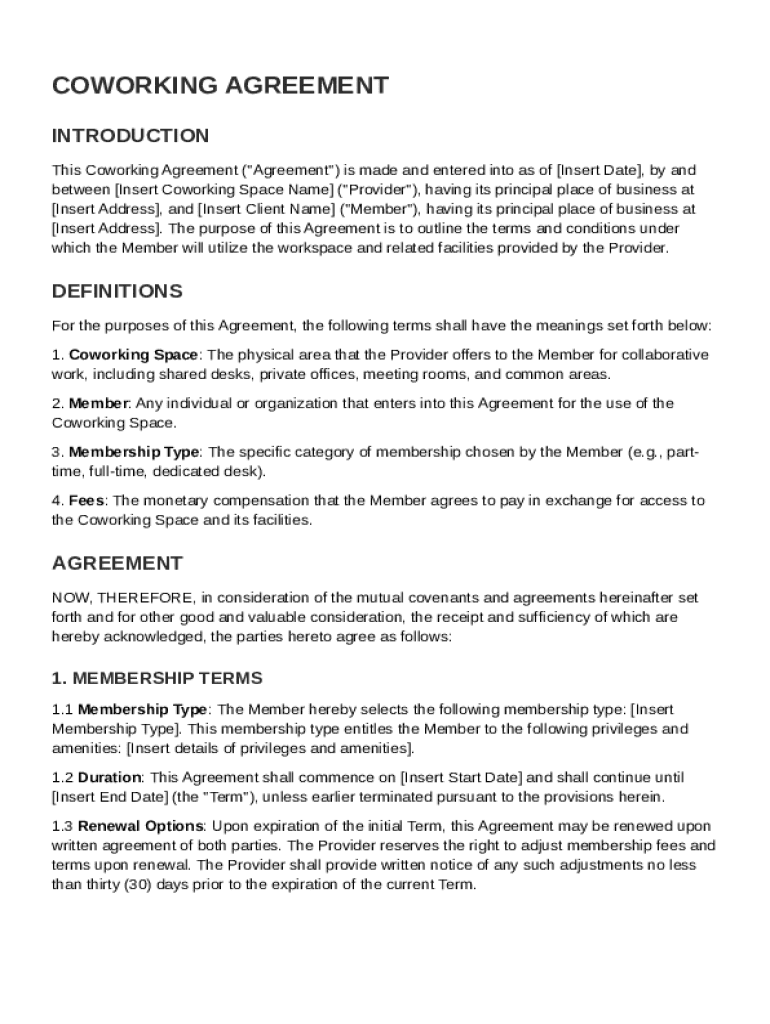
The Coworking Agreement Template is a detailed document outlining the terms and conditions governing the use of a shared workspace. Each element within the agreement serves to clarify the rights and responsibilities of both the coworking space provider and the member. Key elements typically include:
- Membership Types: Defines the different levels of access and privileges available, such as hot desks, dedicated desks, or private offices.
- Fees and Payment Terms: Outlines the cost of the membership and the payment schedule, including any deposit requirements and penalties for late payments.
- Access and Usage Rights: Details the times when members can access the facility and any restrictions on how the space can be used.
- Confidentiality Obligations: Specifies the expectations for maintaining the confidentiality of any sensitive or proprietary information shared within the space.
Each of these components ensures that both parties have a clear understanding of their engagement terms, resulting in a smooth and mutually beneficial working relationship.
Steps to Complete the Coworking Agreement Template
Filling out the Coworking Agreement Template involves understanding its sections and providing the necessary details accurately. Here's a step-by-step guide:
- Review Key Terms: Before starting, meticulously read through the agreement to understand essential clauses like termination and liability.
- Fill Member Information: Enter the member's full name, contact details, and any business information required.
- Select Membership Type: Choose the appropriate membership that aligns with the expected usage.
- Detail Payment Information: Specify the payment amount, frequency, and acceptable methods of payment.
- Agree on Access Times: Note the agreed hours of access and any specific terms regarding the usage of amenities.
- Sign and Date: Both parties should review, sign, and date the document to make the agreement valid.
Completing these steps ensures all necessary details are covered, preventing future disputes.
How to Use the Coworking Agreement Template
Using the Coworking Agreement Template efficiently involves understanding its practical applications.
- Customization: Adjust the template to fit the specific needs of the coworking space and its users, such as including additional clauses for unique amenities.
- Collaboration: Use document tools like DocHub to invite multiple stakeholders for input, ensuring all members agree on terms before signing.
- Archiving: Store the signed agreement digitally for easy reference, reducing the need for physical paperwork.
These practices facilitate a seamless integration of new members into the working environment.
Legal Use of the Coworking Agreement Template
Ensuring the legal integrity of a coworking agreement is vital. This template must comply with relevant legal standards and regulations to be enforceable:
- Governing Law Clause: Specifies which state or federal laws will apply in resolving disputes.
- Indemnification and Liability: Details the extent of legal responsibility in case of property damage or personal injury within the space.
- Termination Conditions: Legally valid processes for termination must be clear, including notice periods and penalties for early termination.
Compliance with these legal standards guarantees that the agreement is binding and protect the interests of all parties involved.
State-Specific Rules for the Coworking Agreement Template
Different states can have varying legal requirements that impact the Coworking Agreement Template. It is essential for users to:
- Research Local Laws: Investigate specific state regulations regarding commercial leases, occupancy limits, and business licensing.
- Tailor Clauses Accordingly: Adapt aspects of the agreement, such as confidentiality and termination policies, to align with state-specific legal requirements.
- Consult with Legal Experts: Consider seeking legal advice to ensure that the agreement complies with local jurisdictional nuances.
Adhering to these state-specific regulations helps maintain the legal enforceability of the agreement and minimizes the risk of legal disputes.
Examples of Using the Coworking Agreement Template
Applying the Coworking Agreement Template can vary significantly based on different scenarios:
- Startup Companies: Startups may use the agreement to provide flexible access to resources without long-term commitments typically associated with conventional office leases.
- Remote Workers: Individuals working remotely often need access to a professional environment; the agreement facilitates clear terms for workspace use.
- Large Corporations: Companies may use the agreement to secure coworking spaces for remote teams or employees traveling for work.
These examples demonstrate how various entities can leverage coworking agreements to accommodate their specific needs.
Important Terms Related to Coworking Agreement Template
Understanding certain key terms that are commonly included in the Coworking Agreement Template is fundamental to utilizing it effectively:
- License Fee: The fee paid by the member for using the coworking space, distinct from traditional rent.
- Permitted Use: Specific activities that are allowed within the workspace, ensuring alignment with the nature of business conducted.
- Common Areas: Parts of the coworking space accessible to all members, such as kitchens and meeting rooms.
Grasping these terms helps ensure clarity in expectations and reduces potential conflicts.
Business Types that Benefit Most from Coworking Agreement Template
Not all businesses will benefit equally from coworking spaces. Those that find the most value in the Coworking Agreement Template typically include:
- Freelancers and Entrepreneurs: Access to affordable, scalable office space without the commitment of a traditional lease.
- Tech Startups: Often require the collaborative environment of a coworking space to thrive.
- Consulting Firms: Consultants who are constantly on the move can use coworking spaces as a flexible base of operations.
These types of businesses can maximize the utility of coworking by leveraging the adaptable, communal nature of such environments.