






Definition and Purpose of the Painting Agreement Template
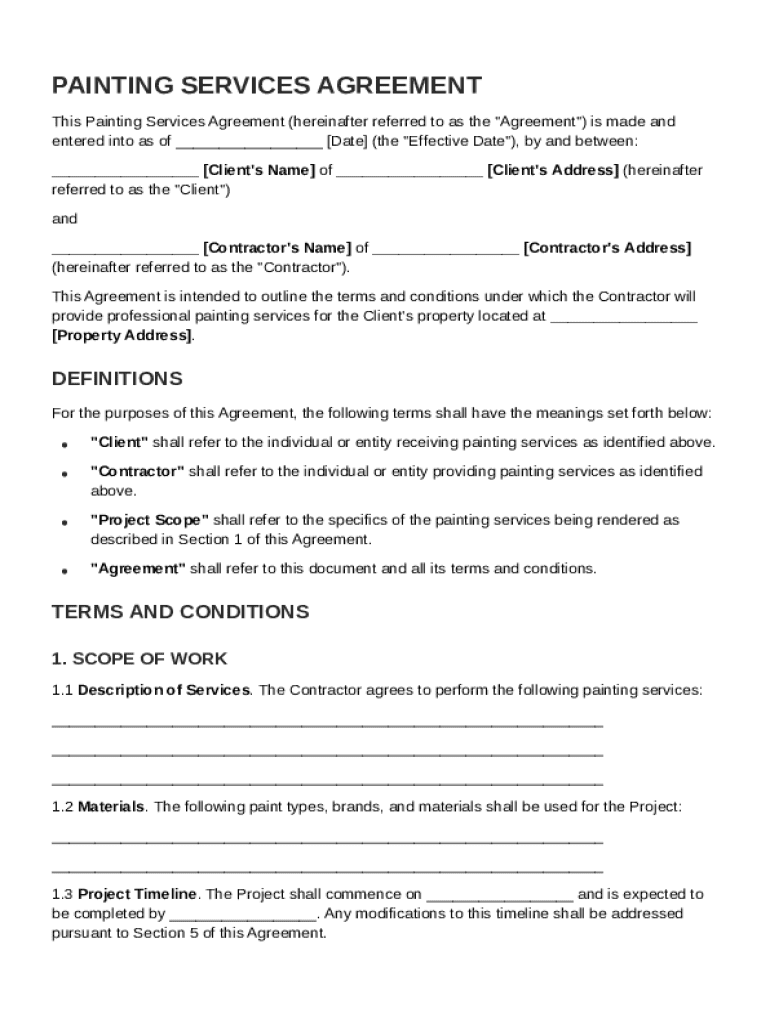
A Painting Agreement Template is a formal document that outlines the terms and conditions between a client and a contractor for professional painting services at a specific property. The agreement is designed to ensure clarity and prevent misunderstandings between the involved parties. This template includes critical components such as the scope of work, payment terms, obligations, and procedures for amendments. By detailing these elements, the template serves as a protective measure for both the client and the contractor, providing a clear framework for the painting project from inception to completion.
Key Components
- Scope of Work: Defines the specific tasks to be performed, including surfaces to be painted and any preparatory work required.
- Payment Terms: Explains the financial aspects, such as cost estimates, payment schedules, and acceptable payment methods.
- Responsibilities and Obligations: Outlines the duties of both the client and the contractor, including timelines, quality expectations, and cleanup requirements.
How to Use the Painting Agreement Template
Using a Painting Agreement Template involves customizing it to fit the specific details of your project. Start by reviewing the template to understand its basic structure and then proceed to fill in details relevant to your painting job.
- Customize the Template: Input the specific details about the client, contractor, and the property address.
- Detailed Description of Services: Clearly define the areas to be painted and any preparatory or ancillary services required.
- Establish Payment Milestones: Decide on payment terms by outlining deposit amounts, installment payments, and final balance due upon job completion.
Practical Tips
- Make sure all parties read and understand the terms.
- Agree upon a timeline for work start and completion.
- Specify any materials or brands to be used for paint to avoid disputes.
Steps to Complete the Painting Agreement Template
Completing this template requires a step-by-step approach to ensure all relevant information is captured accurately.
- Gather Necessary Information: Collect details from both the client and contractor, including contact information and any licensing credentials.
- Fill in Basic Details: Enter basic information such as names, addresses, and contact details.
- Specify Work Scope: Describe the painting tasks, including surface preparation and cleanup.
- Determine Payment Terms: Clearly outline payment expectations and schedule.
- Review Terms and Conditions: Ensure both parties review the agreement for clarity and comprehensiveness.
Considerations
- Double-check spelling and factual accuracy.
- Ensure compliance with state laws regarding contractor agreements.
- Both parties should sign and date the document.
Key Elements of the Painting Agreement Template
Scope and Services
This section details what is covered in the painting work. It includes:
- Areas to be painted (e.g., interior walls, exterior surfaces, trim)
- Preparatory work such as sanding or priming
- Cleanup responsibilities post-completion
Financial Agreement
Details concerning the financial arrangement are crucial for avoiding disputes.
- Payment Schedule: States when payments are due.
- Cost Estimates: Provides a detailed breakdown of labor and material costs.
- Additional Charges: Covers potential extra costs for unforeseen work.
Change Orders and Modifications
The procedure for handling any changes to the original agreement includes:
- A formal process for requesting changes
- Documentation required for modifications
- Adjustment of project timeline and costs based on changes
Legal Use and Considerations
The Painting Agreement Template should comply with local legal requirements to be enforceable.
Legal Validity
- Ensure that the contract aligns with state and federal laws.
- Include a clause on dispute resolution or arbitration.
- The agreement should be signed by both parties to be legally binding.
Liability and Indemnification
Define the limits of liability and any indemnity clauses that protect both the client and the contractor from potential damages or claims.
- Insurance Requirements: Specify any required insurances like liability insurance.
- Indemnification Clauses: Protect parties from third-party claims related to the services provided.
Who Typically Uses the Painting Agreement Template?
The use of a Painting Agreement Template is widespread among various professionals and entities in the painting and construction industry.


Common Users
- Independent Contractors: To formalize agreements with clients for residential or commercial projects.
- Painting Companies: For scaling operations with standardized agreements across multiple projects.
- Property Managers: Use these templates to manage and document improvement projects for rental properties.

Benefits for Users
- Establishes professional credibility.
- Minimizes risk by setting clear expectations.
- Facilitates smoother project execution and client relationships.
Important Terms Related to the Painting Agreement Template
Certain terms in the Painting Agreement Template are crucial for ensuring clarity and enforceability.
Terms to Include
- Commencement Date: The agreed start date for the painting project.
- Completion Date: When the project is expected to be finished.
- Warranty: Information about any guarantees on workmanship or materials.
Understanding Terminology
- Ensure parties understand all terms used, possibly including a definitions section at the document's start.
- Avoid ambiguous language that could lead to disputes.