






Definition & Meaning
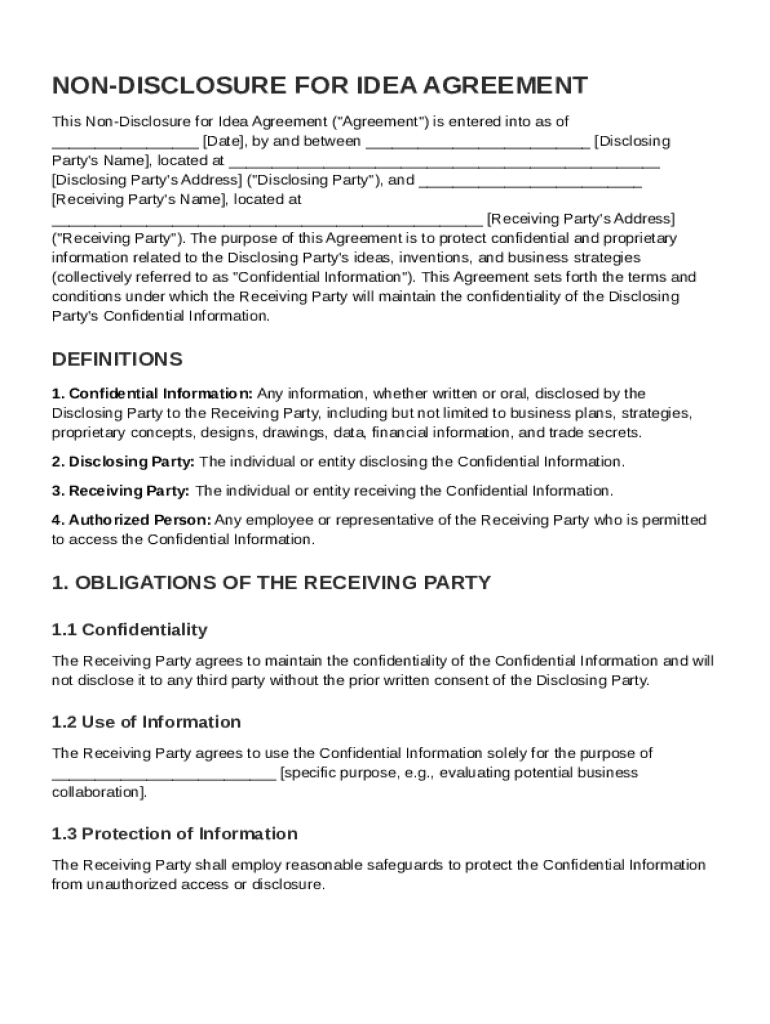
The Non-Disclosure for Idea Agreement Template is a formal legal document employed to safeguard sensitive and proprietary information exchanged between two parties: the Disclosing Party and the Receiving Party. The agreement guarantees that the Receiving Party will maintain confidentiality and not exploit the Disclosing Party's ideas for personal gain. This template includes essential components, such as defined terms and obligations, ensuring clarity and legal enforceability. The document is crucial for protecting intellectual property and maintaining competitive advantage in various industries.
Key Elements of the Non-Disclosure for Idea Agreement Template
The Non-Disclosure for Idea Agreement Template comprises several critical elements that ensure its effectiveness:
- Definitions of Key Terms: Clearly defines what constitutes confidential information, terms like "Receiving Party" and "Disclosing Party," and other relevant terms used within the agreement.
- Obligations of the Receiving Party: Outlines the duty of the Receiving Party to protect confidential information and the repercussions for failing to do so.
- Exclusions from Confidential Information: Lists what data is not considered confidential, such as publicly available information or data already known to the Receiving Party before disclosure.
- Duration of Confidentiality Obligations: Specifies how long the confidentiality obligations remain in effect, often continuing even after the formal end of the business relationship.
- Ownership Rights: Clarifies that the ideas and proprietary information disclosed remain the sole property of the Disclosing Party.
- Miscellaneous Provisions: Includes governing law, dispute resolution mechanisms, and clauses pertinent to the execution of the agreement.
Understanding these key elements is essential for both parties to ensure they are entering into a fair and binding agreement.
How to Use the Non-Disclosure for Idea Agreement Template
Using the Non-Disclosure for Idea Agreement Template involves several steps to ensure accuracy and compliance:
- Identify Parties: Clearly detail the names and contact information of the Disclosing and Receiving Parties.
- Specify Confidential Information: Clearly identify what constitutes confidential information within the scope of the agreement.
- Define Duration: Agree on the duration for which the confidentiality obligations will last.
- Set Conditions and Obligations: Outline the Receiving Party's obligations and any specific conditions for the use or disclosure of information.
- Review Legal Requirements: Ensure the template meets any pertinent legal requirements in your jurisdiction.
- Sign the Agreement: Both parties sign the agreement electronically or in person, as per mutual convenience.
The template is designed to be both comprehensive and flexible, suitable for various business scenarios.
Examples of Using the Non-Disclosure for Idea Agreement Template
This template is utilized across a wide range of scenarios where the protection of intellectual property is critical:
- Startups and Entrepreneurs: When pitching ideas or seeking funding, protecting innovative ideas is crucial. This agreement ensures investors or potential partners respect confidentiality.
- Partnerships and Collaborations: Businesses entering partnerships may exchange sensitive data. The non-disclosure agreement secures this information from misuse.
- Research and Development: Collaborative projects in R&D necessitate sharing proprietary research, making a confidentiality agreement necessary to protect breakthroughs from being disclosed prematurely.
These examples demonstrate the wide application of the agreement, reinforcing its necessity in the contemporary business environment.
Steps to Complete the Non-Disclosure for Idea Agreement Template
Completing the Non-Disclosure for Idea Agreement Template involves the following process:
- Download the Template: Obtain the most appropriate version of the template from a reliable source.
- Fill in Party Details: Insert the legal names and roles of the parties involved in the agreement.
- Detail Confidential Information: Explicitly list what information is to be protected under the agreement.
- Set the Term of Agreement: Agree on how long the confidentiality obligations will apply.
- Mutual Obligations: Clearly state what both parties are obliged to do—or not do—with the information.
- Finalize and Review: Both parties review the filled-in document to ensure understanding and agreement.
- Secure Signatures: Obtain the necessary signatures from both parties to make the agreement legally binding.
These steps streamline the process of securing sensitive information while ensuring all legal aspects are addressed.
Who Typically Uses the Non-Disclosure for Idea Agreement Template
The Non-Disclosure for Idea Agreement Template is commonly used by:
- Inventors and Entrepreneurs: Protects innovative ideas when sharing with potential investors or partners.
- Technology Companies: Safeguards proprietary technology and code when discussing potential collaborations or partnerships.
- Consultants and Freelancers: Ensures that any proprietary methods or client information designated as confidential are not distributed without consent.
By understanding who commonly uses the template, parties can better assess when it is needed.


Legal Use of the Non-Disclosure for Idea Agreement Template
The Non-Disclosure for Idea Agreement Template serves several legal purposes:
- Protection of Intellectual Property: Legally secures intellectual property, preventing unauthorized use or disclosure.
- Enforceable Agreements: Creates a legally binding obligation for the Receiving Party to uphold confidentiality.
- Conflict Resolution: Provides a reference point if disputes arise, detailing the expectations and responsibilities of each party.
Legal protection is a cornerstone of this agreement, making it invaluable for safeguarding sensitive business concepts and ideas.
Important Terms Related to the Non-Disclosure for Idea Agreement Template
Several critical terms and concepts must be understood for effective utilization:
- Confidential Information: Information that must not be disclosed, which could include business strategies, financial data, or unique methodologies.
- Disclosing Party: The individual or entity sharing the confidential information.
- Receiving Party: The individual or entity obligated to keep the information confidential.
- Term: The duration for which the agreement is in effect.
Familiarity with these terms is crucial for drafting and executing a comprehensive non-disclosure agreement that meets legal requirements.