




01. Edit your form online
Type text, add images, blackout confidential details, add comments, highlights and more.

Type text, add images, blackout confidential details, add comments, highlights and more.

Draw your signature, type it, upload its image, or use your mobile device as a signature pad.

Send it via email, link, or fax. You can also download it, export it or print it out.
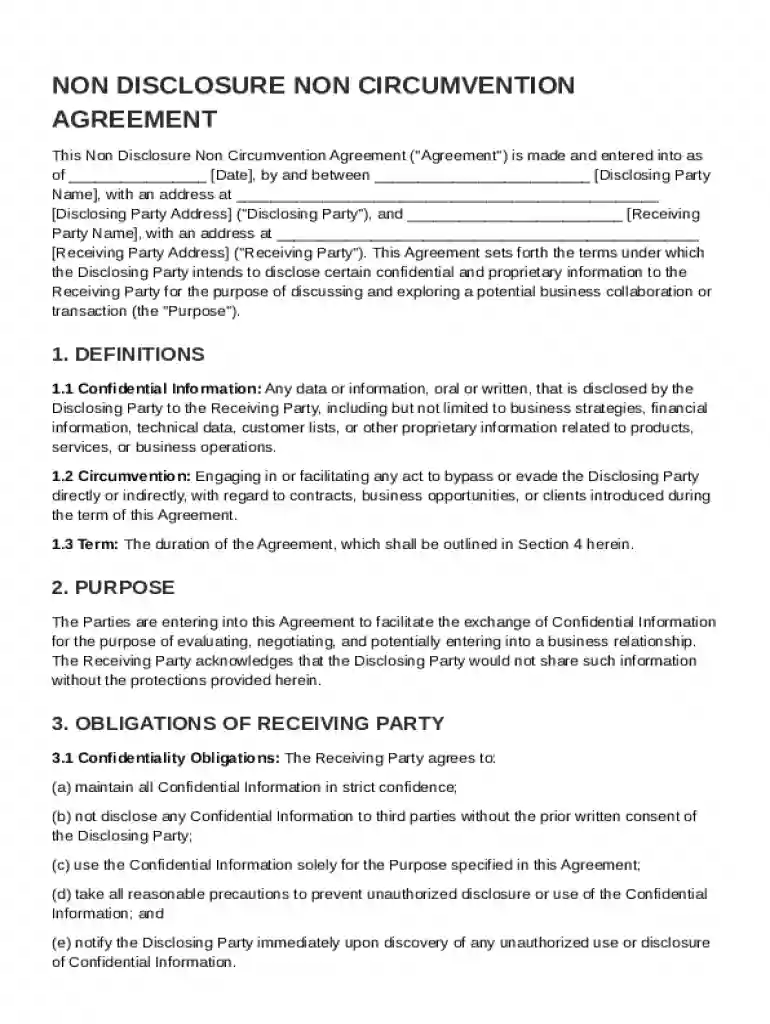
A Non Disclosure Non Circumvention Agreement (NDNCA) outlines terms for sharing confidential information between parties while preventing circumvention. In this scenario, the "Disclosing Party" provides sensitive data to the "Receiving Party," aiming to explore potential business ventures. The document ensures that the Receiving Party maintains confidentiality and refrains from bypassing the Disclosing Party to exploit business opportunities. Key terms defined in this agreement include 'Confidential Information,' which refers to any non-public data disclosed intentionally or unintentionally, and 'Circumvention,' which involves actions that undermine the Disclosing Party's position by going directly to third parties or stakeholders without consent.
Several fundamental components are integral to the NDNCA. Importantly, it specifies the obligations of the Receiving Party, such as maintaining the confidentiality of shared information and abstaining from utilizing the data to advantageously engage directly with any contacts of the Disclosing Party. The agreement typically highlights exceptions to confidentiality, like information already publicly known or independently developed outside the scope of the NDNCA. Moreover, the document outlines the term length, conditions for termination, remedies for potential breaches, and ownership rights concerning shared information. The agreement often concludes with provisions about governing law and jurisdiction to establish the legal framework in case of disputes.
Utilizing the NDNCA template involves a few straightforward steps to ensure it fulfills the transaction's needs. Initially, both parties must clearly identify themselves, with the Disclosing and Receiving Parties explicitly mentioned. The next critical phase is defining the scope of the confidential information that falls under the agreement. Upon completion, each party needs to review the terms regarding confidentiality obligations and circumvention restrictions. It is advisable to consult with legal counsel to ensure compliance with any specific legal requirements and to address any potential pitfalls. After final review, signatures from both parties render the agreement active and enforceable.
Identify Parties: Begin by clearly naming both the Disclosing and Receiving Parties involved in the agreement.
Define Confidential Information: Specify what qualifies as confidential, encompassing documents, data, or business strategies.
Outline Obligations: Detail the responsibilities of the Receiving Party, focusing on the confidentiality and non-circumvention requirements.
Exclusions and Limitations: Include any exceptions to the confidentiality clause, like public domain information or prior independent knowledge.
Specify Duration: Clearly state the agreement's term duration and any conditions that might trigger its early termination.
Signatures: Ensure both parties sign the document, signifying acceptance of all terms and conditions.
Employing an NDNCA template provides structured protection for businesses exploring potential collaborations. It legally binds the Receiving Party to uphold confidentiality and non-circumvention principles, thus safeguarding sensitive business strategies or intellectual properties. By outlining each party's obligations explicitly, it minimizes the risk of misinterpretation, thereby averting potential disputes. The template also offers a clear and concise format, ensuring that essential legal components are not omitted. Ultimately, this document helps mitigate risks while fostering a more trusting, collaborative environment between businesses.
The NDNCA is built on several pivotal terms essential for understanding and executing the agreement correctly. 'Confidential Information' encompasses any non-public details disclosed during collaboration discussions. 'Circumvention' involves bypassing the party that introduced a business opportunity to engage directly with third parties. Terms like 'Breach' specify incidents when the agreement's conditions are violated, while 'Remedies' denote the legal recourse available in such cases. Other crucial terms include 'Term' — the time frame the agreement is in effect, and 'Jurisdiction' — determining which legal system governs the agreement. Clarity in these terms ensures both parties understand their obligations fully.
The legal application of an NDNCA necessitates precise articulation to avoid ambiguity. This agreement serves as a legal shield, offering protection and recourse in case of unauthorized data disclosure or circumvention activities. As a legally binding document, compliance with both federal and state laws in the U.S. is crucial. Parties must ensure that terms uphold statutory requirements, providing a solid legal foundation. It is advisable for parties to seek legal advice when drafting or executing an NDNCA, to make sure no essential clauses are omitted or invalidated under applicable law.
The NDNCA is commonly used by businesses, entrepreneurs, and professionals entering discussions involving confidential information. It is prevalent among startups and small businesses exploring partnerships, joint ventures, or mergers where sensitive information exchange is inevitable. Larger corporations may utilize it when negotiating with suppliers, vendors, or potential stakeholders, ensuring valuable business insights are guarded. Independent consultants and freelancers may also adopt this agreement to protect their proprietary methods and client lists during consultancy arrangements. The document serves as a preventive measure, reducing potential risks of intellectual property theft or competitive exploitation.


Consider a tech startup entering talks with potential investors. An NDNCA ensures that the startup's proprietary technology remains confidential while preventing investors from using disclosed data to bypass the startup and engage directly with the tech's developers. In another scenario, a marketing firm might utilize an NDNCA while partnering with a client to protect innovative strategies and lists from being shared with competitors. Each instance exemplifies the importance of having a formal agreement to safeguard against circumventional and confidentiality breaches, enabling secure, transparent, and trust-based negotiations.
At DocHub, your data security is our priority. We follow HIPAA, SOC2, GDPR, and other standards, so you can work on your documents with confidence.



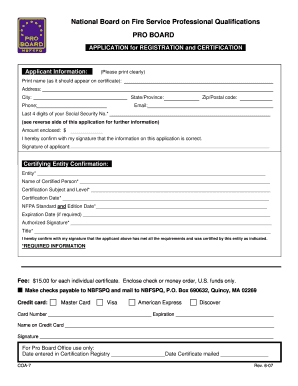
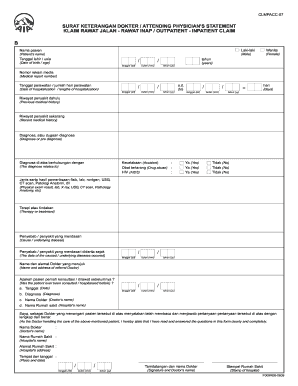


Nov 9, 2020 You shall not circumvent any technical measures in the Software. c) You shall not cause or permit the reverse engineering, disassembly, de-
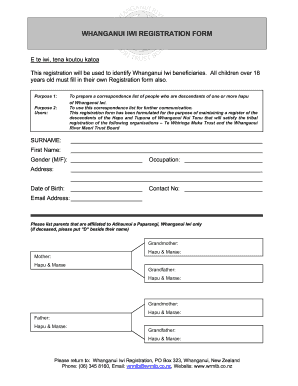
IV Non-Circumvention. For a period of years after the end of the term of this Agreement, the Recipient will not attempt to do business with, or otherwise


