






Definition and Significance
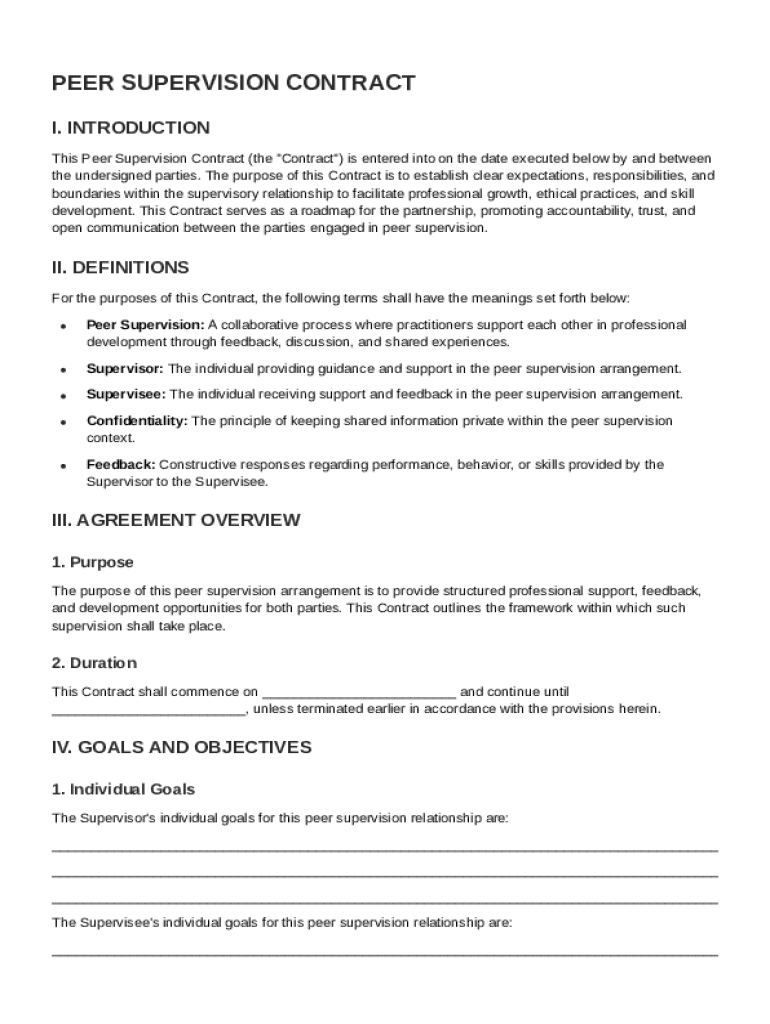
The Peer Supervision Contract Template is an essential document that establishes clear expectations, roles, and responsibilities between parties involved in a peer supervision relationship. It serves as a foundational tool in the professional development of workers who engage in supervisory roles without a hierarchical structure. The contract facilitates a structured yet flexible framework to promote accountability, trust, and open communication.
The contract outlines the overall purpose of peer supervision, focusing on fostering an educational and supportive environment where supervisees can seek advice, share insights, and receive constructive feedback. It acts as a guide to professional growth by detailing how participants can achieve individual and collective goals. This approach helps ensure that all parties have a shared understanding of the objectives and commitments involved, allowing for a structured path to skill enhancement and competence.
How to Use the Peer Supervision Contract Template
To use the Peer Supervision Contract Template effectively, follow a step-by-step approach:
-
Identification of Participants: Begin by clearly identifying the supervisor and supervisee. This includes listing names, titles, and contact information, ensuring that all parties are accurately represented.
-
Establishing Goals: Outline both individual and group objectives. Specify what each participant aims to achieve through the peer supervision process.
-
Role Definition: Clearly define the roles and responsibilities of each party. This includes the supervisor's duties to provide feedback and guidance and the supervisee's tasks to actively participate and engage with the feedback given.
-
Meeting Structure: Agree on the frequency, duration, and format of meetings. This could include weekly face-to-face sessions or bi-weekly virtual check-ins, ensuring consistency and commitment from both sides.
-
Confidentiality Clauses: Include detailed confidentiality agreements to protect sensitive information shared during the supervision process, building trust and integrity.
By adhering to these steps within the template, users can effectively implement a successful peer supervision framework that supports professional development.
Steps to Complete the Peer Supervision Contract Template
Completing the Peer Supervision Contract Template requires meticulous attention to detail:
-
Download the Template: Obtain the template in a compatible format, such as PDF or DOCX, from a reputable source.
-
Fill in Participant Details: Provide the names, positions, and relevant details of all parties involved, ensuring unambiguous identification.
-
Define Objectives: Outline specific goals for both the supervision process and each participant. This aligns expectations and guides the focus of supervision sessions.
-
Agreements on Conduct: Specify the expected conduct, such as respectful communication and punctuality, that will govern interactions.
-
Signatures and Dates: Ensure all participants sign the document and include the date of agreement to document the formal commitment to the terms outlined.
-
Review and Revise: Before finalizing, have all parties review the contract to make any necessary amendments. This ensures clarity and mutual understanding.
-
Distribute Finalized Contract: Share the finished document with all participants, providing each with a copy for their records.
Key Elements of the Peer Supervision Contract Template
The Peer Supervision Contract Template encompasses several vital components critical for setting up a successful supervisory framework:
-
Purpose Statement: Clearly articulate the primary goal of the peer supervision relationship, such as enhancing skills, increasing knowledge, or improving professional practice.
-
Roles and Responsibilities: Define the duties and expectations for both the supervisor and the supervisee. This ensures clarity and reduces the potential for misunderstandings.
-
Meeting Logistics: Include details of the session frequency, locations, formats, and any agreed-upon methodologies or tools to be used in discussions.
-
Ethical Considerations: Highlight ethical guidelines, including confidentiality and the handling of sensitive information.
-
Feedback Mechanisms: Outline processes for providing and receiving feedback, ensuring it is constructive and designed to promote growth.
These elements collectively create a robust contract template that ensures all areas of the supervision process are addressed, supporting a productive and effective relationship.
Legal Use of the Peer Supervision Contract Template
The Peer Supervision Contract Template must be used in compliance with legal standards to ensure its validity:
-
Legally Binding Nature: While the template itself serves as a guideline, it must clearly state that all parties consent to the terms, affirming their respective commitments, to be legally binding.
-
Confidentiality Protections: Legal language should be incorporated to reinforce the confidentiality elements, ensuring protection under disclosure laws suitable to the participants’ jurisdiction.
-
Dispute Resolution: Include a section detailing the procedure for handling conflicts, whether through mediation or arbitration, providing a legal framework for resolving disagreements.
Following these legal provisions helps safeguard the rights and responsibilities of all parties involved, increasing the contract's reliability and enforceability.
Examples of Using the Peer Supervision Contract Template
Real-world applications of the Peer Supervision Contract Template can illustrate its utility:
-
Education Settings: Teachers and educational administrators use the template to refine teaching practices, improve student engagement strategies, and foster collaborative learning environments.
-
Healthcare Environments: Medical practitioners use peer supervision contracts to discuss best practices, share case studies, and maintain high standards of patient care.
-
Corporate Teams: Team leaders in a corporate setting leverage this template to promote skill development, enhance team dynamics, and ensure effective project management.
In these scenarios, the template acts as a framework that supports continuous improvement and professional development across various fields.
Who Typically Uses the Peer Supervision Contract Template
The Peer Supervision Contract Template is versatile and applicable across multiple professions:
-
Healthcare Professionals: Nurses, doctors, and therapists often engage in peer supervision to enhance clinical practices and ensure high-quality patient care.
-
Educators: Teachers and educational counselors use peer supervision to share insights, develop teaching strategies, and improve student outcomes.
-
Corporate Leaders: Team leaders and managers employ the template to foster skill development, encourage peer learning, and enhance team performance.
This broad applicability indicates the template’s usefulness in settings where professional development and peer feedback are critical to success.


Software Compatibility and Integration
Ensuring compatibility with various software platforms optimizes the usability of the Peer Supervision Contract Template:
-
DocHub: The platform allows for seamless document editing and signing, making it easy to fill out and finalize the template.
-
Google Workspace Integration: Users can directly access and modify the template through Google Drive, enhancing collaboration and saving time by eliminating the need for file conversions.
-
Cross-Platform Functionality: By supporting formats like PDF, DOC, and more, the template can be used across devices, including laptops, tablets, and mobile phones, ensuring accessibility for all users.
These compatibility features support efficient workflow and enhance the overall user experience when utilizing the Peer Supervision Contract Template.