






Definition & Meaning
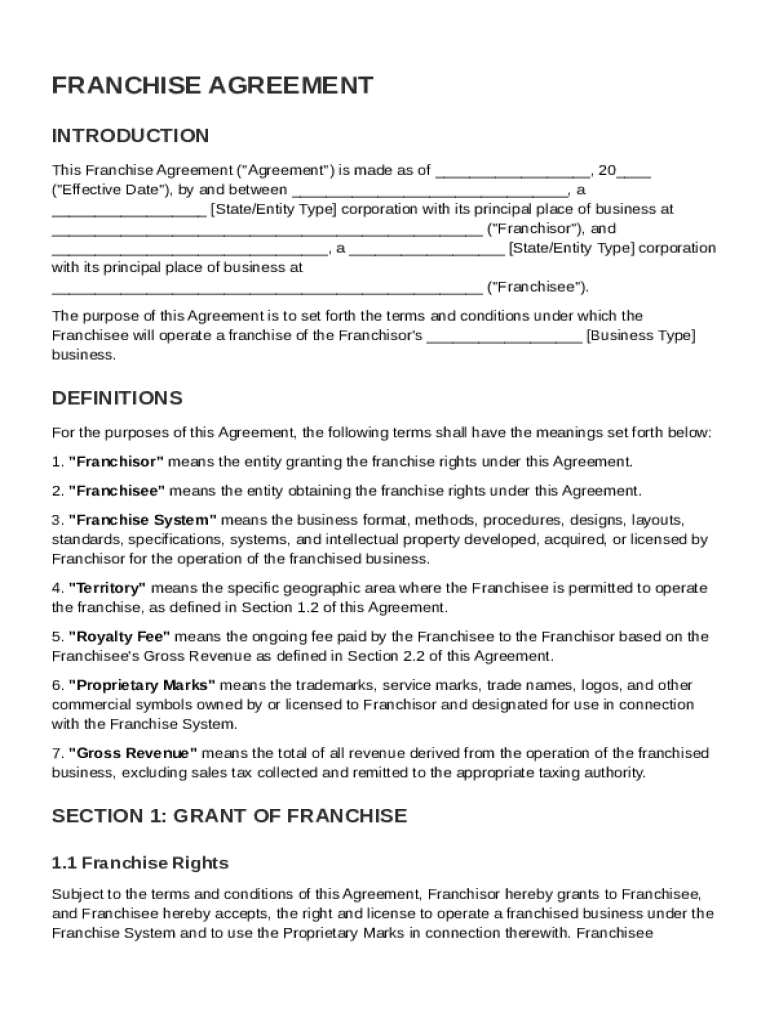
A Franchise Contract Template serves as the foundational document outlining the legal relationship between a Franchisor and a Franchisee. It details the specific terms and conditions under which the Franchisee can operate a business under the Franchisor's trademark and methods. The document is comprehensive, including key components such as franchise fees, territorial rights, duration of the agreement, and obligations of both parties. It acts as a legal framework, ensuring clarity and understanding, which helps prevent disputes and facilitates a smooth relationship between the Franchisor and Franchisee.
Key Elements of the Franchise Franchise Contract Template
The Franchise Contract Template includes several critical sections that define the mutual responsibilities and rights of the Franchisor and Franchisee:
- Franchise Fees: Detailed structure of initial and ongoing fees payable to the Franchisor.
- Term and Renewal: Duration of the contract, along with provisions for renewal.
- Training and Support: Outlines the training and ongoing support the Franchisor will provide.
- Marketing and Advertising: Specifies the marketing fees and the Franchisee's obligations towards brand promotion.
- Operations Standards: Describes the operational guidelines that the Franchisee must follow to ensure consistency in the brand's service delivery.
These components ensure that both parties have a clear understanding of their roles and responsibilities throughout the contract period.
Steps to Complete the Franchise Franchise Contract Template
Completing the Franchise Contract Template involves several important steps to ensure accuracy and legal compliance:
- Review the Template: Thoroughly review the template provided by the Franchisor to ensure it aligns with business objectives.
- Customize the Agreement: Work with legal counsel to customize the template based on specific business needs and compliance with state-specific laws.
- Negotiate Terms: Engage in discussions with the Franchisor to negotiate any terms that need adjustment for mutual benefit.
- Finalize the Document: After making necessary adjustments and reaching consensus, finalize the document by incorporating any additional agreements.
- Sign the Contract: Secure signatures from all involved parties to legally bind the document.
These steps are crucial in forming a valid and enforceable franchise agreement.
Important Terms Related to Franchise Franchise Contract Template
Familiarity with key terms in the Franchise Contract Template is essential for both parties:
- Franchisor: The entity offering the franchise rights.
- Franchisee: The entity purchasing the franchise rights to operate under the brand name.
- Franchise Fee: Payment made by the Franchisee for the rights and ongoing support.
- Royalty: A percentage of sales or a fixed fee paid for ongoing operation under the franchise system.
- Territory: The geographic area in which the Franchisee is allowed to operate.
Understanding these terms is vital to grasp the full scope and implications of the contract.
Legal Use of the Franchise Franchise Contract Template
The legal use of the Franchise Contract Template ensures compliance with federal and state regulations that govern franchise agreements. The document needs to:
- Include a Franchise Disclosure Document (FDD): This is a legal requirement in the United States, detailing essential information about the franchise.
- Adhere to the FTC Franchise Rule: Ensures transparency and protects the rights of both parties involved.
- State Compliance: Specific states might have additional regulatory requirements, and the contract must comply accordingly.
Legal counsel should review the document to certify it meets all legal standards and protects both parties' interests.
Examples of Using the Franchise Franchise Contract Template
Several scenarios illustrate the practical use of the Franchise Contract Template:
- Quick Service Restaurant: A national burger chain expanding to a new state may use the template to bring uniformity and legal clarity.
- Retail Store: A well-known retail franchise uses the template to maintain brand consistency across different regions while setting clear operational guidelines.
- Fitness Franchise: Offering standardized equipment and service requirements across all locations, the template ensures adherence to brand-specific practices.
These examples show the adaptability and necessity of such a document across various business types.
State-Specific Rules for the Franchise Franchise Contract Template
Different states in the U.S. have particular rules governing franchise agreements:
- Registration Requirements: States like California and New York require franchisors to register before offering or selling franchises.
- Disclosure Formats: Ensure the Franchise Disclosure Document adheres to both federal and state formatting rules to avoid legal issues.
- Dispute Resolution: Some states have specific laws that dictate the methods of resolving disputes, which should be included in the contract.
Understanding these variations is crucial for the template’s legal validity across different jurisdictions.
Software Compatibility
The Franchise Contract Template is compatible with a range of document processing software, enhancing accessibility and ease of use:
- Microsoft Word: Allows for comprehensive editing and formatting.
- PDF Editors: Software like DocHub enables secure and collaborative editing directly within the document.
- Google Docs: Offers seamless collaboration for teams working in Google Workspace.
Compatibility with multiple formats ensures that users can adapt the template to their preferred software environment with ease.
Business Types That Benefit Most from the Franchise Franchise Contract Template
Certain business types leverage the Franchise Contract Template to expand operations efficiently:
- Food and Beverage Franchises: Including fast-food chains and coffee shops that need to ensure brand consistency across all locations.
- Service-based Franchise Systems: Such as home cleaning or automotive repair franchises that operate under strict procedural compliance.
- Retail Outlets: Clothing and accessory stores that aim to maintain a consistent shopping experience.
Utilizing a standard contract template enables these businesses to streamline expansion and ensure operational consistency.