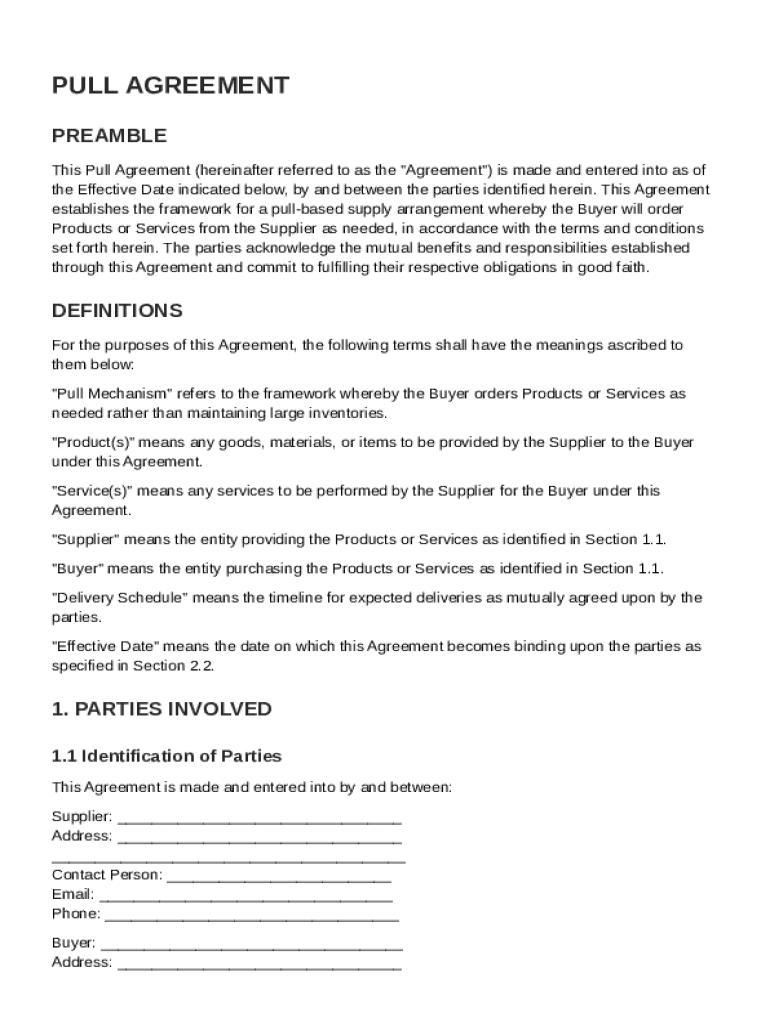







Definition and Meaning of Pull Agreement Template
A Pull Agreement Template establishes a structured framework for a pull-based supply arrangement between a buyer and a supplier. It allows the buyer to order products or services as needed rather than maintaining a constant inventory. This agreement outlines several critical components designed to optimize supply chain efficiency while aligning with both parties' strategic goals and capabilities.
Key Components
- Definitions: Commonly used terms and phrases are explicitly defined to ensure clarity and mutual understanding.
- Responsibilities: The roles and duties of the buyer and supplier, including order fulfillment, payment, and communication protocols.
- Performance Metrics: Specific measurements to evaluate the performance of both parties in fulfilling the agreement's terms.
How to Use the Pull Agreement Template
Utilizing a Pull Agreement Template involves several actionable steps that guide both the buyer and supplier through a structured process, enhancing clarity and mutual benefits.
Step-by-Step Instructions
- Review Definitions: Ensure that all terms are clearly understood by both parties.
- Determine Needs: The buyer should identify their specific product or service requirements.
- Set Performance Metrics: Establish key performance indicators (KPIs) to assess supplier delivery and quality.
- Outline Responsibilities: Define the roles and obligations of each party, including communication and reporting.
Common Scenarios
- Inventory Management: Ideal for businesses looking to optimize inventory turnover rates.
- Service Procurement: Useful for companies requiring variable service levels based on dynamic demand.
Key Elements of the Pull Agreement Template
The Pull Agreement Template is composed of essential elements that define its comprehensive nature, ensuring both parties can operate effectively within its framework.
Major Sections
- Terms of Agreement: Duration and renewal conditions, termination clauses, and other contractual terms.
- Dispute Resolution: Procedures for resolving any conflicts that arise during the contract period.
- Confidentiality Obligations: Guidelines and commitments to protect sensitive information shared between parties.
- Compliance and Legal Considerations: Adherence to relevant laws and regulations governing contract fulfillment.
Legal Use of the Pull Agreement Template
The Pull Agreement Template is a legally binding document designed to comply with relevant U.S. trade and commercial laws. Its structure ensures adherence to legal standards, protecting both parties' rights.
Legal Considerations
- Adhering to Commercial Laws: Ensures compliance with the Uniform Commercial Code (UCC) and other federal regulations.
- Confidentiality Clauses: Legally enforceable provisions to maintain confidentiality and data protection.
- Liabilities and Penalties: Clear outlines of liabilities, indemnities, and violation penalties provide a legal safety net for unforeseen circumstances.
Important Terms Related to Pull Agreement Template
Familiarity with key terms related to the Pull Agreement Template is crucial for both parties to ensure clear communication and mutual understanding.
Commonly Used Terms
- Pull System: A method where orders are initiated based on actual demand rather than forecasted sales.
- Lead Time: The time taken from order placement to order fulfillment.
- Order Fulfillment: Processes involved in completing an order from the initial request to final delivery.
Steps to Complete the Pull Agreement Template
Executing the Pull Agreement Template involves filling out specific sections thoroughly to avoid misunderstandings and ensure a smooth partnership.
Completion Process
- Initiate Draft: Both parties collaborate to agree on terms and initiate the draft of the agreement.
- Conduct Reviews: Legal teams or advisors review the drafted document to ensure compliance with applicable laws.
- Finalize Document: Make necessary revisions, secure approvals, and finalize the agreement.
Potential Pitfalls
- Ambiguity in Terms: Ensure that all terms are explicitly defined to prevent future disputes.
- Overlooking Performance Metrics: Proper metrics should be established upfront to measure success effectively.
Examples of Using the Pull Agreement Template
The Pull Agreement Template finds utility across various industries and business scenarios, aiding buyers and suppliers in optimizing their operations.
Industry Scenarios
- Retail: Retailers like small mom-and-pop stores use pull agreements to manage seasonal inventory.
- Manufacturing: Manufacturing firms employ these agreements to source materials just in time for production processes.
Real-World Applications
- A mid-sized electronics company uses the template to streamline the procurement of components based on production cycles.
- A consulting firm leverages a pull agreement for flexible access to supplemental services during peak client engagements.
Who Typically Uses the Pull Agreement Template
The Pull Agreement Template is utilized by various entities interested in optimizing their supply procedures through demand-driven approaches.

Typical Users
- Manufacturers and Suppliers: Companies seeking to enhance supply chain efficiency and responsiveness.
- Procurement Specialists: Professionals tasked with establishing streamlined and agile sourcing strategies.
- Small to Medium Enterprises (SMEs): Businesses that require flexible supply solutions to adapt to market changes.