







Definition & Meaning
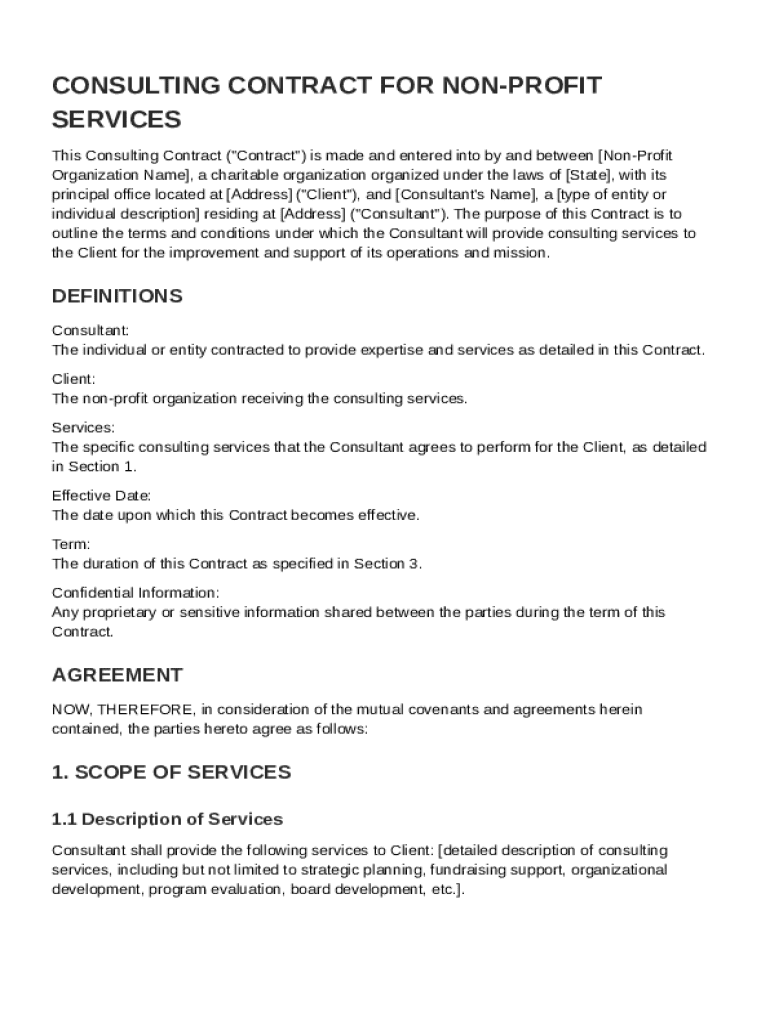
A Non Profit Consult Contract Template serves as a formal agreement between a consultant and a non-profit organization. This template outlines the essential terms and conditions related to consulting services, ensuring both parties have a clear understanding of their responsibilities and expectations. It covers various aspects essential for effective project completion, including service scope, compensation, and confidentiality.
The template acts as a legal framework ensuring both the consultant and the organization understand their roles and the project's parameters. It helps prevent miscommunication and disputes by clearly delineating each party’s duties. For instance, the contract usually specifies the type and frequency of reports the consultant must deliver and any relevant performance metrics. Such details ensure compliance with the organization's guidelines and contribute to a more streamlined service delivery.
How to Use the Non Profit Consult Contract Template
Using the Non Profit Consult Contract Template involves several core steps that ensure the document meets your organization's and the consultant's specific needs. The process starts with reviewing the template to understand what information must be personalized according to the project.
-
Customize Information: Edit sections like the scope of services and compensation based on the project. This might include defining the specific deliverables the consultant is expected to provide in exchange for their fees.
-
Include Client and Consultant Details: Input names, contact information, and roles. Correctly identifying parties helps avoid potential legal complications down the road.
-
Add Specific Obligations: Clearly specify any unique responsibilities the consultant will assume. For example, if certain results are expected by particular milestones, it is critical to mention these deadlines explicitly.
-
Review Legal Terms: Evaluate clauses related to intellectual property, confidentiality, and termination to ensure they align with organizational policies.
-
Consult Legal Experts: Before finalizing the contract, it is wise to consult with a legal professional familiar with non-profit regulations to verify compliance.
By adapting the template according to these guidelines, organizations can manage consultancy engagements effectively, ensuring clarity and adherence to mutually agreed terms.
Key Elements of the Non Profit Consult Contract Template
The Non Profit Consult Contract Template comprises several essential components that establish a clear understanding between the contracting parties.
-
Scope of Services: Describes in detail what services the consultant will provide. This can include project phases, expected activities, and deliverables.
-
Compensation and Payment Terms: Specifies the consultant's fees and payment schedule. It's important to outline whether payments are made per milestone, on a monthly basis, or upon project completion.
-
Confidentiality Obligations: Ensures sensitive organizational information remains confidential. It states the necessity of non-disclosure and outlines any exceptions if applicable.
-
Intellectual Property Rights: Determines ownership of materials produced during the consultancy. Typically, it ensures the non-profit organization retains all rights unless otherwise agreed.
-
Termination Clause: Details conditions that justify contract termination. It may describe notification periods and any penalties for premature contract termination.
These elements are core to preventing misunderstandings and safeguarding both parties' interests throughout the project's lifecycle.
How to Obtain the Non Profit Consult Contract Template
Acquiring a Non Profit Consult Contract Template is crucial for any organization seeking to engage a consultant. Most non-profits can obtain these templates through various channels:
-
Legal Service Platforms: Websites like DocHub often provide customizable templates that users can download and modify to fit their unique situations.
-
Professional Associations: Many non-profit associations offer templates as part of their resources for member organizations.
-
Legal Counsel: An attorney specializing in non-profit law can provide tailored templates that meet specific regulatory requirements.
-
Online Libraries: Many online databases provide freely available versions of contract templates that can be adapted for non-profit use.
By leveraging these sources, non-profits ensure that they have a professional and compliant document to guide their consulting arrangements.
Important Terms Related to Non Profit Consult Contract Template
Familiarity with the terms frequently found in a Non Profit Consult Contract Template is vital for ensuring thorough understanding and enforcement of the agreement.
-
Indemnification: A provision where one party agrees to protect another from legal claims due to acts of the former. It often requires the consultant to indemnify the non-profit for liabilities arising from the consultancy.
-
Amendments: These are modifications that parties can make to the contract terms during the project's execution. The amendment clause outlines the process for making and agreeing upon these changes.
-
Governing Law: Specifies which state’s laws will apply to interpret the contract. This is crucial for resolving any disputes that may arise.
Recognizing these and other terms helps both parties navigate the contract confidently and ensures the agreement serves its intended purpose.
Steps to Complete the Non Profit Consult Contract Template
To finalize a Non Profit Consult Contract Template properly, follow these comprehensive steps to ensure accurate and complete documentation.
-
Initial Review: Examine the full template to comprehend each section's purpose.
-
Fill In Basic Information:
- Party names
- Contact details
- Dates relevant to contract commencement and completion
-
Specify Project Details:
- Define deliverables, expected outcomes, and performance measures.
- Add deadlines and milestone markers for tracking progress.
-
Review Legal Clauses:
- Check provisions like confidentiality, intellectual property ownership, and indemnification for applicability and fairness.
-
Confirm Mutual Understanding:
- Discuss contract terms with the consultant to ensure clarity and consensus on obligations.
-
Legal Consult: Seek legal advice to validate the contract.
-
Finalize and Sign: Once all parties agree, signatures should be obtained to formalize the contract.
These steps ensure every aspect of the template is completed thoughtfully, with attention to detail reflecting the collaborative and strategic nature of the consultancy.
Who Typically Uses the Non Profit Consult Contract Template
The Non Profit Consult Contract Template is utilized by various stakeholders within the non-profit sector. Typically, executive directors or department heads in charge of engagement oversee its use. They engage consultants to enhance organizational effectiveness, implement strategic initiatives, or deliver expertise in niche areas.
Board members may also employ this template when they seek external expertise to guide decision-making or organizational transformation. Additionally, non-profit consultants themselves might use these templates to propose comprehensive service agreements to potential clients.
By employing these templates, users ensure that their consultancy arrangements are underpinned by a robust legal framework, enhancing trust, clarity, and outcome success.


Legal Use of the Non Profit Consult Contract Template
The Non Profit Consult Contract Template must adhere to legal standards and non-profit regulations to be effective and enforceable.
Compliance with relevant federal and state laws is critical. For example, non-profit organizations in the U.S. must align consultancy contracts with the Internal Revenue Service (IRS) requirements, particularly when consultancy fees could impact the organization's tax-exempt status.
The contract often incorporates clauses that reflect non-profit operational principles, such as transparency, accountability, and the director's fiduciary duties. Local laws may also dictate specific inclusions regarding labor practices, fair employment, and anti-discrimination standards.
Legal teams and consultants should ensure these legal frameworks guide contract creation, preventing legal risks that could affect the organization's standing or operational efficacy.




