






Definition & Meaning
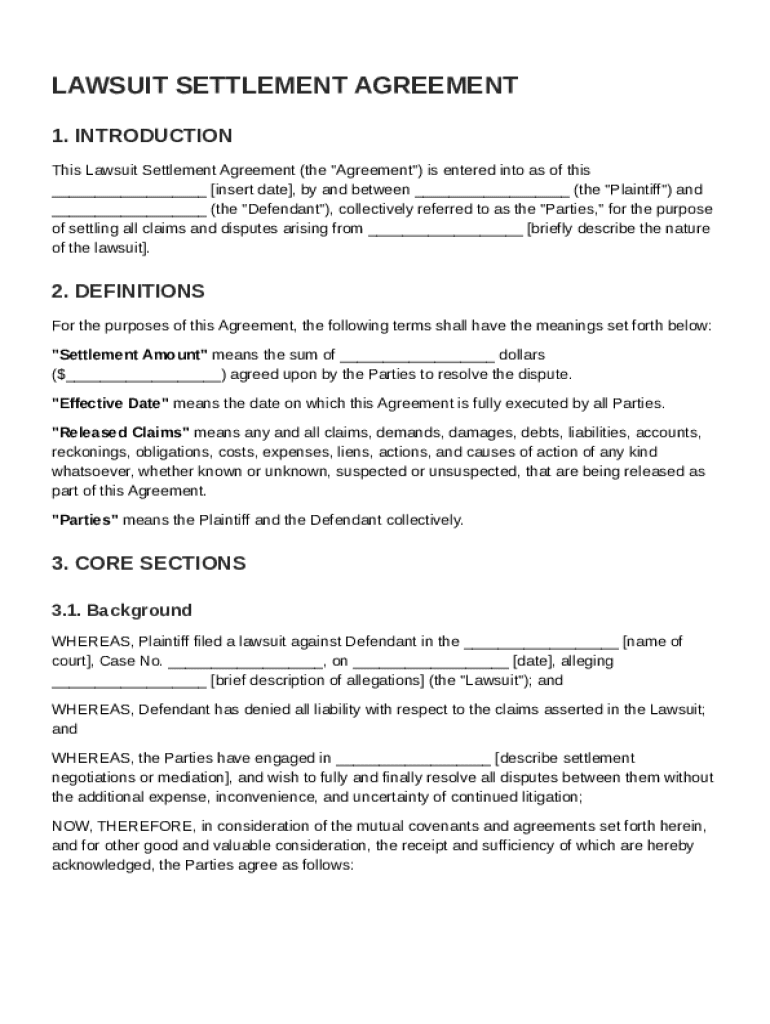
A Lawsuit Settlement Agreement Template is a legal document designed to formalize the resolution of a dispute between a plaintiff and a defendant. It serves as a legally binding outline of the terms agreed upon by both parties to settle their legal claims outside of court. Such agreements aim to resolve disputes without the necessity of continued litigation, saving time and legal expenses. The document typically contains provisions regarding the settlement amount, confidentiality clauses, mutual release of claims, and governing law—among other important terms. This template functions as a framework, offering a comprehensive guide to drafting tailored agreements that fit the specific needs of a given lawsuit context.
Key Elements of the Lawsuit Settlement Agreement Template
A Lawsuit Settlement Agreement Template encompasses several critical components essential for a comprehensive settlement:
- Parties Involved: Clearly identifies the plaintiff and defendant, establishing their roles within the agreement.
- Settlement Amount: Specifies the financial compensation the defendant agrees to pay to resolve claims.
- Payment Terms: Details the schedule for the settlement payments, including due dates and any interest penalties for late payments.
- Mutual Release of Claims: Both parties agree to waive any future claims related to the dispute, securing legal closure.
- Confidentiality Clause: Often included to prevent the parties from publicly discussing the terms or existence of the settlement.
- Governing Law: Specifies which state laws will govern the interpretation and enforcement of the agreement.
- Dismissal of Lawsuit: Stipulates that the lawsuit will be dismissed once all terms are fulfilled.
Steps to Complete the Lawsuit Settlement Agreement Template
Completing a Lawsuit Settlement Agreement Template involves a systematic approach:
- Gather Information: Collect all pertinent facts about the lawsuit, including the parties' identities, claims, and any prior negotiations.
- Draft Initial Terms: Use the template to establish basic terms, such as payment amounts and schedules.
- Review Legal Language: Ensure that the agreement’s wording complies with legal standards and accurately represents the parties' intent.
- Consult Legal Advisors: Both parties should seek legal advice to confirm the agreement protects their interests.
- Negotiate Final Terms: Allow room for negotiation to address and resolve any disputes over the template's provisions.
- Execute the Agreement: Once finalized, both parties sign the document to formalize their consent and obligations.
Subsections for Further Detail
- Payment Schedule: Elaborate on how and when payments will be made.
- Confidentiality and Breach: Discuss consequences for violating confidentiality.
- State-Specific Clauses: Adapt the agreement to local legal nuances if necessary.
Important Terms Related to the Lawsuit Settlement Agreement Template
Navigating a Lawsuit Settlement Agreement Template involves understanding key legal terms:
- Plaintiff and Defendant: Refers to the parties involved—plaintiff being the one who brings the lawsuit, defendant being the one sued.
- Consideration: The payment or promise made by one party to another as part of the agreement.
- Mutual Consent: Agreement by all parties to the terms outlined within the settlement.
- Remedy: Legal means to enforce a right or redress a harm.
- Severability: The ability for a provision of the agreement that is found invalid or unenforceable to be removed, leaving the remainder intact.
Legal Use of the Lawsuit Settlement Agreement Template
When executed correctly, a Lawsuit Settlement Agreement Template is a versatile legal tool:
- Formal Documentation: Offers a written record of dispute resolution terms accepted by both parties.
- Court Recognition: Typically honored in court as proof of voluntary agreement, negating further litigation.
- Amendment Clauses: Defines processes for making changes post-signature, ensuring all alterations are formally documented and agreed upon.
- Attorney Fees: Addresses whether one or both parties will bear legal costs associated with drafting and enforcing the agreement.
- Unauthorized Disclosure: Protects the interests of the parties by imposing penalties for breach of confidentiality.
Examples of Using the Lawsuit Settlement Agreement Template
Practical application of a Lawsuit Settlement Agreement Template can vary widely between cases:
- Breach of Contract Dispute: Used to resolve claims where one party alleges breach of contract by the other, securing compensation without trial.
- Personal Injury Claims: Commonly employed to settle damages for personal injury cases without prolonged legal battles.
- Employment Disputes: Utilized in scenarios involving workplace disputes or wrongful termination claims where amicable resolution is preferred.
- Intellectual Property Settlements: Applicable in cases where disputes over copyrights, patents, or trademarks lead to litigation and subsequent settlement discussion.
State-Specific Rules for the Lawsuit Settlement Agreement Template
Although a Lawsuit Settlement Agreement Template is broadly applicable, state-specific rules can influence its composition:
- Variances in Legal Requirements: Certain states may have unique rules regarding confidentiality clauses or standard settlement terms.
- Governing Law Clause: Ensures the agreement aligns with specific legal principles unique to the state chosen to govern the agreement.
- State-Imposed Limitations: Understanding limits on settlement amounts, particularly in cases involving public entities or consumer rights.
Who Typically Uses the Lawsuit Settlement Agreement Template
This template serves a diverse array of users:
- Corporate Entities: Often utilized by businesses to resolve commercial disputes swiftly.
- Legal Professionals: Attorneys use these templates as foundational tools to draft tailored solutions.
- Individuals in Disputes: Private citizens engaged in legal conflicts who wish to avoid expensive litigation.
- Mediators: Facilitators who use such templates to guide resolution processes between opposing parties.
Each of these sections is designed to provide in-depth insights into how a Lawsuit Settlement Agreement Template functions, its components, and its practical applications within the U.S. legal framework.